


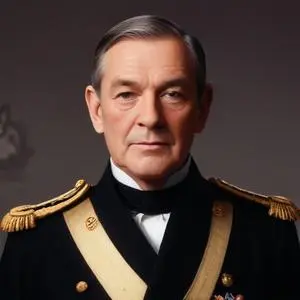
A renowned naval historian and Rear Admiral who wrote extensively on American naval history, earning two Pulitzer Prizes for his work.
Samuel Eliot Morison is renowned for his authoritative and engaging works on maritime history and American history, earning him two Pulitzer Prizes and a plethora of other accolades. As a historian, professor, and prolific writer, Morison dedicated his life to shedding light on the lesser-known aspects of American history, particularly the maritime aspects that shaped the nation's development.
Born on July 9, 1887, in Boston, Massachusetts, Morison was named after his maternal grandfather, Samuel Eliot, a historian, educator, and public-minded citizen. His family's rich intellectual heritage, which included the famous poet T.S. Eliot, instilled in him a passion for learning and a love for the sea. Morison's early life was marked by a strong educational foundation, attending Noble and Greenough School and St. Paul's before entering Harvard University, where he was a member of the Phoenix S K Club.
Morison's fascination with maritime history led him to pursue his Ph.D. from Harvard University in 1912. He went on to teach history at Harvard for 40 years, during which he penned some of his most influential works. His Pulitzer Prize-winning biographies, Admiral of the Ocean Sea (1942) and John Paul Jones: A Sailor's Biography (1959), showcased his meticulous research and engaging writing style.
Morison's literary accomplishments are staggering, with notable works including:
Morison's contributions to historiography were recognized with numerous awards and honors, including:
Samuel Eliot Morison's legacy extends far beyond his impressive list of publications and awards. His work has inspired generations of historians, scholars, and readers, shedding light on the often-overlooked maritime aspects of American history. As a pioneer in his field, Morison's contributions have charted a new course for understanding the complexities of American history, ensuring his place as one of the most revered historians of the 20th century.
Born in 1890
Led the Allied forces to victory in World War II and later served as President, maintaining peace and prosperity during the Cold War era. He's known for his strategic leadership and diplomatic skills.
Born in 1885
Led the U.S. Pacific Fleet to victory in World War II, playing a crucial role in defeating Japan and ending the war. He was a highly respected and decorated naval leader.
Born in 1886
A highly decorated naval officer who played a crucial role in several key battles in World War II, including the Battle of Midway, and later served as a diplomat.
Born in 1884
Led the Imperial Japanese Navy during World War II, masterminding the surprise attack on Pearl Harbor, and later became a symbol of Japanese military power and strategy.
Born in 1901
The Japanese emperor who ruled from 1926 to 1989, leading the country through World War II and its post-war reconstruction, and is known for his symbolic role in Japanese politics and culture. He is also remembered for his rare public apology for Japan's wartime atrocities.
Born in 1880
A highly decorated military leader and statesman who played a crucial role in shaping post-WWII foreign policy and was awarded the Nobel Peace Prize for his efforts. He's most known for authoring the Marshall Plan, a massive economic aid program that helped rebuild war-torn Europe.
Born in 1893
Led the US Army in World War II and became the last five-star general, playing a crucial role in shaping post-war American military strategy. He's also known for his humble and unassuming leadership style.
Born in 1880
A highly decorated war hero and master strategist who led troops to victory in World War I and II, and later became a prominent figure in the occupation of Japan.
