


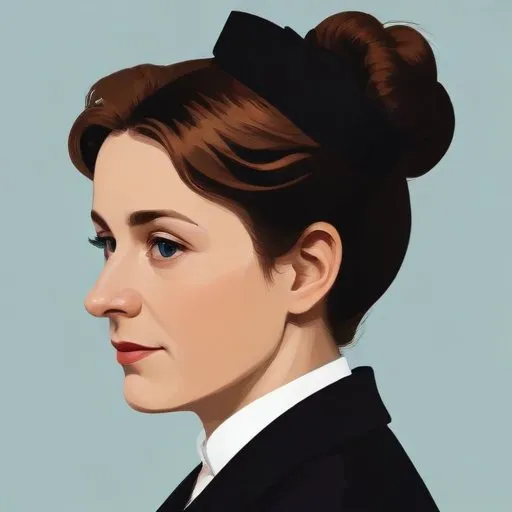
A pioneering female writer of regionalist fiction, capturing the essence of rural Maine life through poignant stories and poetry. Known for her nuanced portrayals of women's lives and struggles.
Sarah Orne Jewett is renowned for her poignant and evocative portrayals of rural Maine life, earning her a reputation as a master of American literary regionalism. Her works, often set in the coastal towns of Maine, captivate readers with their rich tapestry of local color, exploring the complexities of human relationships and the nuances of small-town life.
Born on September 3, 1849, in South Berwick, Maine, Jewett was raised in a family steeped in New England tradition. Her father, Dr. Theodore Herman Jewett, was a dedicated physician, and her mother, Caroline Frances Perry, instilled in her a love for nature. Jewett's early life was marked by frequent walks with her father, which fostered her appreciation for the natural world and its inhabitants.
Rheumatoid arthritis, which she developed in childhood, led to treatment in the form of long walks, further cementing her connection to the outdoors. These experiences would later inform her writing, imbuing it with a deep sense of place and empathy for the people who inhabited it.
Jewett's education took her to Miss Olive Raynes' school and later to Berwick Academy, where she graduated in 1866. Her family's extensive library provided her with a wealth of literary material, which she devoured voraciously. Jewett's reading list was eclectic, ranging from classical works to contemporary literature, and included authors such as William Shakespeare, John Milton, and Nathaniel Hawthorne.
Her association with Boston's literary circles introduced her to influential figures like Thomas Wentworth Higginson, who became a mentor and friend. Jewett's work was also shaped by her interest in unconventional religious ideas, particularly the teachings of Emanuel Swedenborg, which emphasized individual responsibility and the interconnectedness of all things.
Jewett's literary career began at the age of 18 with the publication of her story "Jenny Garrow's Lovers" in The Flag of Our Union. This early success paved the way for a string of critically acclaimed works, including The Country of the Pointed Firs (1896) and The Tory Lover (1901).
Her most famous novel, The Country of the Pointed Firs, is a poignant portrayal of life in a small coastal town in Maine. The work is characterized by its lyrical prose, nuanced characterization, and exploration of themes such as isolation, community, and the human condition.
Sarah Orne Jewett's contribution to American literature is multifaceted and far-reaching. Her work has inspired generations of writers, including Willa Cather, who credited Jewett as a significant influence. Jewett's writing has also had a lasting impact on the regionalist movement, paving the way for authors like Sherwood Anderson and Ernest Hemingway.
Today, Jewett's works continue to captivate readers with their timeless exploration of the human experience. Her legacy extends beyond the literary world, with her stories offering a window into the past, showcasing the beauty and complexity of rural Maine life.
Sarah Orne Jewett's life was a testament to her dedication to her craft, her connection to her community, and her unwavering passion for storytelling. Her works continue to enchant readers, offering a glimpse into the beauty and complexity of the human experience.
Born in 1850
A pioneering feminist writer who explored themes of independence, marriage, and women's rights in her novels and short stories, particularly in "The Awakening".
Born in 1862
A pioneering female author of novels and short stories that explored the social conventions and morals of the Gilded Age, known for her witty and insightful portrayals of the American aristocracy.
Born in 1843
A renowned literary mastermind, celebrated for crafting psychologically complex, atmospheric novels and short stories that probed the human condition, often exploring the intricacies of the American and European aristocracy.
Born in 1837
A prominent figure in American literary realism, known for his novels and plays that explored the lives of ordinary people, and his influential literary criticism.
Born in 1835
Witty writer of classics like "The Adventures of Tom Sawyer" and "The Adventures of Huckleberry Finn", known for humor and social commentary.
Born in 1811
Wrote influential abolitionist novels, including "Uncle Tom's Cabin", which humanized the horrors of slavery and fueled the anti-slavery movement.
Born in 1804
Author of dark, psychologically complex tales that explore the human condition, often set in 17th-century New England, and known for his masterpiece "The Scarlet Letter".
Born in 1803
A leading figure in the Transcendentalist movement, he advocated for individualism, self-reliance, and nature-inspired spirituality through his essays and poetry. His ideas continue to influence American thought and culture.
