


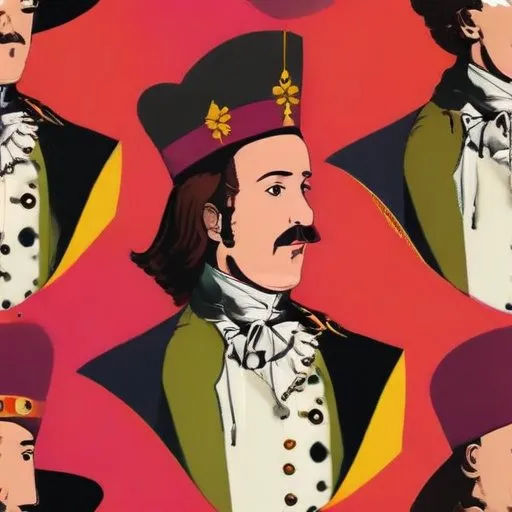
Ruler of Tyrol from 1662 to 1665, known for his brief but significant reign that saw the establishment of the University of Innsbruck.
Sigismund Francis, Archduke of Austria, is remembered as a ruler of great vision and integrity, who brought stability and prosperity to the regions under his rule. As the Archduke of Further Austria, including Tyrol, from 1662 to 1665, he left an indelible mark on the history of the Habsburg dynasty.
Born on November 27, 1630, in Innsbruck, Sigismund Francis was the second son of Leopold V, Archduke of Austria, and Claudia de Medici. From a young age, he was groomed for a life of leadership and service, with a strong emphasis on education and faith. His upbringing and training prepared him to take on the significant responsibilities that would eventually be bestowed upon him.
In 1646, Sigismund Francis was appointed as Prince-Bishop of Augsburg, a position that reflected his deep commitment to the Catholic Church. He went on to become Bishop of Gurk in 1653 and Prince-Bishop of Trent in 1659, solidifying his reputation as a devoted servant of the Church. Despite never being ordained as a priest or consecrated as a bishop, his faith and dedication to his people were unwavering.
In 1662, following the death of his brother, Archduke Ferdinand Charles, Sigismund Francis inherited the title of Archduke of Further Austria, including Tyrol. This marked a turning point in his life, as he took on the responsibilities of ruling a vast region. His leadership was characterized by wisdom, compassion, and a deep understanding of the needs of his people.
Just before his untimely death, Sigismund Francis married Hedwig of the Palatinate-Sulzbach on June 3, 1665. This union was short-lived, as he passed away twenty-two days later in Innsbruck, due to an illness.
Sigismund Francis's life was cut short, but his legacy endures. His commitment to his people, his faith, and his duty as a ruler have left a lasting impact on the regions he governed. His early death marked the end of the younger Tyrolean line of the House of Habsburg, but his memory continues to inspire and motivate generations to come.
Sigismund Francis was part of a rich and storied lineage, with a strong legacy of leaders and visionaries. His family tree is a testament to the enduring power and influence of the Habsburg dynasty.
Sigismund Francis's life may have been short, but his impact on history is profound. As a ruler, a servant of the Church, and a devoted leader, he left an indelible mark on the world. His legacy serves as a reminder of the power of faith, duty, and dedication to the greater good.
Today, we remember Sigismund Francis as a shining example of leadership, compassion, and service. His life is a testament to the enduring power of the human spirit, and his legacy continues to inspire and motivate us to this day.
Born in 1793
Emperor of Austria from 1835 to 1848, known for his role in the Revolutions of 1848 and his abdication in favor of his nephew Franz Joseph.
Born in 1717
The wife of Francis I, Holy Roman Emperor, ruled Austria and its territories with intelligence and diplomacy, implementing reforms and expanding the empire through strategic marriages. She's remembered for her strong leadership and cultural achievements.
Born in 1643
A 17th-century nobleman who ruled Lorraine and played a significant role in the Thirty Years' War, known for his military campaigns and territorial expansions.
44 Years Old
A Cameroonian professional footballer who played as a midfielder and won several titles with clubs in Europe and Africa. He's known for his skillful playing style and goal-scoring ability.
Born in 1552
The eccentric and reclusive ruler of the Holy Roman Empire, known for his fascination with alchemy, astrology, and the occult, and his patronage of artists and intellectuals.
