


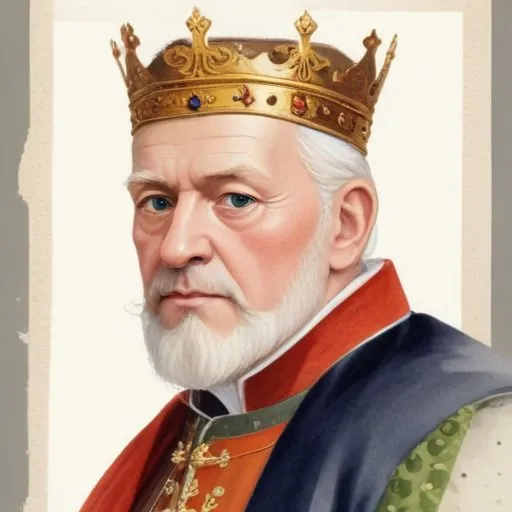
The Polish king who ruled from 1506 to 1548, known for strengthening the Polish-Lithuanian state and promoting Renaissance culture.
Sigismund I the Old, also known as Zygmunt I Stary, was a remarkable king who ruled Poland and Lithuania from 1506 until his death in 1548. He is remembered for his exceptional leadership, cultural patronage, and territorial expansions, earning him a special place in the annals of Polish and Lithuanian history.
Born on January 1, 1467, in Kozienice, Poland, Sigismund was the fifth son of Casimir IV and Elizabeth of Austria. He was not initially destined for the throne, with his elder brothers Vladislaus II, John I Albert, and Alexander I Jagiellon holding more prominent positions. However, circumstances led to Sigismund's ascension to the throne at the age of 39, following the death of his brother Alexander in 1506.
Established Polish rule over Ducal Prussia, ensuring the payment of feudal homage or tribute to Polish monarchs until the Treaty of Bromberg in 1657.
Annexed the Duchy of Mazovia, incorporating Warsaw, and maintained the nation's wealth and prominence in the region.
Fostered a cultural renaissance, patronizing arts and architecture, and encouraging the development of education and literature.
Sigismund's legacy extends beyond his territorial conquests. He played a significant role in shaping the cultural and educational landscape of Poland and Lithuania. His patronage of the arts and architecture led to the construction of magnificent buildings, including the Wawel Castle in Krakow, which remains an iconic symbol of Polish heritage.
1499: Became Duke of Gogw
1501: Became Duke of Opava
1504: Appointed governor of Silesia on behalf of his brother, King Vladislaus II of Bohemia and Hungary
Sigismund I the Old's reign marked a period of stability and growth for Poland and Lithuania. He successfully navigated the complexities of European politics, maintaining alliances and avoiding conflicts that could have threatened the integrity of his kingdom. His legacy serves as a testament to his diplomatic prowess and statesmanship.
Sigismund was nicknamed "the Old" to distinguish him from his son and successor, Sigismund II Augustus.
He was one of thirteen children born to Casimir IV and Elizabeth of Austria.
Sigismund I the Old's remarkable reign has left an indelible mark on Polish and Lithuanian history. His cultural achievements, territorial expansions, and diplomatic acumen have cemented his position as one of the most significant monarchs of his time.
Sigismund's story serves as a reminder of the importance of effective leadership, cultural patronage, and diplomatic prowess in shaping the destiny of nations. His legacy continues to inspire and influence generations, making him an integral part of Poland's and Lithuania's rich cultural heritage.
Born in 1427
Unified the Kingdom of Poland and the Grand Duchy of Lithuania, creating a powerful state that lasted for centuries. He's also known for his military campaigns and territorial expansions.
Born in 1629
The Polish-Lithuanian king who led the Polish-Lithuanian Commonwealth to victory against the Ottoman Empire in the Battle of Vienna in 1683, saving Europe from Ottoman conquest. He's also known for his military prowess and cultural achievements.
Born in 1670
A powerful Polish king who transformed his country into a major European power through military conquests and cultural achievements, earning him the nickname "the Strong".
