


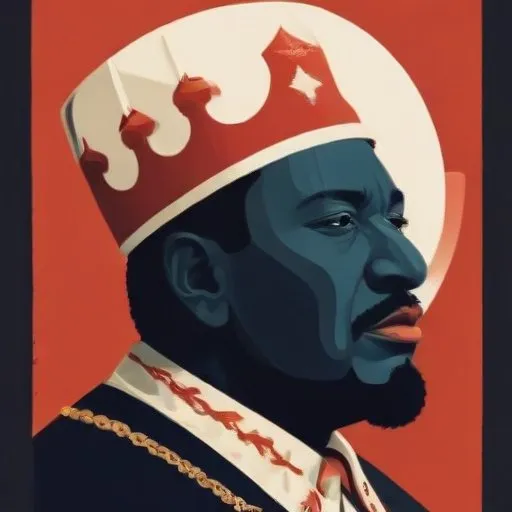
Ruler of Poland and Lithuania from 1492 to 1501, known for his military campaigns and territorial expansions. He also supported the arts and education, fostering a cultural renaissance.
John I Albert, also known as Jan I Olbracht, was a Polish king who reigned from 1492 to 1501, leaving a lasting legacy in Polish history. He is remembered for his bold attempts to strengthen royal authority, modernize the country, and expand its borders, earning him a place among the most notable rulers of the Jagiellonian dynasty.
John I Albert was born on December 27, 1459, to Casimir IV and Elizabeth of Austria, making him a direct descendant of the powerful House of Habsburg. His well-educated upbringing, under the tutelage of scholars like Johannes Longinus and Callimachus, prepared him for a life of leadership and diplomacy.
John I Albert's early years were marked by a series of military campaigns aimed at expanding Poland's borders and solidifying its position in Eastern Europe. In 1487, he led a successful expedition against the Ottoman Empire, defeating the Tatars of the Crimean Khanate and paving the way for future Polish-Ottoman Wars.
During his reign, John I Albert sought to modernize Poland, introducing reforms aimed at strengthening royal authority and limiting the influence of the Catholic Church. He also supported the arts and education, encouraging the spread of Renaissance ideas across the country.
Although his ambitions often exceeded his means, John I Albert's legacy is undeniable. He played a crucial role in shaping Poland's future, paving the way for his successors to build upon his foundation.
John I Albert's family life was marked by a complex web of alliances and rivalries. His attempts to usurp Hungary from his brother Vladislaus led to tension within the family, while his younger brother Alexander's election as Grand Duke of Lithuania temporarily broke the personal union between Poland and Lithuania.
John I Albert's reign was not without controversy. His aggressive expansionist policies and attempts to centralize power led to criticisms from the nobility and the Church, who saw him as a threat to their privileges.
Despite these criticisms, John I Albert remains an important figure in Polish history, remembered for his bravery, ambition, and vision for a stronger, more modern Poland.
John I Albert's life and reign serve as a testament to the complexities and challenges of ruling a nation, leaving behind a legacy that continues to shape Poland's identity to this day.
Born in 1520
The last Jagiellonian king of Poland and Grand Duke of Lithuania, who united the two countries and established a strong, centralized government, known for his diplomatic skills and cultural achievements.
Born in 1321
A 13th-century Italian nobleman who ruled Montferrat and led several military campaigns, including the Fifth Crusade. He's also known for his diplomatic efforts to unite the Latin Empire with the Byzantine Empire.
Born in 1452
The King of Naples who ruled from 1496 to 1501, known for his brief but tumultuous reign marked by conflicts with France and the Pope. He was eventually deposed and exiled.
Born in 1081
Reigned from 1108 to 1137, this king strengthened the French monarchy and expanded its territories through strategic marriages and military campaigns. He's also known for his patronage of the arts and architecture.
