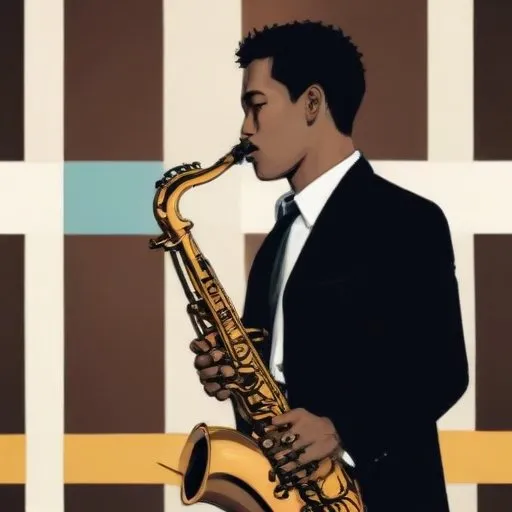
Sil Austin: The Saxophonist Who Brought Rock 'n' Roll to the Masses
A Legendary Career in Jazz and Beyond
Sil Austin was an American jazz saxophonist who made a name for himself in the music industry with his soulful and energetic performances. Best known for his hit singles "Danny Boy" and "Slow Walk," Austin's music career spanned over five decades, leaving an indelible mark on the jazz and rock 'n' roll genres.
Early Life and Career
Born on September 17, 1929, in Dunnellon, Florida, Austin taught himself to play the saxophone at the tender age of 12. His talent was soon recognized, and he won the Ted Mack Amateur Hour in St. Petersburg, Florida, in 1945, playing his signature tune "Danny Boy." This victory led to a recording contract with Mercury Records, and Austin moved to New York to study at the prestigious Juilliard School of Music.
Rise to Fame
Austin's music career took off in the 1950s, with his unique blend of jazz, rock, and pop. He recorded over 30 albums for Mercury Records, with many of his singles becoming Top 40 hits. His music was characterized by its energetic and infectious horn playing, which resonated with the youth of the time. Austin's sound was dubbed "rock 'n' roll" by many, although he himself described it as "exciting horn, honking horn, gutbucket horn."
Collaborations and Discography
Throughout his career, Austin collaborated with several notable musicians, including
Roy Eldridge,
Cootie Williams, and
Tiny Bradshaw. Some of his most notable albums include
Slow Walk Rock (1957),
Everything's Shakin' (1957), and
Battle Royal (1959), which featured saxophonist Red Prysock. Austin's discography is a testament to his prolific career, with over 30 albums to his name.
Legacy and Impact
Sil Austin's contribution to the world of jazz and rock 'n' roll is immeasurable. He was one of the first musicians to bring rock 'n' roll to the masses, paving the way for future generations of musicians. Austin's music continues to be celebrated and enjoyed by fans around the world, and his influence can be seen in the work of many modern-day musicians.
Awards and Honors
Austin's talent and contributions were recognized with several awards and honors, including a star on the Hollywood Walk of Fame.
Personal Life
Austin was married to his wife, Rev. Vernice Austin, for 52 years, until his passing on September 1, 2001, at the age of 71. He is survived by his wife, two daughters, nine grandchildren, and seven great-grandchildren.
Trivia and Fun Facts
- Austin's signature tune "Danny Boy" was recorded in 1949 and became an instant hit.
- He was known for his energetic live performances, which often featured him playing the saxophone while doing backflips and other acrobatic stunts.
- Austin was one of the first African American musicians to achieve mainstream success in the 1950s.
Conclusion
Sil Austin's legacy continues to inspire and influence musicians to this day. His unique blend of jazz, rock, and pop helped shape the sound of rock 'n' roll, and his energetic performances left an indelible mark on the music industry. As a testament to his contributions, Austin's music remains popular and relevant, even decades after his passing.
FAQ
What style of music did Sil Austin play on the saxophone?
Sil Austin was a renowned saxophonist known for his smooth, soulful playing style, particularly in the genres of R&B, jazz, and blues.
What is Sil Austins most famous song?
Sil Austins most famous song is Danny Boy, a soulful jazz rendition of the classic melody that has become a staple of his repertoire.
Did Sil Austin play with any notable musicians?
Yes, Sil Austin played with several notable musicians, including Ray Charles, Little Richard, and Sam Cooke, among others, during his extensive music career.
What instrument did Sil Austin primarily play?
Sil Austin was primarily a saxophonist, and his instrument of choice was the tenor saxophone, which he played with great finesse and expression.
What is Sil Austins legacy in the music world?
Sil Austins legacy in the music world is that of a soulful, versatile saxophonist who helped shape the sound of R&B and jazz in the mid-20th century.