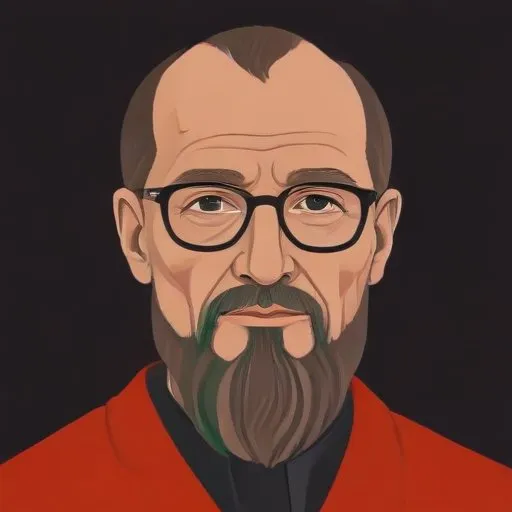
Stephan Praetorius: The Lutheran Theologian Who Shaped the Protestant Reformation
A Life Dedicated to Faith and Controversy
Stephan Praetorius, a German Lutheran theologian and pastor, is renowned for his unwavering commitment to the Protestant Reformation and his fervent critique of Jesuitism and Calvinism. Born on May 3, 1536, in Salzwedel, Margraviate of Brandenburg, Praetorius' life and work were characterized by his unrelenting passion for the sacraments and justification by faith, earning him both admiration and criticism from his contemporaries.
Early Life and Education
Praetorius received his education at the University of Rostock, where he later taught in local schools. His ordination by Agricola at Berlin in 1565 marked the beginning of his illustrious career as a preacher and pastor. He served as a preacher at the monastery of the Holy Ghost at Salzwedel and soon after became the deacon of the Church of St. Mary's. From 1569 until his death, Praetorius held the office of pastor in Salzwedel.
A Great Admirer of Martin Luther
Praetorius was deeply influenced by the teachings of
Martin Luther, and his work reflected a strong affinity for the German reformer's ideology. He emphasized the importance of the sacraments, albeit in a distinctly Lutheran sense, and advocated for justification by faith while stressing the need for purity of life.
Prtorianism and the Charges of Antinomianism and Perfectionism
Praetorius' unbridled enthusiasm for his beliefs led to accusations of antinomianism and perfectionism. The latter theory, which came to be known as Prtorianism, sparked controversy and criticism from his contemporaries. Despite these challenges, Praetorius' tracts, published by himself and his friends after 1570, exerted a profound influence far beyond his congregation.
The Prtorian Controversy
The publication of Praetorius' tracts led to a heated controversy, with Abraham Calovius attacking the view that the faithful possess salvation not only in prospect but in reality. This debate, known as the Prtorian controversy, highlighted the complex and often contentious nature of 16th-century theological discourse.
Legacy and Influence
Praetorius' work had a significant impact on the development of Lutheran theology, influencing notable figures such as Johann Arndt and Philipp Jakob Spener. His emphasis on the sacraments and justification by faith helped shape the Protestant Reformation, earning him a place among the prominent theologians of his century.
Writings and Hymns
Praetorius' tracts were later arranged in the form of dialogues by M. Statius in his
Geistliche Schatzkammer der Glubigen (Lneburg, 1636). These writings, including 14 hymns with their melodies, continue to inspire and educate to this day.
A Precursor to Pietism
Praetorius' emphasis on personal piety and the importance of a virtuous life foreshadowed the emergence of Pietism, a movement that would gain momentum in the 17th and 18th centuries.
A Global Vision for Christianity
Unlike many of his contemporaries, Praetorius exhorted Christianity to comply with the worldwide proclamation of the Gospel, demonstrating a forward-thinking and inclusive approach to faith.
A Life of Service and Controversy
Stephan Praetorius' life was marked by his unwavering dedication to his beliefs, his passion for theological discourse, and his commitment to serving his congregation. As we reflect on his life and work, we are reminded of the complexities and challenges of the Protestant Reformation, and the enduring influence of this remarkable theologian.
FAQ
What was Stephan Praetoriuss contribution to the Protestant Reformation?
Stephan Praetorius was a German theologian who played a significant role in the Protestant Reformation by advocating for the principles of Lutheranism.
What was Stephan Praetoriuss relationship with Martin Luther?
Stephan Praetorius was a close friend and collaborator of Martin Luther, and worked with him to promote the ideas of the Protestant Reformation.
What did Stephan Praetorius write about?
Stephan Praetorius wrote extensively on theology, particularly on the topics of justification, faith, and the sacraments.
What is Stephan Praetoriuss legacy in the Lutheran Church?
Stephan Praetoriuss legacy is one of a faithful servant of God who contributed significantly to the development of Lutheran theology.
How did Stephan Praetorius die?
Stephan Praetorius died on January 29, 1571, after a long illness, leaving behind a legacy of theological writings and contributions to the Protestant Reformation.