


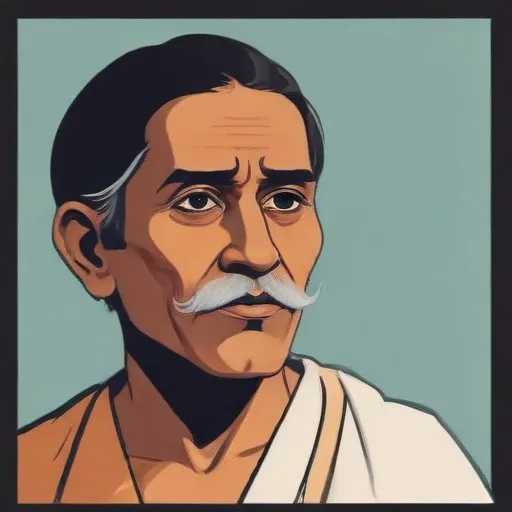
A celebrated Hindi poet and author, known for his romantic and nature-inspired works that explored themes of love, beauty, and the human condition.
Renowned for his romantic and nature-inspired poetry, Sumitranandan Pant is one of the most celebrated 20th-century poets of the Hindi language. His works are a testament to the beauty and flavor of rural India, showcasing his love for the country's natural splendor.
Born on May 20, 1900, in Kausal, Almora, Pant grew up in a financially stable family, with his father serving as the manager of a local tea garden and a landholder. This comfortable upbringing allowed Pant to focus on his education and passion for literature.
During his time at Queens College in Banaras (1918) and Muir College in Allahabad (1919), Pant was deeply influenced by the works of Sarojini Naidu, Rabindranath Tagore, and English Romantic poets. These literary giants shaped his writing style and perspective, which would later become a hallmark of his poetry.
Pant's poetry collection, Pallav (1926), catapulted him to literary fame, establishing him as a leading figure in the Hindi renaissance. This collection showcased his unique ability to merge romanticism with nature-inspired themes, cementing his position alongside other Hindi literary giants like Jaishankar Prasad.
In Pallav, Pant expressed his discontent with the Hindi language, which he believed was stagnant and in need of reform. He sought to create a new national language that would reflect the beauty and complexity of Indian culture.
Throughout his career, Pant continued to explore and experiment with various themes and styles. He drew inspiration from notable figures like Karl Marx, Mahatma Gandhi, and Aurobindo, incorporating their ideas and philosophies into his poetry.
Sumitranandan Pant's literary contributions have had a profound impact on the Hindi language and Indian literature as a whole. His romantic and nature-inspired poetry continues to inspire generations of readers and writers.
Through his works, Pant has left an indelible mark on Indian culture, celebrating the beauty and diversity of the country's natural landscape and people. His poetry serves as a testament to the power of literature to inspire and uplift, solidifying his position as one of the most celebrated poets of the 20th century.
Born in 1861
A Bengali polymath who wrote extensively on love, nature, and humanity, creating a unique blend of Indian and Western literary styles, and was the first non-European to win the Nobel Prize in Literature.
Born in 1879
A pioneering Indian poet and activist who used her lyrical voice to advocate for women's rights and Indian independence, leaving a lasting legacy in Indian literature and politics.
Born in 1899
A Bengali poet, author, and flute player who is revered as the national poet of Bangladesh, known for his powerful writings that inspired India's struggle for independence. His works are a testament to his love for humanity and freedom.
Born in 1907
A pioneering Hindi poet and women's rights activist, known for her powerful writings that challenged social norms and advocated for women's empowerment.
Born in 1889
A prominent figure in Hindi literature, known for his poetic and dramatic works that explored themes of love, nature, and Indian identity. His plays and poems are still widely studied and performed today.
Born in 1907
A renowned Hindi poet and author, known for his romantic and socially conscious writings that captivated India's literary scene, earning him a Padma Bhushan award.
