


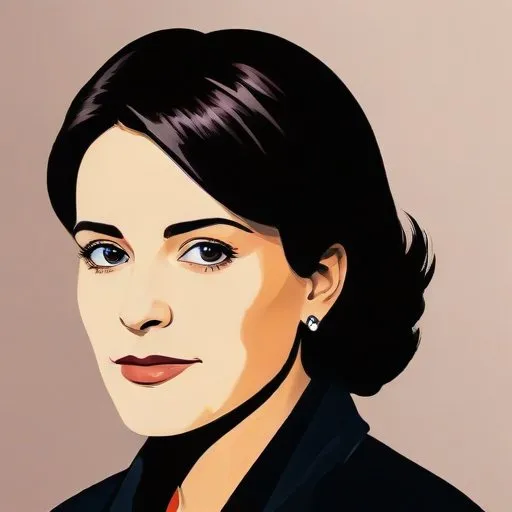
A prominent moral philosopher and cultural critic, known for exploring the intersection of ethics, politics, and culture, and writing about the importance of confronting evil and injustice.
Susan Neiman is a renowned American moral philosopher, cultural commentator, and essayist, known for her in-depth exploration of the intersection of Enlightenment moral philosophy, metaphysics, and politics. Her work has made significant contributions to the field, making her a prominent voice in both academic and public spheres.
Born on March 27, 1955, in Atlanta, Georgia, Neiman's early life was marked by a strong sense of social consciousness. She dropped out of high school to join the anti-Vietnam War movement, an experience that would shape her future endeavors. Later, she pursued philosophy at Harvard University, earning her Ph.D. under the guidance of esteemed philosophers John Rawls and Stanley Cavell.
Neiman's academic career has been marked by notable positions at esteemed institutions. She served as an assistant and associate professor of philosophy at Yale University from 1989 to 1996, followed by a stint as an associate professor of philosophy at Tel Aviv University from 1996 to 2000. In 2000, she assumed her current position as the Director of the Einstein Forum in Potsdam, Germany.
Neiman's most notable work is her book Evil in Modern Thought, which presents a comprehensive history of modern philosophy as a series of responses to the existence of evil. This seminal work has won prizes from PEN, the Association of American Publishers, and the American Academy of Religion.
Her other noteworthy works include Slow Fire: Jewish Notes from Berlin, a memoir that explores her experiences as a Jewish woman in 1980s Berlin. This work has been praised for its nuanced exploration of identity, culture, and politics.
Neiman's writings have been published in various esteemed publications, including The New York Times, The Boston Globe, Dissent, and German publications such as Die Zeit, Frankfurter Allgemeine Zeitung, and Freitag.
Her work has been recognized with numerous honors, including membership in the Institute for Advanced Study in Princeton, New Jersey, the Berlin-Brandenburg Academy of Sciences and Humanities, and the American Council of Learned Societies.
Neiman is the mother of three adult children and currently resides in Germany. Her life's work is a testament to her commitment to exploring the complex relationships between morality, politics, and culture.
Today, Susan Neiman remains a prominent figure in the world of philosophy, continuing to inspire and influence new generations of scholars and thinkers.
Born in 1724
Developed influential philosophical frameworks, such as the Critique of Pure Reason, that shaped modern Western thought on ethics, morality, and human understanding.
Born in 1905
Existentialist philosopher and playwright who argued that humans have complete freedom to choose their actions and create their own meaning in life, influencing modern thought on morality and individual responsibility.
Born in 1889
A German philosopher and academic who explored the meaning of existence, time, and human existence, influencing 20th-century philosophy with his concept of "Being-in-the-world".
Born in 1906
A 20th-century philosopher and theorist who explored the nature of power, politics, and humanity, particularly in the context of totalitarianism and the Holocaust.
Born in 1903
A critical theorist who critiqued modern society, culture, and capitalism, arguing that they perpetuate inequality and stifle individual freedom. His work influenced many fields, from sociology to musicology.
97 Years Old
A prominent thinker who developed the concept of "communicative action" and explored the relationships between power, language, and social structures, influencing modern critical theory and sociology.
95 Years Old
A philosopher who challenged traditional notions of objective truth and knowledge, arguing that they are shaped by language, culture, and social practices. He's known for his critiques of modern philosophy and his concept of "ironism."
