


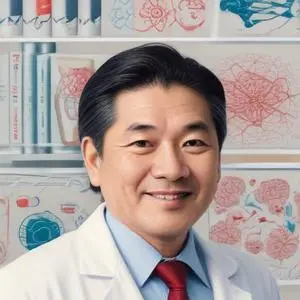
A Japanese biologist and immunologist who discovered the genetic mechanism of antibody diversity, leading to a deeper understanding of the immune system. His work has had a significant impact on the development of vaccines and treatments for diseases.
Susumu Tonegawa, a Japanese scientist, is renowned for his groundbreaking discovery of VDJ recombination, the genetic mechanism responsible for producing antibody diversity. This pioneering work earned him the Nobel Prize for Physiology or Medicine in 1987, cementing his status as a leading figure in the field of immunology.
Born on September 5, 1939, in Nagoya, Japan, Tonegawa's fascination with molecular biology began during his undergraduate studies at Kyoto University. Inspired by the work of Franois Jacob and Jacques Monod, he pursued his doctoral studies under Dr. Masaki Hayashi at the University of California, San Diego, where he received his Ph.D. in 1968.
Tonegawa's postdoctoral work at the Salk Institute in San Diego, under the guidance of Renato Dulbecco, marked the beginning of his transition from molecular biology to immunology. His subsequent move to the Basel Institute for Immunology in Switzerland in 1971 proved pivotal, as it was during this period that he conducted his landmark immunology studies.
In 1981, Tonegawa became a professor at the Massachusetts Institute of Technology (MIT), where he continued to advance our understanding of the immune system. His work led to the establishment of the MIT Center for Learning and Memory in 1994, which he directed until 2006. Today, he serves as a Picower Professor of Neuroscience and Biology and a Howard Hughes Medical Institute Investigator.
Tonegawa's Nobel Prize-winning discovery of VDJ recombination revealed the genetic mechanism responsible for generating the vast diversity of antibodies in the immune system. This breakthrough has had far-reaching implications for our understanding of immunology, enabling the development of novel therapeutic approaches and vaccines.
In the latter part of his career, Tonegawa shifted his focus to neuroscience, seeking to unravel the complexities of memory formation and retrieval. His work in this field has contributed significantly to our understanding of the molecular and cellular basis of memory, with potential applications in the treatment of neurological disorders.
Susumu Tonegawa's work has left an indelible mark on the fields of immunology and neuroscience. His discovery of VDJ recombination has enabled significant advances in our understanding of the immune system, while his contributions to the field of neuroscience continue to shed light on the intricate mechanisms underlying memory formation and retrieval.
As a pioneering scientist, Tonegawa's work has inspired generations of researchers, fostering a deeper understanding of the intricacies of human biology and driving innovation in the pursuit of novel therapeutic approaches.
Born in 1920
A physician and immunologist who discovered the major histocompatibility complex genes, leading to a deeper understanding of the immune system and organ transplantation. He was awarded the Nobel Prize in Physiology or Medicine in 1980.
Born in 1916
A Nobel Prize-winning immunologist and academic who discovered the genes that encode the major histocompatibility complex, revolutionizing organ transplantation and immunology research.
Born in 1926
A Nobel Prize-winning neurophysiologist who uncovered the inner workings of the visual cortex, revealing how the brain processes visual information. Their groundbreaking research revolutionized our understanding of the human brain.
Born in 1924
A Swedish neurophysiologist and academic who discovered the organization and function of the visual cortex, and was awarded the Nobel Prize in Physiology or Medicine in 1981 for his work on the brain's visual system.
Born in 1909
A pioneering neuroscientist who discovered the growth factor NGF, revolutionizing our understanding of cell growth and development, and leading to major breakthroughs in cancer and neurodegenerative disease research.
Born in 1922
A Nobel Prize-winning biochemist who discovered epidermal growth factor, a protein essential for cell growth and development, and pioneered the field of growth factor research.
97 Years Old
A pioneering neuroscientist and psychiatrist who unraveled the mysteries of memory and learning, earning a Nobel Prize for his groundbreaking work on the physiological basis of memory storage.
Born in 1923
A Swedish pharmacologist and physician who discovered the neurotransmitter dopamine's role in the brain, leading to major breakthroughs in Parkinson's disease treatment.
