


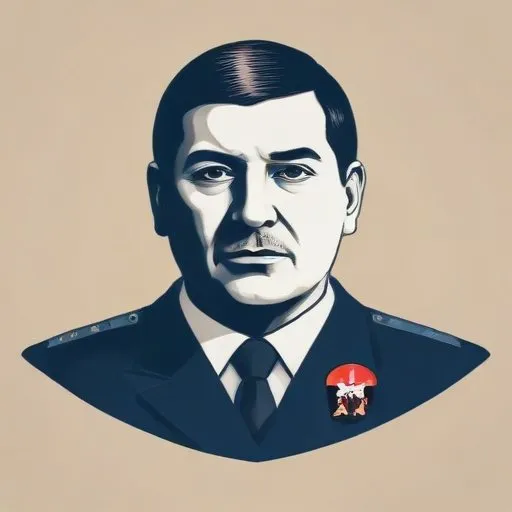
The last president of the State Union of Serbia and Montenegro, serving from 2003 to 2006, known for his efforts to reform the country and maintain unity. He played a key role in the country's transition to democracy.
Svetozar Marovi, a Montenegrin lawyer and politician, is best known for serving as the last head of state and head of government of Serbia and Montenegro from 2003 until Montenegro's declaration of independence in 2006. Throughout his career, he has been a prominent figure in Montenegrin politics, leaving an indelible mark on the country's history.
Marovi was born on March 31, 1955, in Kotor, Montenegro, to Jovo Marovi and Ivana Marovi (née Pavić). His father, a native of the Grbalj region, instilled in him a strong sense of duty and public service. Marovi's educational journey began in his hometown, where he completed his elementary and high school education. He then pursued a degree in law from the Veljko Vlahović University's Faculty of Law in Titograd (now Podgorica).
Marovi's entry into politics was marked by his role as a paralegal in the local parliament of Budva. He quickly rose through the ranks, becoming the President of the Socialist Youth Union of Budva and later, the President of the Socialist Youth Union of Montenegro. His early years in politics were marked by controversy, including an outdoor meeting of the presidency where he spoke out against the old guard of the party, as well as the publication of a brochure titled "Stop Electoral Fraud" in 1984.
In the late 1980s, Marovi became the Administrator of Public Revenues in Budva, where he oversaw the renovation of the town following the devastating earthquake of 1979. During this period, he launched the Theatre City Budva project in 1987, a cultural initiative aimed at promoting arts and culture in the region.
In January 1989, Marovi, along with his partners, Momir Bulatović, seized power over the Socialist Republic of Montenegro, marking a significant shift in the country's political landscape. This event marked the beginning of Marovi's ascendance to the top echelons of Montenegrin politics.
Marovi's later years in politics were marred by controversy, including allegations of corruption, which led to his arrest in 2015. His family's assets were frozen in 2017, and he was eventually found guilty of corruption charges. Marovi currently resides in Serbia, where he fled before his extradition was requested by Montenegro. In 2022, he was added to the US Treasury's Specially Designated Nationals List of individuals facing Balkans-related sanctions.
Marovi's contributions to Montenegrin politics and culture have been recognized through various awards and honors, including his appointment as President of the Socialist Youth Union of Montenegro and later, his role as President of the local government in Budva.
Despite the controversies that have surrounded him, Svetozar Marovi remains an important figure in Montenegrin history, leaving behind a legacy that continues to shape the country's political and cultural landscape.
84 Years Old
The first President of Serbia, a mastermind behind the Yugoslav Wars, and a key figure in the Kosovo conflict, known for his nationalist and authoritarian rule.
68 Years Old
A Serbian psychologist and politician who served as the 16th President of Serbia, known for his efforts to reform the country's education system and promote democratic values. He played a key role in Serbia's transition from a one-party to a multi-party system.
60 Years Old
A Serbian journalist and politician who served as the 95th Prime Minister of Serbia, known for his leadership during a tumultuous period in the country's history. He implemented economic reforms and navigated Serbia's path towards EU membership.
