


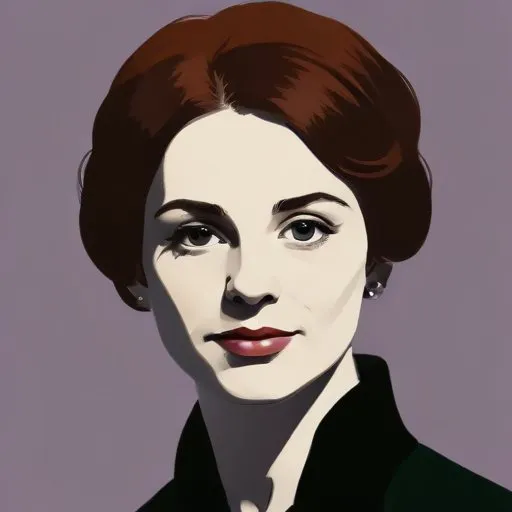
A pioneering female writer of Gothic novels and poetry, known for her vivid descriptions of Irish life and politics. Her works often explored themes of identity, nationality, and social class.
Sydney, Lady Morgan, was a trailblazing Irish novelist, best known for her romantic and protofeminist novel, The Wild Irish Girl, published in 1806. This influential work, with its political and patriotic overtones, cemented her position as a leading literary figure of her time.
Sydney Owenson, later Lady Morgan, was born on December 25, 1781, to Robert Owenson, a professional actor, and Jane Hill, in Ireland. Her early life was marked by a nomadic existence, with her family frequently moving between Dublin, Drumcondra, and Sligo, as her father performed in various theatres. Sydney's mother, Jane, played a significant role in her early education, which was later supplemented by tutoring from a young prodigy, Thomas Dermody. After her mother's death in 1789, Sydney was sent to private schools to complete her education, including a Huguenot academy at Clontarf and a finishing school in Earl Street, Dublin.
Sydney's literary career was marked by controversy and censorship, yet she remained undeterred, producing a prolific body of work that spanned novels, travelogues, and poetry. Her novel, The Wild Irish Girl, is considered a seminal work, exploring themes of nationalism, identity, and feminism. The book's success was swift, with critics praising its originality and depth. Sydney's other notable works include Florence Macarthy (1818) and The O'Briens and the O'Flahertys (1827), which further solidified her reputation as a leading novelist of her time.
Sydney's work sparked intense debate and controversy, with some critics accusing her of promoting Catholic nationalism and others praising her for her progressive views on women's rights. Despite the backlash, she counted prominent literary figures, such as Percy Bysshe Shelley and Lord Byron, among her defenders. Her travelogues, particularly France (1817) and Italy (1821), were criticized for their perceived bias and inaccuracy, yet they remain important testimonies to her experiences as a woman traveling alone in Europe.
In 1812, Sydney married Sir Charles Morgan, a knight of the Order of the Garter, and subsequently became Lady Morgan. The couple had two sons, and Sydney's marriage brought her both financial security and social standing. Her personal relationships were marked by her strong will and independence, which often put her at odds with her contemporaries. Despite this, she maintained close friendships with prominent literary figures, including Mary Shelley and Lady Blessington.
Sydney, Lady Morgan's, literary legacy is multifaceted and far-reaching. She played a significant role in shaping the romantic novel, and her protofeminist ideas paved the way for later generations of women writers. Her travelogues and novels continue to be studied by scholars and readers alike, offering valuable insights into the social, political, and cultural landscape of 19th-century Europe. As a pioneering Irish novelist, Sydney, Lady Morgan, remains an important figure in the literary canon, her works continuing to inspire and influence writers to this day.
"I am a wild Irish girl, and I will not be tamed."
Sydney, Lady Morgan's, life and work are inextricably linked to the tumultuous political and social landscape of 19th-century Ireland and Europe. Her writing reflects the complexities and contradictions of her time, offering a unique perspective on the struggles and triumphs of women, nationalists, and artists. As a testament to her enduring legacy, Sydney, Lady Morgan, remains an important figure in Irish literary history, her works continuing to captivate and inspire audiences today.
In recognition of her literary achievements, Sydney, Lady Morgan, was awarded a royal pension in 1837, a testament to her contribution to Irish literature and culture.
Born in 1771
A renowned author of historical novels, plays, and poetry, credited with creating the genre of historical fiction and influencing the development of the novel as a literary form.
Born in 1788
Romantic poet and playwright celebrated for passionate, expressive works that explored themes of love, freedom, and the human condition.
Born in 1797
Author of Gothic novels, particularly the iconic "Frankenstein", which has become a cultural phenomenon and influenced countless adaptations and reinterpretations.
Born in 1792
Romantic-era writer of lyrical poetry and Gothic dramas that explored the human condition, freedom, and the beauty of nature.
Born in 1795
Romantic poet celebrated for sensual language and vivid imagery, capturing the beauty of nature and human experience in odes like "To Autumn" and "Ode to a Nightingale".
Born in 1759
A pioneering advocate for women's rights and education, this 18th-century thinker wrote influential works that shaped feminist philosophy and literature.
Born in 1770
A major Romantic poet, known for his focus on nature, emotion, and the human experience, creating works that evoke a sense of wonder and connection to the natural world.
Born in 1772
A leading figure of the Romantic movement, he crafted vivid, imaginative poetry and explored the human experience through his writing and philosophical ideas. His works continue to inspire and influence literature and art to this day.
