


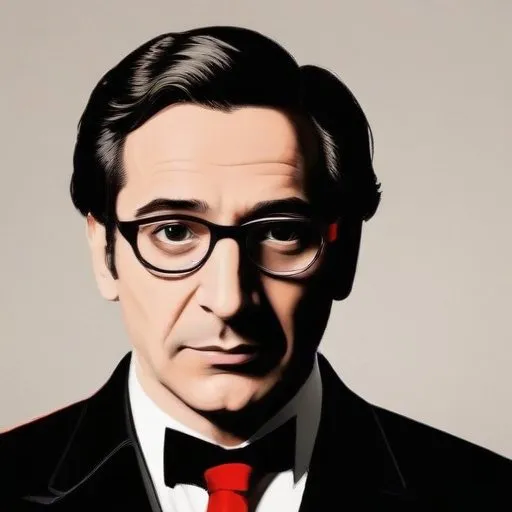
A French-Austrian composer who blended late Romanticism with early 20th-century modernism, creating operas and symphonic works that showcased his unique style. His music often featured complex harmonies and innovative orchestration.
Sylvio Lazzari, born Josef Fortunat Silvester Lazzari, was a renowned French composer of Austrian and Italian origin, best known for his operas and chamber music that showcased his unique blend of cyclic structures, Wagnerian influence, and impressionist nuances. His most celebrated opera, La Lépreuse, first performed in 1912, remains a testament to his mastery of musical composition, despite being criticized for its naturalistic libretto.
Born on December 30, 1857, in Bolzano, then part of the Austro-Hungarian Empire, Lazzari moved to Paris in 1882 after studying law in Austria. At the Paris Conservatory, he studied under the esteemed composers Ernest Guiraud and César Franck, whose influences would shape his musical style.
Encouraged by Ernest Chausson and Franck, Lazzari settled permanently in France, obtaining French citizenship in 1896. He held several official positions in Paris, including president of the Wagner Society from 1894 and choirmaster at the Opéra de Monte-Carlo. Lazzari's use of cyclic structures was indebted to Franck, while his operas and impressionist influences reflected the era's musical trends.
Lazzari's operas, including La Lépreuse, Au bois de Misère, and Fête bretonne, drew inspiration from Brittany, incorporating Breton plots and folksongs. Although his operas were highly praised for their musical content, they were often criticized for their naturalistic librettos.
Lazzari's chamber music, including his Piano Trio, Op. 13, String Quartet, Op. 17a, and Violin Sonata, Op. 24, showcased his mastery of intimate, expressive compositions. His orchestral works, such as the Symphony in E-flat major, Rapsodie for violin and orchestra, and Suite in F major, Op. 23, demonstrated his ability to create grand, sweeping scores.
Although Lazzari's works fell into relative obscurity after his death in 1944, his chamber music has experienced a revival in recent years. His unique blend of influences and innovative compositional style continue to inspire contemporary musicians and composers.
Sylvio Lazzari's life and works serve as a testament to the rich cultural heritage of France and its intersections with Austrian and Italian influences. His unique compositional style continues to fascinate audiences and inspire future generations of musicians and composers.
Born in 1835
A French Romantic-era mastermind who composed iconic works like "The Carnival of the Animals" and "Danse Macabre", leaving an indelible mark on classical music.
Born in 1822
A Belgian organist and composer who created iconic works that blended Romanticism and Impressionism, leaving a lasting impact on classical music.
Born in 1845
A renowned French pianist, composer, and educator, he is most known for his romantic and impressionistic compositions, particularly his Requiem and nocturnes.
Born in 1803
A French Romantic-era mastermind who composed iconic symphonies, operas, and orchestral works, revolutionizing classical music with his bold, expressive style.
Born in 1811
A virtuosic pianist and composer who revolutionized classical music with his technically demanding and emotionally expressive works, blending Hungarian folk influences with Romantic-era drama.
Born in 1813
A revolutionary composer who transformed opera with his epic, mythological works, creating a new era of musical storytelling. His iconic operas, such as "Der Ring des Nibelungen," continue to captivate audiences worldwide.
Born in 1813
A renowned composer of iconic operas like La Traviata and Aida, known for his masterful blending of drama and music. His works continue to captivate audiences worldwide.
