


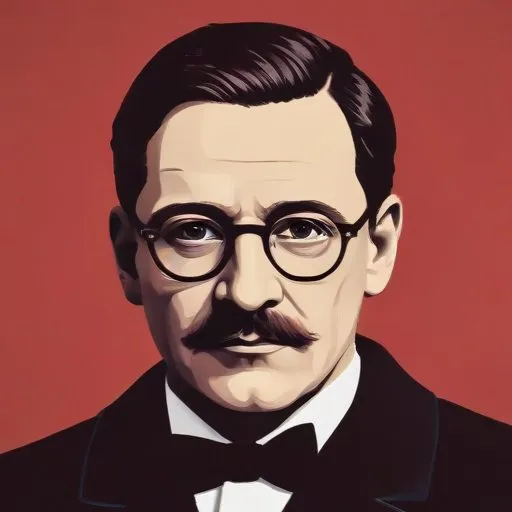
Developed methods for synthesizing organic compounds, including the discovery of diazo compounds, and made significant contributions to the field of organic chemistry.
Theodor Curtius is renowned for his groundbreaking contributions to the field of chemistry, particularly for his discovery of the Curtius rearrangement, a fundamental reaction in organic chemistry that has far-reaching implications for the synthesis of complex molecules. Additionally, he is credited with the discovery of diazoacetic acid, hydrazine, and hydrazoic acid, further solidifying his reputation as a trailblazer in the world of chemistry.
Theodor Curtius was born on May 27, 1857, in Duisburg, Germany. He pursued his passion for chemistry, studying under the guidance of Robert Bunsen at Heidelberg University and later with Hermann Kolbe at Leipzig University. In 1882, Curtius earned his doctorate from Leipzig University, marking the beginning of his illustrious career.
Curtius' academic journey took him to various prestigious institutions, including the University of Munich, where he worked under Adolf von Baeyer, and the University of Erlangen, where he directed the analytical chemistry department. In 1897, he succeeded the renowned August Kekulé as Professor of Chemistry at Bonn University, and later, in 1898, he returned to Heidelberg University, where he remained until his retirement in 1926.
During his tenure, Curtius made significant contributions to the field of chemistry, including the discovery of diazoacetic acid, hydrazine, and hydrazoic acid. His most noteworthy achievement, however, is the Curtius rearrangement, a reaction that has become a cornerstone of organic chemistry. This process involves the decomposition of acyl azides to form isocyanates, which has far-reaching implications for the synthesis of complex molecules.
Beyond his academic pursuits, Curtius was an avid mountaineer and composer. He founded the Kiel section of the Association of German and Austrian Alpinists in 1894, and his love for music led him to compose and sing in concerts. His friendship with Christian Klucker, a renowned alpinist guide, took him on many mountaineering hikes throughout his life.
In recognition of his outstanding contributions to chemistry, Curtius was appointed Geheimer Regierungsrat (Privy Councillor) in 1895. This prestigious title was a testament to his dedication and commitment to the field of chemistry.
Theodor Curtius' groundbreaking work has had a lasting impact on the field of chemistry. The Curtius rearrangement, in particular, has paved the way for the synthesis of complex molecules, which has far-reaching implications for the development of pharmaceuticals, materials, and other innovative technologies.
Today, Curtius is remembered as a pioneering chemist who not only made significant contributions to the field but also inspired future generations of scientists to explore the wonders of chemistry.
Born in 1868
Developed a process to synthesize ammonia, revolutionizing agriculture and warfare, and was awarded the Nobel Prize in Chemistry in 1918.
Born in 1879
A pioneering nuclear chemist who discovered nuclear fission, a process that releases massive energy from atomic nuclei, and was awarded the Nobel Prize in Chemistry in 1944.
Born in 1878
Pioneering physicist who made groundbreaking contributions to nuclear physics, including the discovery of nuclear fission, and was the first woman to become a full professor of physics in Germany.
Born in 1879
A brilliant physicist who developed the theory of relativity and is considered one of the most influential scientists of the 20th century, known for his groundbreaking work in physics and mathematics.
Born in 1867
A pioneering scientist who pioneered radioactivity research, discovering elements polonium and radium, and paving the way for breakthroughs in medicine and energy.
Born in 1901
A pioneer in quantum mechanics, he formulated the uncertainty principle, which revolutionized our understanding of the atomic world. His groundbreaking work reshaped modern physics.
Born in 1885
A pioneer in quantum mechanics, he introduced the concept of wave-particle duality, revolutionizing our understanding of atomic structure. His philosophical approach to science also explored the nature of reality and human understanding.
