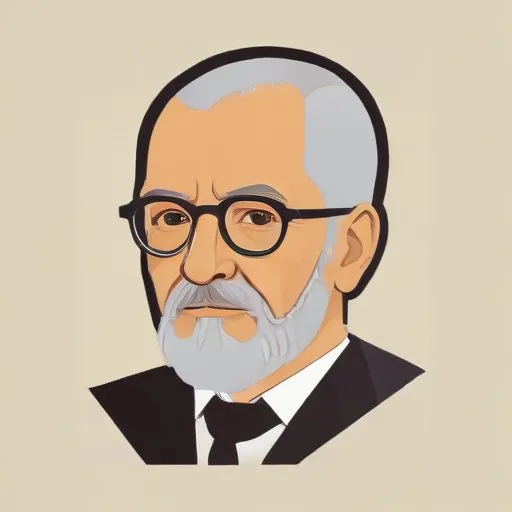
Theodor Escherich: The Pediatrician Who Uncovered the Secrets of E. coli
A Legacy of Discovery
Theodor Escherich, a German-Austrian pediatrician, is renowned for his groundbreaking discovery of the bacterium Escherichia coli, commonly known as E. coli. This significant finding has had a profound impact on the field of medicine, allowing for a deeper understanding of the causes of various diseases and the development of effective treatments.
Early Life and Education
Born on November 29, 1857, in Ansbach, Germany, Escherich was the younger son of Ferdinand Escherich, a medical statistician. After the death of his mother when he was just five years old, Escherich was raised by his father and stepmother. He attended a Jesuit boarding school in Feldkirch, Austria, before completing his secondary education in Würzburg, Germany.
Medical Career and Achievements
Escherich's medical career spanned over three decades, during which he made significant contributions to the field of pediatrics. After completing his medical studies at the University of Würzburg, he worked under the guidance of Carl Jakob Adolf Christian Gerhardt, a renowned internist. In 1882, Escherich was awarded his medical doctorate, and soon after, he began his research on bacteriology at the St. Anna Children's Clinic in Vienna.
Discovery of E. coli
Escherich's most notable achievement was the discovery of E. coli in 1885. While working at the St. Anna Children's Clinic, he isolated the bacterium from the feces of healthy individuals, leading to a fundamental shift in the understanding of the human gut microbiome. This discovery enabled him to develop new diagnostic techniques and treatments for various diseases, including diarrhea and urinary tract infections.
Influence on Modern Medicine
Escherich's work has had a lasting impact on modern medicine. His discovery of E. coli has led to a greater understanding of the role of bacteria in human health and disease. Additionally, his research has paved the way for the development of vaccines, antibiotics, and other treatments for bacterial infections.
Legacy and Honors
Throughout his career, Escherich received numerous honors and accolades for his contributions to medicine. He was appointed as a professor of pediatrics at the University of Graz and later at the University of Vienna. In recognition of his work, the bacterium he discovered was named Escherichia coli in his honor.
Personal Life and Milestones
Escherich's personal life was marked by significant milestones. He married twice and had three children. Despite his busy schedule, he was known for his dedication to his patients and his passion for research.
Timeline of Major Works and Events
- 1857: Born in Ansbach, Germany
- 1876: Completed secondary education in Würzburg, Germany
- 1881: Completed medical studies at the University of Würzburg
- 1882: Awarded medical doctorate
- 1885: Discovered E. coli
- 1890: Appointed as professor of pediatrics at the University of Graz
- 1902: Appointed as professor of pediatrics at the University of Vienna
- 1911: Passed away on February 15
Conclusion
Theodor Escherich's groundbreaking discovery of E. coli has left an indelible mark on the field of medicine. His tireless efforts to understand the human gut microbiome have paved the way for significant advancements in the diagnosis and treatment of diseases. As a pioneering pediatrician, Escherich's legacy continues to inspire generations of researchers and medical professionals.
FAQ
What is Theodor Escherich known for in the field of pediatrics?
Theodor Escherich discovered the bacterium Escherichia coli, which bears his name, and made significant contributions to the understanding of pediatric diseases, particularly in the areas of bacteriology and immunology.
What was Theodor Escherichs contribution to the development of bacteriology?
Escherichs work on E. coli led to a greater understanding of the role of bacteria in disease, paving the way for advances in bacteriology and the development of vaccines.
What awards did Theodor Escherich receive?
Escherich received the Robert Koch Prize and the Emil Fischer Medal for his contributions to bacteriology and pediatrics.
What is Theodor Escherichs connection to the University of Vienna?
Escherich was a professor of pediatrics at the University of Vienna, where he conducted much of his research and taught future generations of pediatricians.
How did Theodor Escherichs work impact the field of pediatrics?
Escherichs discoveries and research laid the foundation for modern pediatric care, shaping our understanding of bacterial diseases and informing the development of treatments for children.