


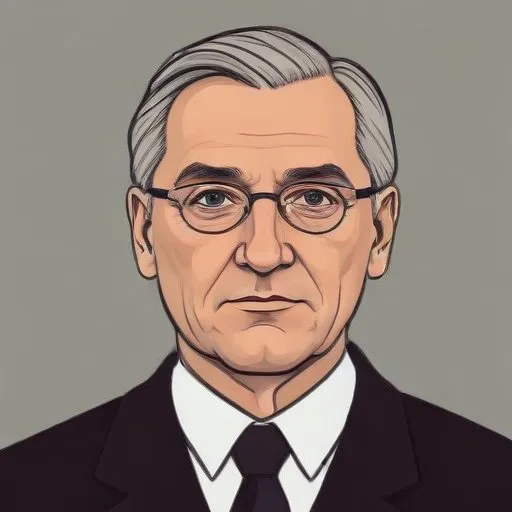
German lawyer and politician who served as Federal Minister of Finance, known for his role in shaping the country's economic policy and introducing the Euro currency.
Theodor Waigel is widely regarded as the mastermind behind Germany's remarkable economic revival in the 1990s, dubbed the "Waigel Plan." As the Federal Minister of Finance from 1989 to 1998, Waigel implemented a series of far-reaching reforms that propelled Germany into a period of unprecedented growth and prosperity.
Born on April 22, 1939, in Uffing am Staffelsee, Bavaria, Germany, Waigel grew up in a family of modest means. He studied law and economics at the University of Munich, earning his doctorate in 1967.
Waigel's entry into politics began in the 1970s, when he joined the Christian Social Union (CSU), a conservative party in Bavaria. He quickly rose through the ranks, becoming a member of the German Bundestag in 1976. In 1989, he was appointed Federal Minister of Finance by Chancellor Helmut Kohl, a position he would hold for nearly a decade.
In response to Germany's stagnant economy and high unemployment, Waigel devised a comprehensive plan to stimulate growth and reduce debt. The plan involved a combination of budget cuts, tax reforms, and investments in infrastructure and education. The results were nothing short of spectacular, with Germany's economy growing by over 3% annually during the 1990s.
Waigel's economic reforms had a profound impact on modern Germany, laying the foundations for the country's current status as a global economic powerhouse. His legacy extends beyond Germany, as his policies have inspired economic reforms in other European countries.
Waigel is a strong advocate for conservative economic policies, emphasizing the importance of fiscal discipline, low taxes, and investment in human capital. He has also been a vocal proponent of European integration, believing that closer economic ties between European nations are essential for prosperity and stability.
Waigel is known for his strong working relationships with other European leaders, including Chancellor Helmut Kohl and French President François Mitterrand. He has also been praised for his folksy, down-to-earth demeanor, often regaling colleagues with stories of his Bavarian upbringing.
Waigel's policies have not been without controversy, with some critics accusing him of prioritizing economic growth over social welfare. However, his popularity among the German people has endured, with many regarding him as a champion of German economic interests.
"A strong economy is the best social policy."
This quote, often attributed to Waigel, encapsulates his commitment to fiscal responsibility and economic growth.
Waigel's reforms occurred against the backdrop of a rapidly changing Europe, as the Soviet Union's collapse and German reunification presented new challenges and opportunities. His legacy continues to shape German economic policy, with many regarding him as one of the most influential finance ministers in German history.
96 Years Old
The first unified Germany's leader, who oversaw the country's reunification after the Berlin Wall's fall, and is credited with creating a strong, stable economy.
82 Years Old
The 7th Chancellor of Germany, a lawyer-turned-politician, led the country from 1998 to 2005, implementing significant economic and social reforms. He's known for his efforts to modernize Germany and strengthen the European Union.
72 Years Old
The first female Chancellor of Germany, serving for 16 years, known for her leadership during the European sovereign-debt crisis and her role in shaping the European Union's policy. She's a highly influential figure in modern politics.
81 Years Old
A German politician who served as Vice-Chancellor of Germany from 1991 to 1992 and was a prominent figure in the Free Democratic Party. He's known for his controversial statements and scandals that led to his resignation.
85 Years Old
A German lawyer and politician who served as Minister President of Bavaria, known for his conservative policies and efforts to strengthen regional autonomy. He played a key role in shaping Bavaria's economy and politics.
