


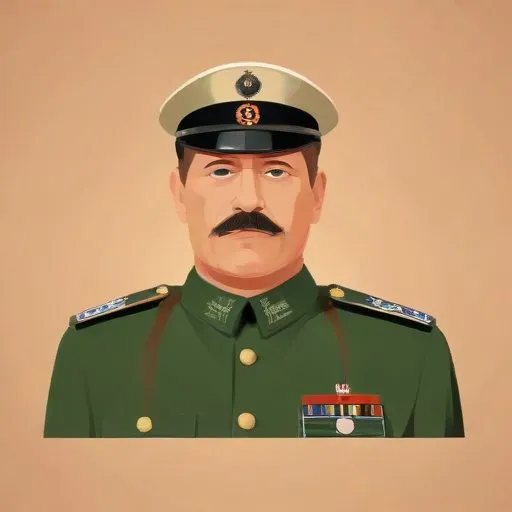
A German politician who served as Vice-Chancellor of Germany from 1991 to 1992 and was a prominent figure in the Free Democratic Party. He's known for his controversial statements and scandals that led to his resignation.
Jrgen Mllemann, a prominent German politician, is best known for his influential roles in the German government, including Minister of State at the Foreign Office, Minister of Education and Research, Minister of Economics, and Vice Chancellor of Germany. Throughout his remarkable career, Mllemann made significant contributions to shaping Germany's political landscape, earning him a reputation as a key figure in modern German politics.
Born on July 15, 1945, in Augsburg, Bavaria, Germany, Mllemann took his Abitur in 1965 and went on to serve as a paratrooper in the Bundeswehr. He then studied to become a teacher of German, sports, and history at the Pdagogische Hochschule in Mnster from 1966 to 1969. This educational background laid the foundation for his future success in politics.
Mllemann's political career began in 1962 when he joined the Christian Democratic Union (CDU). However, he later switched to the Free Democratic Party (FDP) in 1970. He was first elected to the Bundestag in 1972, a position he held until 2000 and again from 2002 to 2003. Within the FDP, Mllemann held various leadership positions, including president of the FDP in North Rhine-Westphalia from 1983 to 1994 and again from 1996 to 2002.
Under Chancellor Helmut Kohl, Mllemann occupied several cabinet positions. From 1982 to 1987, he served as Minister of State at the Foreign Office, where he played a crucial role in shaping Germany's foreign policy. He then went on to serve as Minister of Education and Research from 1987 to 1991, focusing on education reform and innovation. In 1991, Mllemann became Minister of Economics, a position he held until 1993. During this period, he worked to stimulate Germany's economy and promote economic growth.
One of Mllemann's most notable roles was as Vice Chancellor of Germany from 1992 to 1993. During this time, he worked closely with Chancellor Kohl to implement key policies and legislation.
In 1993, Mllemann faced criticism for using an official letterhead for advertising a relative's business idea, known as the "Briefbogen-Affäre." This controversy led to his resignation from the cabinet. However, Mllemann continued to be involved in politics, serving as president of the Deutsch-Arabische Gesellschaft (German-Arabic Society) from 1981 to 1991 and again from 1993 until his death in 2003.
In the 2002 federal election, Mllemann created a stir with a flyer criticizing Israeli Prime Minister Ariel Sharon's actions against Palestinians. This event sparked controversy and debate within Germany and beyond.
Jrgen Mllemann's remarkable career in German politics has left a lasting impact on the country's development and growth. His contributions to education, economics, and foreign policy continue to shape Germany's political landscape. Through his leadership positions and committee work, Mllemann demonstrated his dedication to public service and his commitment to promoting Germany's interests.
Although Mllemann faced controversies and challenges throughout his career, his legacy serves as a testament to his unwavering commitment to German politics and his role as a leading figure in modern German history.
"Politics is not about being right, it's about doing what is right."
This quote, often attributed to Mllemann, reflects his commitment to public service and his dedication to making a positive impact on German politics.
Mllemann's career coincided with a period of significant change and growth in Germany. His contributions to education, economics, and foreign policy must be considered within the context of Germany's reunification and its emergence as a major player on the global stage.
When compared to his contemporaries, Mllemann's leadership style and policy initiatives demonstrate a unique blend of liberal and pragmatic approaches. His ability to navigate complex political landscapes and build coalitions has earned him a reputation as a skilled and effective politician.
Mllemann's contributions to German politics and public service were recognized through various awards and honors, including:
96 Years Old
The first unified Germany's leader, who oversaw the country's reunification after the Berlin Wall's fall, and is credited with creating a strong, stable economy.
Born in 1915
A prominent post-war German politician who served as Minister President of Bavaria and played a key role in shaping the country's conservative politics. He was also a strong advocate for European integration.
99 Years Old
A German statesman who served as Vice-Chancellor and Foreign Minister, playing a key role in reunifying Germany and shaping European politics. He's known for his diplomatic efforts and advocacy for human rights.
82 Years Old
The 7th Chancellor of Germany, a lawyer-turned-politician, led the country from 1998 to 2005, implementing significant economic and social reforms. He's known for his efforts to modernize Germany and strengthen the European Union.
72 Years Old
The first female Chancellor of Germany, serving for 16 years, known for her leadership during the European sovereign-debt crisis and her role in shaping the European Union's policy. She's a highly influential figure in modern politics.
84 Years Old
A German lawyer and politician who served as Minister President of Bavaria, known for his conservative policies and efforts to strengthen regional autonomy. He played a key role in shaping Bavaria's economy and politics.
