


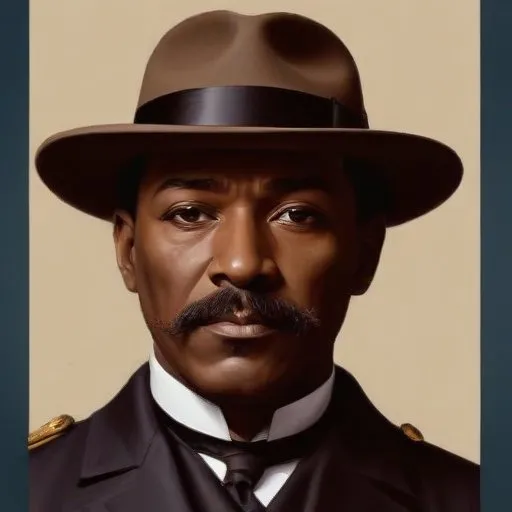
A Confederate general during the American Civil War, known for his failures and controversies, particularly his role in the Siege of Petersburg.
Theophilus H. Holmes was a prominent figure in the American Civil War, renowned for leading the largest army in the Confederacy. As a trusted commander of the Confederate States Army, he played a crucial role in several pivotal battles, earning him a reputation as a skilled and fearless military leader.
Born on November 13, 1804, in Sampson County, North Carolina, Holmes was the son of a planter family. He graduated from the United States Military Academy at West Point in 1829, ranking 44th out of 46 cadets. Despite his mediocre academic performance, Holmes went on to serve in the United States Army during the Seminole Wars and the Mexican-American War, where he was brevetted for gallantry.
When the American Civil War broke out, Holmes resigned from the United States Army and joined the Confederate States Army. He quickly rose through the ranks, becoming a brigadier general in June 1861. Holmes played a key role in the Battle of Bull Run, the first major land battle of the war, and was promoted to major general in October 1861. He went on to command the Confederate Army of the Trans-Mississippi Department, the largest army in the Confederacy, comprising over 50,000 soldiers.
As commander of the Army of the Trans-Mississippi, Holmes led several campaigns and battles, including:
Holmes married Laura Wetmore Hawkins in 1842, and they had two daughters together. Despite his military prowess, he struggled with personal demons, including depression and a penchant for heavy drinking. After the war, Holmes returned to North Carolina, where he practiced law and served as a judge. He died on June 20, 1880, and was buried in the family cemetery in Sampson County.
Holmes' military career was marked by a series of strategic blunders and defeats, which ultimately contributed to the Confederacy's downfall. Despite this, he remains an important figure in American history, offering valuable insights into the complexities of the Civil War. His legacy serves as a testament to the turmoil and uncertainty of the time, as well as the bravery and sacrifice of those who fought on both sides of the conflict.
Holmes' military career is often compared to that of his contemporaries, including Robert E. Lee and P.G.T. Beauregard. While he lacked the strategic brilliance of Lee, Holmes possessed a similar level of bravery and tactical expertise. His leadership style, however, was more erratic and impulsive than Beauregard's, often leading to costly mistakes on the battlefield.
Did you know that Holmes was known for his love of poetry and literature? He was an avid reader and even wrote his own poetry, often inspired by his military experiences. Holmes was also a fervent supporter of states' rights and secession, believing that the South had a distinct cultural identity that warranted independence from the North.
Holmes received several awards and honors for his military service, including:
In conclusion, Theophilus H. Holmes was a complex and multifaceted figure, whose military career was marked by both triumph and tragedy. While his legacy is often overshadowed by more prominent Confederate generals, Holmes remains an important and fascinating figure in American history, offering a unique perspective on the tumultuous era of the Civil War.
Born in 1807
Led the Confederate States Army during the American Civil War, surrendering to Union forces at Appomattox, marking the war's effective end.
Born in 1822
Led the Union Army to victory in the Civil War and later became President, known for issuing the Emancipation Proclamation and strengthening federal authority.
Born in 1820
A renowned Union general during the American Civil War, he's infamous for his scorched earth tactics and march through the Confederacy, leaving destruction in his wake.
Born in 1815
Led the Union Army to victory in the Battle of Gettysburg, a turning point in the American Civil War, and later oversaw the construction of the Washington Aqueduct.
Born in 1824
A Union general during the American Civil War, known for his distinctive sideburns and leading the Army of the Potomac to a disastrous defeat at the Battle of Fredericksburg.
Born in 1831
A Confederate general during the American Civil War, known for his bravery and aggressive tactics, but also criticized for his reckless decisions that led to devastating defeats.
Born in 1821
A Confederate general during the American Civil War, later serving as a diplomat and ambassador to Turkey, known for his military strategies and post-war reconciliation efforts.
Born in 1824
A Confederate general during the American Civil War, he's renowned for his unconventional tactics and bravery, earning him a legendary status among military historians.
