


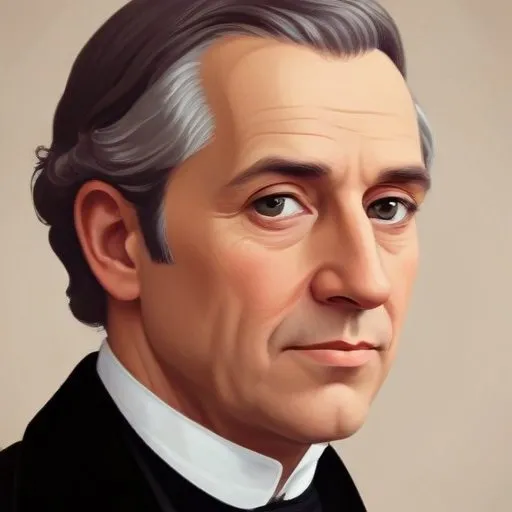
An English physician and philanthropist who edited Shakespeare's works to remove "objectionable" content, creating a more family-friendly version, and inadvertently popularizing the term "bowdlerize" to describe censorship.
Thomas Bowdler, a name synonymous with censorship, is often maligned for his zealous editing of William Shakespeare's plays to make them suitable for 19th-century women and children. His 1818 publication, The Family Shakespeare, sparked a controversy that would forever etch his name in the annals of literary history.
Born on July 11, 1754, in Box, near Bath, Somerset, Thomas Bowdler was the youngest of six children to Thomas Bowdler, a banker, and his wife, Elizabeth. He pursued his passion for medicine at the universities of St Andrews and Edinburgh, graduating in 1776 with a thesis on intermittent fevers. His curiosity led him to travel extensively across continental Europe, visiting Germany, Hungary, Italy, Sicily, and Portugal, where he contracted a fever in Lisbon in 1781.
Returning to England in broken health, Bowdler abandoned his medical career and dedicated himself to prison reform. In 1781, he was elected a Fellow of the Royal Society (FRS) and a Licentiate of the Royal College of Physicians (LRCP). Despite his credentials, he chose not to practice medicine, instead channeling his energy into improving the lives of the incarcerated.
In collaboration with his sister, Henrietta Maria Bowdler, Thomas embarked on a mission to create a sanitized version of Shakespeare's plays, eliminating content deemed inappropriate for women and children. Their efforts resulted in The Family Shakespeare, a publication that sparked debate and criticism. The term "bowdlerize" was born, referring to the act of censoring or expurgating content considered offensive or unsuitable.
Bowdler's final work, an expurgated edition of Edward Gibbon's Decline and Fall of the Roman Empire, was published posthumously in 1826 under the supervision of his nephew, Thomas Bowdler the Younger. This monumental work cemented his reputation as a champion of family-friendly literature.
A strong chess player, Bowdler once faced off against the renowned chess master, Franois-Andr Danican Philidor, playing eight recorded games. This intriguing side of his personality humanizes the man behind the controversy, revealing a complex individual with diverse passions and interests.
Thomas Bowdler's life and work continue to evoke strong opinions, but his influence on literature and society cannot be denied. Love him or loathe him, Bowdler's name has become synonymous with censorship, earning him a permanent place in the annals of literary history.
Born in 1820
Pioneering nurse and statistician who revolutionized healthcare by introducing sanitation practices and data-driven decision making, becoming the founder of modern nursing.
Born in 1749
Developed the smallpox vaccine, revolutionizing disease prevention and saving countless lives.
Born in 1843
A pioneering microbiologist and physician who discovered the bacteria that cause tuberculosis, cholera, and anthrax, revolutionizing the field of microbiology and saving countless lives.
Born in 1822
Developed vaccines for rabies and anthrax, and pioneered the germ theory of disease, revolutionizing our understanding of microbiology and disease prevention.
Born in 1818
Pioneering doctor who introduced handwashing to reduce hospital infections, saving countless lives. He championed antiseptic practices in medicine, revolutionizing healthcare.
Born in 1827
Pioneering antiseptic surgery, revolutionizing medical practices with germ-killing techniques, saving countless lives.
Born in 1821
Founded the American Red Cross, providing humanitarian aid and disaster relief, and pioneering nursing education. Known for her courageous and selfless efforts during the Civil War and beyond.
