


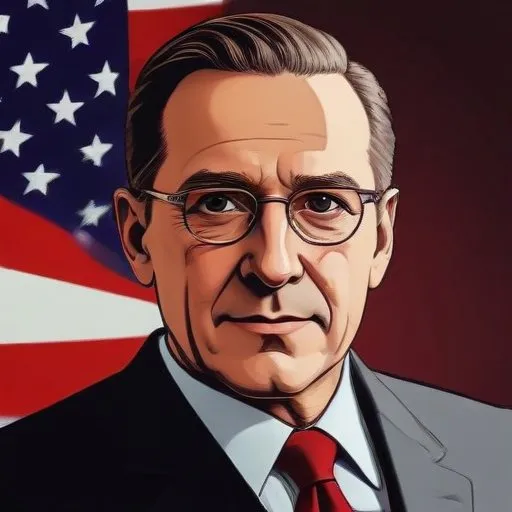
A U.S. diplomat who served as Ambassador to El Salvador, playing a key role in shaping foreign policy during a tumultuous period in Central American history. He's known for his efforts to promote democracy and stability in the region.
Thomas Clifton Mann, a renowned American diplomat, is best known for his instrumental role in shaping the United States' foreign policy towards Latin America during the Cold War era. His doctrine, aptly named the Mann Doctrine, focused on supporting regime change and promoting the economic interests of US businesses in the region.
Born on November 11, 1912, in Laredo, Texas, Mann grew up speaking English and Spanish, an asset that would serve him well in his future diplomatic endeavors. His father, a lawyer and a Southern Baptist, instilled in him a strong sense of justice and public service. Mann attended Baylor University and Baylor Law School, where he met his future wife, Nancy Aynesworth.
Rejected from the Navy due to poor vision, Mann joined the Diplomatic Service of the United States Department of State in 1942. He was deployed to Montevideo, Uruguay, to investigate Nazi shipping, and his success in this role led to his promotion to investigate Nazi activities across Latin America.
In 1945, Mann played a key role in crafting the Act of Chapultepec treaty, which established a mutual defense pact among trans-American nations. This treaty marked a significant shift in US foreign policy towards Latin America, and Mann's involvement set the stage for his future influence in the region.
In March 1964, Mann formally outlined his policy of supporting regime change and promoting US business interests in Latin America. This doctrine, which moved away from the political centrism of Kennedy's Alliance for Progress, was met with both praise and criticism. While it cemented Mann's reputation as a shrewd diplomat, it also sparked controversy and debate about the nature of US intervention in Latin America.
Thomas C. Mann's legacy is complex and multifaceted. While some have praised his instrumental role in shaping US foreign policy towards Latin America, others have criticized his doctrine as a form of imperialist intervention. Regardless, Mann's influence on modern international relations cannot be overstated, and his doctrine remains a topic of study and debate among scholars and policymakers today.
Mann received numerous awards and honors for his service, including the Superior Honor Award and the Distinguished Service Award.
Through his doctrine and diplomatic career, Thomas C. Mann left an indelible mark on US-Latin American relations. While his legacy may be contested, his influence on modern international relations remains undeniable.
Born in 1917
The 35th President of the United States was a charismatic leader who navigated the country through the Cuban Missile Crisis and advocated for civil rights, leaving a lasting legacy in American politics.
Born in 1908
The 36th President of the United States, a skilled politician and leader, played a crucial role in passing landmark civil rights legislation, including the Civil Rights Act and Voting Rights Act.
Born in 1909
The 54th United States Secretary of State, a key figure in shaping American foreign policy during the Cold War era, known for his role in the Cuban Missile Crisis and Vietnam War.
66 Years Old
A talented outfielder who played for the Toronto Blue Jays and Chicago White Sox, known for his impressive power-hitting and strong throwing arm.
Born in 1891
A prominent businessman and politician who served as the 11th United States Secretary of Commerce, playing a significant role in shaping the country's economic policies during World War II. He was also a key figure in the formation of the Marshall Plan.
Born in 1901
A diplomat and ambassador who played a key role in shaping US foreign policy during the Cold War era, particularly in Asia, and was a strong advocate for international cooperation and economic development.
Born in 1850
A prominent historian and politician who served as a U.S. Senator and was a key figure in the development of the U.S. foreign policy, particularly in the early 20th century.
