


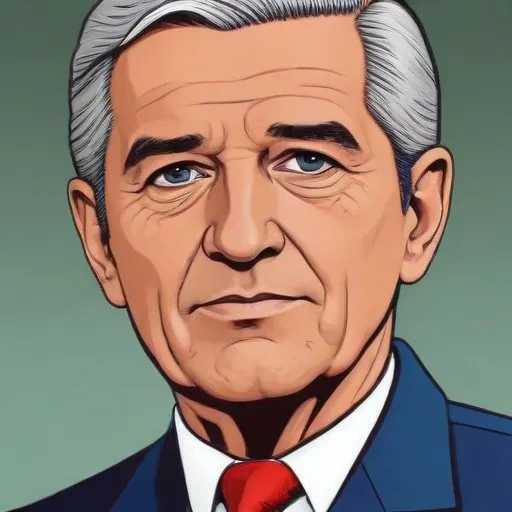
A Confederate general and US Senator from North Carolina, he fought in the Mexican-American War and advocated for states' rights. He's most known for his role in the American Civil War.
Thomas Lanier Clingman, a renowned American geologist, Confederate general, and statesman, left an indelible mark on the world of science, politics, and military history. Best known for his groundbreaking explorations of the North Carolina mountains and his unwavering dedication to the Confederate cause, Clingman's multifaceted career continues to inspire and intrigue historians and enthusiasts alike.
Born on July 27, 1812, in Huntsville, North Carolina, Clingman grew up in a family of modest means, with his father being a farmer and a clerk. Despite the financial constraints, Clingman's parents encouraged his love for learning, and he went on to attend the University of North Carolina at Chapel Hill, where he graduated in 1832.
Clingman's passion for geology led him to pursue a career in the field, and in 1835, he embarked on an expedition to explore the North Carolina mountains. His findings, published in his 1843 book, Mountains of North Carolina, provided unprecedented insights into the region's geology and earned him recognition as a leading authority on the subject.
As the American Civil War loomed, Clingman's allegiance to the Confederacy led him to enlist as a brigadier general in the Confederate Army. He played a pivotal role in several battles, including the Battle of Antietam and the Battle of Fredericksburg, earning a reputation as a brave and skilled military leader.
After the war, Clingman went on to serve as a United States Senator from North Carolina from 1858 to 1861 and again from 1866 to 1867. His political career was marked by his advocacy for states' rights and his unwavering support for the Confederate cause.
Thomas Lanier Clingman's contributions to geology, military history, and politics continue to inspire and educate scholars and enthusiasts today. His unwavering dedication to his craft and his country serves as a testament to the power of passion, perseverance, and service.
In conclusion, Thomas Lanier Clingman's remarkable life and achievements continue to captivate and inspire us, serving as a reminder of the importance of dedication, hard work, and service to one's country and community.
Born in 1808
The President of the Confederate States of America during the American Civil War, leading the secessionist movement and fighting to preserve slavery. He's infamous for his role in the Civil War and its aftermath.
Born in 1807
Led the Confederate States Army during the American Civil War, surrendering to Union forces at Appomattox, marking the war's effective end.
Born in 1824
A Confederate general during the American Civil War, he's renowned for his unconventional tactics and bravery, earning him a legendary status among military historians.
Born in 1822
Led the Union Army to victory in the Civil War and later became President, known for issuing the Emancipation Proclamation and strengthening federal authority.
Born in 1820
A renowned Union general during the American Civil War, he's infamous for his scorched earth tactics and march through the Confederacy, leaving destruction in his wake.
Born in 1821
A Confederate general during the American Civil War, later serving as a diplomat and ambassador to Turkey, known for his military strategies and post-war reconciliation efforts.
Born in 1818
A Confederate general who played a pivotal role in the American Civil War, particularly during the Battle of Fort Sumter, and is often credited with starting the war.
Born in 1833
A flamboyant and daring Confederate cavalry commander, known for his bold raids and reconnaissance missions that often outmaneuvered Union forces. He played a key role in several battles, including Gettysburg.
