


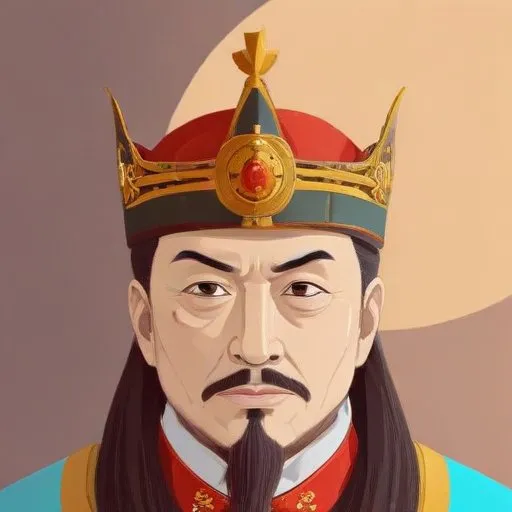
The last emperor of the Ming dynasty, known for his incompetence and indulgence, leading to the downfall of the dynasty and the rise of the Qing dynasty.
The Tianqi Emperor, reigning from 1620 to 1627, is notoriously remembered as the 16th emperor of the Ming dynasty who prioritized his woodworking skills over state affairs, earning him the title of a "puppet ruler". However, his fascinating story extends beyond his incompetence as a ruler, revealing a complex individual with intriguing philosophical contributions and a lavish lifestyle.
Born as Zhu Youjiao on December 23, 1605, the Tianqi Emperor ascended to the throne at the tender age of 15, following the sudden demise of his father, the Taichang Emperor. His inexperience and disinterest in governance led to the grasping of power by the court eunuch Wei Zhongxian and his wet nurse Madam Ke.
Despite his illiteracy, the Tianqi Emperor demonstrated exceptional carpentry skills, often devoting his time to woodworking and instructing his servants to sell his creations undercover to gauge their market value. This peculiar pastime not only showcased his creative side but also hints at his possible learning disability.
As the Tianqi Emperor's attention drifted away from state affairs, Wei Zhongxian exploited the situation, appointing his trusted allies to key positions in the imperial court. Meanwhile, Madam Ke secured her grip on power by imprisoning the emperor's concubines, starving them to death. Rumors of the emperor's private palaces, one for female lovers and one for male lovers, further tarnished his already questionable reputation.
The Confucian moralist group, the Donglin Movement, condemned the corruption and moral decay within the government, sparking a wave of discontent among the people. The imperial court, under Wei Zhongxian's control, responded by covertly suppressing any opposition, deepening the schism between the ruling elite and the populace.
The Tianqi Emperor's reign, marked by nepotism, corruption, and indifference, has been etched in history as a cautionary tale. Despite his shortcomings, his remarkable craftsmanship and intriguing personal life have cemented his place as one of the most enigmatic figures of the Ming dynasty. His era, aptly named "Tianqi" or "Heavenly Opening", ironically, remains a testament to the far-reaching consequences of unchecked power and the human desire for creative expression.
Although the Tianqi Emperor's philosophical views are not well-documented, his actions suggest a prioritization of personal desires over state affairs, showcasing a possible disregard for traditional Confucian values. His passion for craftsmanship, however, may have been an attempt to find solace in a world where he felt disconnected from his imperial responsibilities.
The Tianqi Emperor's legacy serves as a poignant reminder of the dangers of unchecked power and the importance of accountability in governance. His story also highlights the human capacity for creativity and the pursuit of passion, even in the midst of great responsibility.
Born in 1611
The last emperor of the Ming dynasty, ruling from 1627 to 1644, known for his attempts to reform the government and military, but ultimately failing to prevent the fall of the dynasty.
Born in 1130
A leading figure in Confucianism, he synthesized Confucian classics into a coherent philosophical system, influencing East Asian thought for centuries. His teachings emphasized moral cultivation and self-reflection.
Born in 1328
Founded the Ming dynasty, reunifying China after a century of fragmentation, and established a strong, centralized government. He's also known for his brutal suppression of opposition and his autocratic rule.
Born in 1507
Ruling China from 1521 to 1566, this emperor oversaw a period of cultural and economic growth, while also being known for his tyrannical behavior and persecution of officials.
