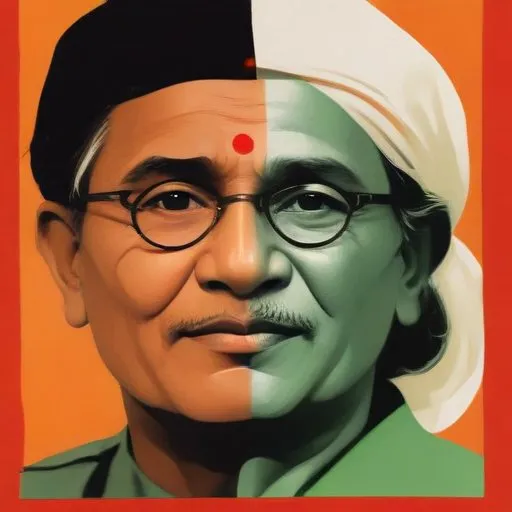
Titumir: The Bengali Revolutionary Who Fought Against British Colonial Rule
A Champion of Muslim Nationalism and Agrarian Consciousness
Titumir, born Syed Mir Nisar Ali, was a Bengali revolutionary who left an indelible mark on Indian history. He is renowned for building a large bamboo fort to resist the British, a feat that has become a legendary symbol of Bengali folk resistance against colonial rule.
Early Life and Education
Titumir was born on January 27, 1782, in the village of Haidarpur (also known as Chand Pur) to Syed Mir Hasan Ali and Abidah Ruqayyah Khatun. His family claimed an Arabic ancestry, tracing their descent from Caliph Ali. Titumir was educated in a local madrassa, where he became a hafiz of the Quran by the age of twenty. He was also accomplished in Bengali, Arabic, and Persian. A skilled wrestler and gymnast, he served as the bodyguard of a local zamindar for some time.
Religiopolitical Activism
In 1822, Titumir embarked on a life-changing journey to Mecca, where he was influenced by Syed Ahmad Barelvi, an Indian Islamic revivalist preacher. Barelvi advocated for Jihad to purge all non-Islamic corruptions and accretions from sociopolitical life and enforce Sharia. Titumir was deeply inspired by Barelvi's ideology and, upon his return, began to mobilize the Muslim peasantry by preaching against deviations from the Quran.
Islamic Resurgence and Social Reforms
Titumir's teachings emphasized the importance of adhering to Islamic principles and rejecting non-Islamic practices. He condemned the veneration of pirs, the construction of dargahs, and the charging of interest on loans. His sermons also targeted the zamindars, who were mostly Hindu, accusing them of collaborating with the British East India Company.
Legacy and Impact
Titumir's influence extended far beyond his local community. He is ranked number 11 in the BBC's poll of the Greatest Bengali of all time. His bamboo fort, which was eventually destroyed by the British, has become a symbol of Bengali resistance against colonial rule.
Philosophical Contributions and Beliefs
Titumir's philosophy was rooted in Islamic values and a deep sense of justice. He believed in the importance of social reform and the need to challenge colonial oppression. His teachings continue to inspire Bengalis to this day, serving as a reminder of the power of resistance against colonial rule.
Influence on Modern Society
Titumir's legacy extends beyond Bengali nationalism. His struggle against colonial rule has inspired generations of freedom fighters across India. His emphasis on social reform and justice has also influenced contemporary social movements in Bangladesh and beyond.
Quotes and Memorable Sayings
- "The Quran is our guide, and Jihad is our path."
- "We must resist the British and reclaim our country."
Historical Context and Legacy
Titumir's life and struggle are a testament to the power of resistance against colonial rule. His legacy serves as a reminder of the importance of social reform, justice, and national pride. Today, Titumir is remembered as a champion of Bengali nationalism and a hero of Indian independence.
FAQ
Who was Titumir?
Titumir was a Bengali revolutionary who played a significant role in the Indian independence movement against British colonial rule. He is remembered for his bravery and sacrifice in the fight for Indian independence.
What was Titumirs role in the Indian independence movement?
Titumir was a key figure in the Indian independence movement, leading a group of rebels against British colonial rule. He was instrumental in organizing armed resistance against the British East India Company.
What was the significance of Titumirs rebellion?
Titumirs rebellion was significant because it marked one of the earliest attempts to challenge British colonial rule in India. Although the rebellion was ultimately unsuccessful, it inspired later generations of Indian nationalists.
Who were Titumirs contemporaries?
Titumirs contemporaries included other prominent Indian nationalists, such as Rani Rashmoni and Ram Mohan Roy. These individuals helped shape the Indian independence movement and paved the way for future generations of activists.
What is Titumirs legacy?
Titumirs legacy is that of a brave and committed freedom fighter who gave his life in the struggle for Indian independence. He is remembered as a hero and a symbol of resistance against colonial rule.