


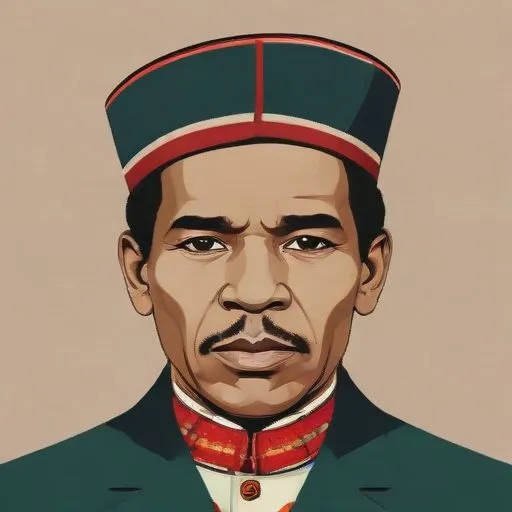
The regent of the Bamangwato tribe, a powerful leader who ruled with wisdom and justice, is revered for modernizing and protecting their people during a tumultuous period of colonialism. They played a crucial role in maintaining tribal autonomy and cultural heritage.
Tshekedi Khama, the son of Khama III, also known as Khama the Great, was a prominent figure in the history of Botswana, reigning as the regent king of the Bamangwato tribe from 1926 to 1959. He is famously known for his remarkable leadership, wise decision-making, and his unwavering commitment to preserving the cultural heritage and traditions of his people.
Born in Serowe in 1905, Tshekedi Khama was educated in Serowe and later at Lovedale, a Church of Scotland school in Cape Province. He further pursued his education at the South African Native College in Fort Hare. His educational background played a significant role in shaping his perspective and approach to leadership.
Following the death of his half-brother, Sekgoma II, in 1925, Tshekedi Khama was named regent for his nephew, Seretse Khama, who was still a minor at the time. He was installed as regent in 1926 and quickly established himself as a strong and capable leader. During his regency, Tshekedi worked tirelessly to consolidate his position and protect the interests of his people.
Tshekedi Khama's regency was marked by several significant events, including the banishment of the influential Ratshosa family and the destruction of their property. This move was met with opposition from the British Resident Commissioner, Sir Charles Rey, who sought to curb the chief's powers. The two men frequently clashed, and Tshekedi's actions were often seen as a challenge to British authority.
Throughout his regency, Tshekedi Khama remained committed to preserving the cultural heritage and traditions of the Bamangwato tribe. He worked to promote and protect the tribe's customs, language, and way of life, ensuring that they continued to thrive despite the challenges of colonialism.
Tshekedi Khama's leadership was guided by a deep understanding of the importance of tradition, culture, and community. He believed in the significance of preserving the tribe's cultural identity and was committed to promoting the welfare and well-being of his people.
Tshekedi Khama's remarkable leadership and commitment to his people have had a lasting impact on modern society. He played a crucial role in shaping the course of Botswana's history, and his legacy continues to inspire and influence future generations.
Tshekedi Khama's life was marked by several significant milestones, including his education at Lovedale and Fort Hare, his installation as regent in 1926, and his eventual deposition and reinstatement in 1933. These events shaped his perspective and approach to leadership, ultimately defining his legacy.
Although few quotes from Tshekedi Khama are recorded, his actions and decisions speak volumes about his commitment to his people and his unwavering dedication to preserving the cultural heritage of the Bamangwato tribe.
Tshekedi Khama's reign coincided with a significant period in Botswana's history, marked by colonialism, cultural exchange, and the struggle for independence. His leadership and legacy continue to inspire and influence future generations, serving as a testament to the importance of preserving cultural heritage and tradition.
Born in 1921
The first president of Botswana, a key figure in the country's transition to independence from British colonial rule, and a champion of African nationalism. He's known for his courageous fight against racism and colonialism.
Born in 1922
First President of Tanzania, led the country to independence from British colonial rule and implemented socialist policies, known for his Pan-Africanism and anti-colonialism efforts.
Born in 1909
First President of Ghana, leading the country to independence from British colonial rule and promoting Pan-Africanism. He's known for his vision of a united Africa and his role in shaping modern Ghana.
Born in 1924
First president of Zambia, leading the country to independence from British colonial rule and advocating for African unity and development.
Born in 1917
A key figure in Zimbabwe's fight for independence, leading the Zimbabwe African People's Union and serving as Vice President, playing a crucial role in shaping the country's modern history.
Born in 1924
The 2nd President of Zimbabwe, a controversial figure who ruled with an iron fist, known for his country's economic downfall and human rights abuses.
