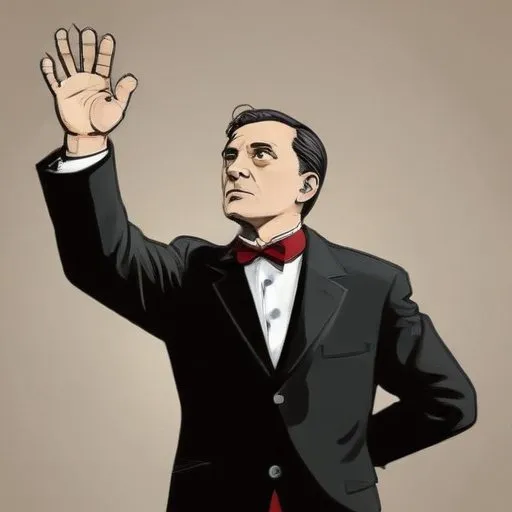
Tullio Serafin: The Maestro of Opera
A Conductor's Legacy
Tullio Serafin is renowned for his immense contribution to the world of opera, having revived numerous 19th-century bel canto operas and fostering the talents of some of the most iconic singers of the 20th century. As a leading Italian opera conductor, he left an indelible mark on the musical landscape, shaping the careers of legendary vocalists such as
Renata Tebaldi,
Maria Callas, and Joan Sutherland.
Early Life and Training
Born on September 1, 1878, in Rottanova, Cavarzere, near Venice, Italy, Serafin's journey in music began at a young age. He trained in Milan, where he honed his skills as a viola player and later became a member of the Orchestra of La Scala under the guidance of the legendary conductor Arturo Toscanini.
Rise to Prominence
Serafin's ascent to fame began when he took over as Music Director at La Scala in 1909, a position he held until 1914 and then again from 1917 to 1918. He briefly returned to La Scala after World War II, serving from 1946 to 1947. During this period, he also joined the conducting staff of the Metropolitan Opera in New York, where he remained for a decade.
Teatro Colón and Beyond
One of Serafin's most notable associations was with the Teatro Colón in Buenos Aires, Argentina, where he conducted an astonishing 368 opera performances of 63 different operas across nine seasons (1914-1951). This impressive tenure saw him tackle a wide range of operas, including rare works by composers like Alfano, Catalani, and Monteverdi.
Champion of New Works
Serafin was instrumental in promoting contemporary composers, conducting world premieres of works by Franco Alfano, Italo Montemezzi,
Deems Taylor, and
Howard Hanson. He also introduced Italian audiences to modern masterpieces by
Alban Berg,
Paul Dukas, and Benjamin Britten.
Legacy and Impact
Tullio Serafin's influence on the world of opera is immeasurable. He not only revived neglected masterpieces but also launched the careers of some of the most celebrated singers of the 20th century. His dedication to nurturing young talent and his passion for new music have left an enduring legacy in the opera world.
Personal Milestones
- Born on September 1, 1878, in Rottanova, Cavarzere, Italy
- Trained in Milan under Arturo Toscanini
- Served as Music Director at La Scala (1909-1914, 1917-1918, 1946-1947)
- Joined the conducting staff of the Metropolitan Opera (1924-1934)
- Artistic director of the Teatro Reale in Rome
- Conducted at the Teatro Colón in Buenos Aires (1914-1951)
- Died on February 2, 1968, at the age of 89
Trivia and Fun Facts
- Serafin's goddaughter was the soprano Claudia Muzio.
- He was known for his exceptional ability to coach young opera singers.
- Serafin's collaborations with Maria Callas resulted in some of the most iconic recordings in opera history.
A Lasting Legacy
Tullio Serafin's tireless dedication to the world of opera has left an indelible mark on the musical landscape. His commitment to nurturing new talent, promoting contemporary works, and reviving neglected masterpieces has cemented his place as one of the most influential conductors of the 20th century.
FAQ
What was Tullio Serafins role in the development of Italian opera?
Tullio Serafin was a renowned Italian conductor and director who played a significant role in the development of Italian opera. He was particularly known for his performances of Verdis operas.
What were Tullio Serafins notable conducting credits?
Tullio Serafin conducted many notable operas, including Verdis La Traviata, Aida, and Rigoletto. He also worked with famous singers, such as Enrico Caruso and Rosa Ponselle.
How did Tullio Serafins conducting style influence opera performance?
Tullio Serafins conducting style was known for its precision, clarity, and lyricism. He emphasized the importance of orchestral balance and was particularly concerned with the singing style of his opera performers.
What was Tullio Serafins relationship with the Metropolitan Opera?
Tullio Serafin had a long association with the Metropolitan Opera in New York City, where he conducted many productions and worked with prominent singers and directors. He was particularly known for his performances of Italian opera.
What is Tullio Serafins legacy in the world of opera?
Tullio Serafins legacy is that of a master conductor and director who helped shape the course of Italian opera. He was a pioneer in the development of opera performance and his influence can still be heard in modern opera productions.