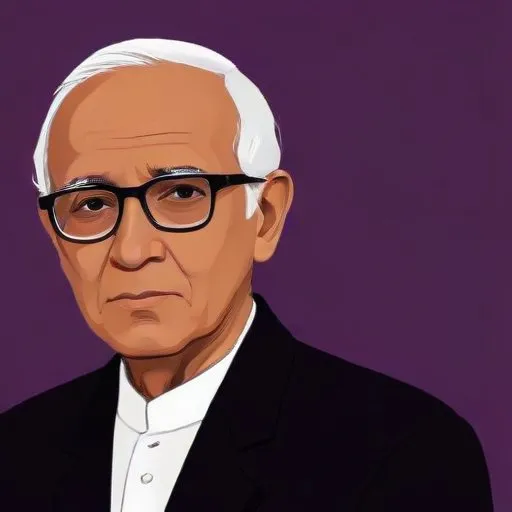
V. V. Giri: The Unwavering Advocate of Freedom and Democracy
The Rise to Prominence
V. V. Giri, the fourth President of India, is renowned for his unwavering commitment to the country's freedom struggle and his pioneering efforts in shaping the nation's democracy. As the first president to be elected as an independent candidate, Giri left an indelible mark on India's political landscape.
Early Life and Education
Born on August 10, 1894, in Berhampur, Madras Presidency (present-day Odisha), Giri was raised in a Telugu Brahmin family. His parents, V. V. Jogayya Pantulu and Subhadramma, instilled in him the values of patriotism and social justice. Giri's mother, a vocal advocate for women's rights and prohibition, was arrested during the Civil Disobedience Movement, further fueling his desire for social change.
Giri's educational pursuits took him to Ireland, where he studied law at University College Dublin and the Honourable Society of Kings Inns, Dublin between 1913 and 1916. During his time in Ireland, he was exposed to the country's freedom struggle, which deepened his understanding of the complexities of nation-building.
Political Career and Activism
Giri's political career spanned several decades, with his early years marked by active participation in the Indian National Congress. He was a fervent advocate for workers' rights and played a pivotal role in organizing labor unions in India. His unwavering commitment to the freedom struggle led to his arrest in 1922, during the Non-Cooperation Movement.
As India gained independence in 1947, Giri continued to shape the country's political landscape. He served as the Governor of Uttar Pradesh, Kerala, and Mysore, respectively, before being elected as the Vice President of India in 1967. In 1969, he became the fourth President of India, a position he held until 1974.
Awards and Recognition
Giri's contributions to India's freedom struggle and his commitment to democracy were recognized with the Bharat Ratna, the country's highest civilian honor, in 1975.
Personal Life and Legacy
Giri's personal life was marked by simplicity and humility. He was married to Saraswati Bai, and the couple had 14 children together. Throughout his life, Giri remained committed to his principles, never wavering from his belief in the power of democracy and social justice.
Impact on Modern Society
Giri's legacy extends beyond his political career. He was a vocal advocate for workers' rights, women's empowerment, and social justice. His contributions paved the way for future generations of politicians and social activists, inspiring them to strive for a more equitable and just society.
Controversies and Public Perception
Despite his unwavering commitment to democracy, Giri's presidency was not without controversy. His decision to suspend the Lok Sabha in 1970 sparked widespread protests, and his perceived closeness to the Indian National Congress raised concerns about partisanship.
Philosophical Contributions and Beliefs
Giri's philosophical beliefs were deeply rooted in his commitment to democracy and social justice. He believed that true freedom could only be achieved through the empowerment of the masses, and that the state had a critical role to play in ensuring the welfare of its citizens.
Trivia and Fun Facts
- Giri was one of the first Indian students to study law in Ireland.
- He was elected to the student union of Khallikote College for three consecutive years.
- Giri was a skilled orator, known for his powerful speeches that inspired generations of Indians.
As we reflect on Giri's life and legacy, we are reminded of the power of unwavering commitment to one's principles. His story serves as a testament to the enduring spirit of freedom and democracy, inspiring us to strive for a better tomorrow.
FAQ
What was V. V. Giris role in Indian politics?
V. V. Giri was an Indian lawyer and politician who served as the 4th President of India from 1969 to 1974. He played a key role in the Indian independence movement and was a prominent figure in Indian politics for over three decades.
What were V. V. Giris key achievements as President of India?
As President of India, V. V. Giri implemented various initiatives to promote national unity and social welfare. He also played a crucial role in resolving the 1971 Bangladesh Liberation War.
What was V. V. Giris background before entering politics?
Before entering politics, V. V. Giri was a lawyer, practicing law in Madras, India. He was also involved in the Indian independence movement, participating in various protests and movements against British rule.
How did V. V. Giri contribute to Indian labor movements?
V. V. Giri was a pioneer of Indian labor movements, founding the All India Trade Union Congress in 1929. He worked tirelessly to promote workers rights and improve working conditions in India.
What is V. V. Giris legacy in Indian politics?
V. V. Giris legacy in Indian politics is that of a dedicated public servant, who worked to promote national unity, social welfare, and economic development in India. He is remembered as a champion of workers rights and a strong advocate for Indian independence.