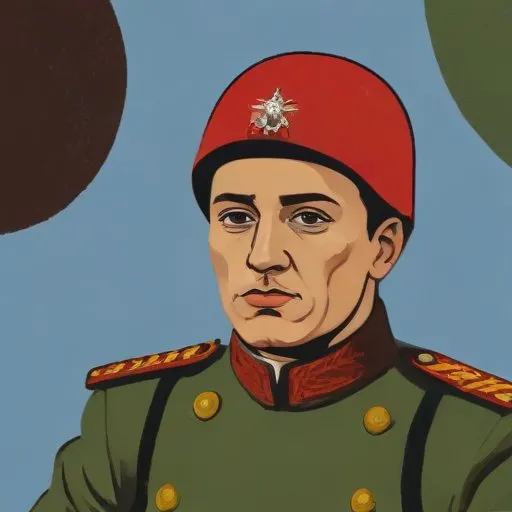
Vasily Vereshchagin: The Russian War Artist of Unflinching Realism
A Pioneering Realist: Early Life and Inspiration
Vasily Vereshchagin, a Russian war artist, is renowned for his unflinching and graphic depictions of war, which led to many of his works being censored or never exhibited. Born on October 26, 1842, in Cherepovets, Novgorod Governorate, Russia, Vereshchagin was the middle of three brothers to a noble-born father and a mother of common origin with Tatar roots.
The Formation of a War Artist
At the tender age of eight, Vereshchagin was sent to Tsarskoe Selo to enter the Alexander Cadet Corps, where he began his教育 in the military. Three years later, he entered the Sea Cadet Corps at St Petersburg, making his first voyage in 1858 on the frigate Kamchatka, which sailed to Denmark, France, and Egypt. This early exposure to the world beyond Russia's borders would later influence his artistic perspective.
The Artistic Awakening
After graduating first in his list at the naval school, Vereshchagin abandoned his military career to pursue his passion for drawing. In 1863, he won a medal from the St Petersburg Academy for his "Ulysses Slaying the Suitors." This recognition propelled him to Paris, where he studied under Jean-Léon Gérôme, although he eventually dissented from his master's methods.
Travels in Central Asia: Inspiration and Heroism
In 1867, Vereshchagin accompanied General Konstantin Kaufman's expedition to Turkestan, where he was granted the rank of ensign. His bravery during the siege of Samarkand from June 28, 1868, earned him the Cross of St George 4th class. This experience would later influence his artistic style, as he became fascinated with the cultures and landscapes of Central Asia.
Artistic Career Highlights
- In 1871, Vereshchagin established an atelier in Munich, solidifying his reputation as a war artist.
- In 1873, he held a solo exhibition of his Turkestan Series at the Crystal Palace in London, showcasing his unflinching realism.
- In 1874, Vereshchagin exhibited his works in St Petersburg, where two of his paintings from the Turkestan Series garnered significant attention.
Philosophical Contributions and Beliefs
Vereshchagin's artwork was not only a reflection of his experiences but also a commentary on the human cost of war. Through his art, he sought to convey the brutal realities of conflict, urging viewers to confront the horrors he witnessed firsthand. This unique perspective earned him both acclaim and criticism, as his work was deemed too graphic for its time.
Legacy and Impact on Modern Society
Vereshchagin's pioneering work in war art has inspired generations of artists, from Otto Dix to
Francisco Goya. His unflinching realism has influenced the way war is depicted in art, literature, and media, encouraging a more nuanced understanding of the human experience during conflict. Today, Vereshchagin's legacy extends beyond the art world, as his work serves as a poignant reminder of the devastating consequences of war.
Personal Milestones and Key Life Events
- October 26, 1842: Born in Cherepovets, Novgorod Governorate, Russia
- 1858: Made his first voyage on the frigate Kamchatka
- 1863: Won a medal from the St Petersburg Academy for "Ulysses Slaying the Suitors"
- 1867: Accompanied General Konstantin Kaufman's expedition to Turkestan
- 1868: Awarded the Cross of St George 4th class for bravery during the siege of Samarkand
- April 13, 1904: Died in Port Arthur, Manchuria, during the Russo-Japanese War
Historical Context and Legacy
Vereshchagin's life and artwork are inextricably linked with the tumultuous era in which he lived. His unflinching realism captured the essence of war, reflecting the brutal realities of the late 19th and early 20th centuries. Today, his legacy serves as a testament to the enduring power of art to convey the human experience, inspiring generations to come.
FAQ
What were Vasily Vereshchagins most famous paintings?
Vasily Vereshchagin was a renowned Russian painter, and his most famous works include The Apotheosis of War, They Forgot Him, and The Pearl Mosque at Delhi. His paintings often depicted scenes of war, politics, and everyday life in Russia and Asia.
How did Vasily Vereshchagins military service influence his art?
Vasily Vereshchagins military service had a profound impact on his art, as it exposed him to the harsh realities of war and the human experience. His experiences in the Russo-Turkish War and the Russian conquest of Turkestan influenced his artistic style and themes, and he often depicted scenes of war and its aftermath in his paintings.
What was Vasily Vereshchagins role in the Peredvizhniki movement?
Vasily Vereshchagin was a key figure in the Peredvizhniki movement, a group of Russian artists who sought to break away from traditional academic art and focus on more realistic, socially conscious themes. His work helped to shape the movements ethos and style.
How did Vasily Vereshchagins travels influence his artistic style?
Vasily Vereshchagins travels to Asia and the Middle East had a significant impact on his artistic style, as he was exposed to new cultures, landscapes, and architectural styles. His experiences abroad influenced his use of color, composition, and subject matter in his paintings.
What were Vasily Vereshchagins contributions to Russian art?
Vasily Vereshchagins contributions to Russian art were significant, as he helped to shape the development of Russian realism and the Peredvizhniki movement. His work continues to be celebrated in Russia and around the world for its powerful, thought-provoking themes and its technical mastery.