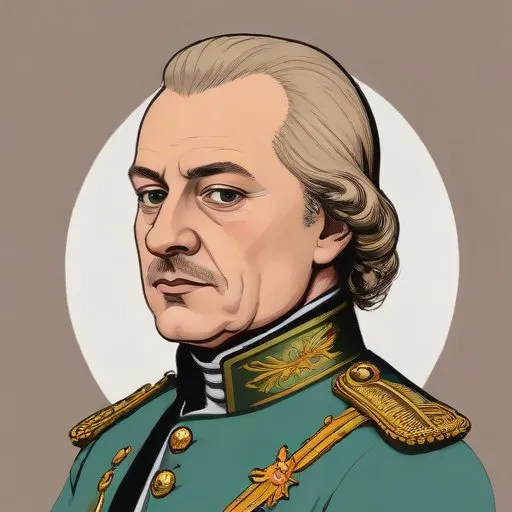
Victor, Duke of Mnsterberg: A Pillar of 15th Century Nobility
A Life of Imperial Counts and Dukedoms
Victor, Duke of Mnsterberg, was a prominent Imperial Count and Duke of Mnsterberg and Opava, leaving an indelible mark on the nobility of 15th century Europe. Born on May 29, 1443, in Cieszyn, he was the second son of the Bohemian king George of Podbrady and his wife Kunigunde of Sternberg.
Family Background and Marriages
Victor's family background played a significant role in shaping his life and career. As the second son of a powerful king, he was groomed for greatness from a young age. He married three times, first to Margaret Ptkov, the only daughter of Hynek Ptek of Pirkstein, in 1463. After her death in 1472, he married Sophie, daughter of Duke Boleslaw II of Cieszyn, in 1465. After Sophie's death in 1479, he married Helena-Margarete Palaiologa, daughter of John IV, Marquess of Montferrat, in 1480.
Children and Legacy
Victor's marriages produced several children, including two sons, Lawrence Vavinec and Bartholomew, and five daughters, Johanna, Magdalena, Anna, Urula, and Apolonia. Unfortunately, his male line died out with the death of his son Bartholomew in 1515.
Rise to Power and Titles
In 1459, Victor was appointed Imperial Count by Emperor
Frederick III, a title confirmed in 1462. Around the same time, his father, George, appointed him and his brothers, Henry the Elder and Henry the Younger, Dukes of Mnsterberg and Counts of Kladsko. These titles were ruled jointly by the brothers until George's death in 1471.
Personal Milestones and Key Life Events
- 1462: Appointed Duke of Mnsterberg and Count of Kladsko along with his brothers
- 1465: Married Sophie, daughter of Duke Boleslaw II of Cieszyn
- 1479: Married Helena-Margarete Palaiologa, daughter of John IV, Marquess of Montferrat
- 1485: Ceased to be Duke of Opava
- 1500: Died on August 30 in Cieszyn
Historical Context and Legacy
Victor, Duke of Mnsterberg, lived during a time of great turmoil and change in Europe. His life and career were marked by the intricacies of nobility and the power struggles of the time. Despite his male line dying out, his legacy as a prominent Imperial Count and Duke continues to be remembered to this day.
Trivia and Fun Facts
- Victor's older brother, Boek, was mentally challenged, which led to Victor taking on more responsibilities from a young age.
- He was the second son of a king, but rose to become a powerful Duke in his own right.
- His death in 1500 marked the end of his male line, but his daughters continued to play important roles in European nobility.
FAQ
What was Victor, Duke of Münsterbergs role in the Holy Roman Empire?
Victor, Duke of Münsterberg was a powerful nobleman in the Holy Roman Empire, holding titles such as Reichsgraf, Duke of Münsterberg, and Count of Glatz.
What territories did Victor, Duke of Münsterberg govern?
Victor, Duke of Münsterberg governed the Duchy of Münsterberg, the County of Glatz, and other territories in the Holy Roman Empire.
What was Victor, Duke of Münsterbergs relationship like with the Habsburgs?
Victor, Duke of Münsterberg had a complex relationship with the Habsburgs, often negotiating and navigating the delicate balance of power in the Holy Roman Empire.
What were Victor, Duke of Münsterbergs accomplishments?
Victor, Duke of Münsterberg accomplished significant administrative and economic reforms in his territories, leaving a lasting legacy in the region.
What was Victor, Duke of Münsterbergs legacy?
Victor, Duke of Münsterbergs legacy is marked by his wise governance, strategic alliances, and significant contributions to the development of his territories.