


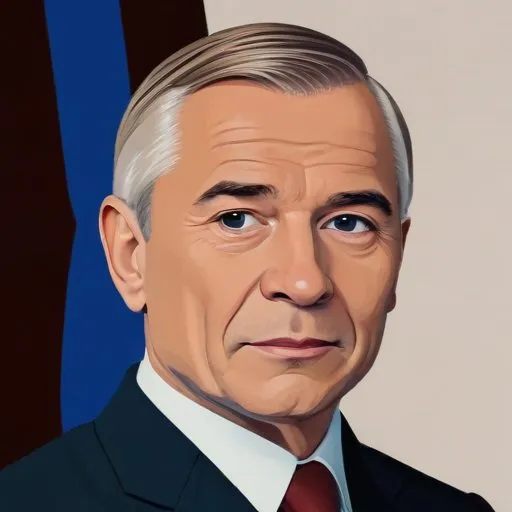
Estonian communist politician and journalist who played a key role in the country's early 20th-century revolutionary movement. He was a founder of the Estonian Communist Party and a leader in the 1918-1920 Estonian War of Independence.
Viktor Kingissepp, a prominent Estonian communist politician, is best known for leading the Estonian Communist Party and playing a pivotal role in the country's revolutionary movement during the early 20th century. As a devoted Marxist, Kingissepp dedicated his life to propagating the principles of socialism and communism, earning him recognition as a champion of the working class.
Born on March 24, 1888, in Arensburg (now Kuressaare), Kingissepp grew up in a working-class family. As a schoolboy, he was drawn to Marxist ideology, joining a local Marxist circle that would shape his worldview and future political endeavors.
During World War I, Kingissepp served as the head of a medical train on the Western Front. Following the February Revolution, he returned to Petrograd (formerly St. Petersburg) and joined the Bolsheviks and the Red Guards. After the Bolshevik Revolution, he became the deputy chairman of the Estonian Revolutionary Soviet in Reval (now Tallinn). However, he was forced to flee back to Petrograd when Estonia was occupied by the German army.
On May 3, 1922, Kingissepp was arrested by the Estonian Political Police following a mass May Day demonstration in Tallinn. He was executed that same night, leaving behind a legacy that would be remembered for generations to come.
In recognition of his contributions, the Soviet Russian government renamed the town of Yamburg as Kingisepp in his honor. The Estonian town of Kuressaare was also temporarily renamed Kingissepp during the Soviet era. Additionally, many Estonian towns had streets named after him, a testament to his enduring impact on the country's history.
Viktor Kingissepp's commitment to the principles of communism and his tireless efforts to promote social change have forever etched his name in the annals of Estonian history. His story serves as a powerful reminder of the power of conviction and the importance of standing up for one's beliefs, even in the face of adversity.
Born in 1874
Estonia's first president, a key figure in the country's struggle for independence from Russia, served as a unifying force during tumultuous times. He's remembered for his role in shaping Estonia's early years and its path to sovereignty.
Born in 1868
Estonia's 2nd Prime Minister, a pioneering journalist, lawyer, and politician who played a crucial role in the country's struggle for independence and development. He's most known for his efforts to establish a democratic government and promote national unity.
Born in 1884
Estonia's 7th Prime Minister, a lawyer and politician who played a crucial role in shaping the country's early years of independence, known for his diplomatic efforts and national unification.
Born in 1890
A prominent Estonian leader who served as the country's Prime Minister during a tumultuous period, guiding Estonia through World War II and the Soviet occupation. He's revered for his bravery and statesmanship during Estonia's struggle for independence.
Born in 1888
Estonian journalist and politician who served as the 6th Prime Minister of Estonia, known for his leadership during the country's interwar period and his role in shaping the nation's early years of independence.
Born in 1886
Estonia's Head of State during World War II, leading the country's government-in-exile and advocating for independence from Soviet occupation. He played a crucial role in preserving Estonia's sovereignty and identity.
Born in 1872
Estonia's 7th State Elder, a prominent lawyer and politician, played a crucial role in shaping the country's early 20th-century government and politics. He's most known for his efforts in establishing Estonia's independence and sovereignty.
Born in 1875
Estonia's second Prime Minister, a lawyer and politician, played a crucial role in shaping the country's early years, serving as a key figure in its struggle for independence. He's most known for his efforts in establishing Estonia's sovereignty and democratic government.
