


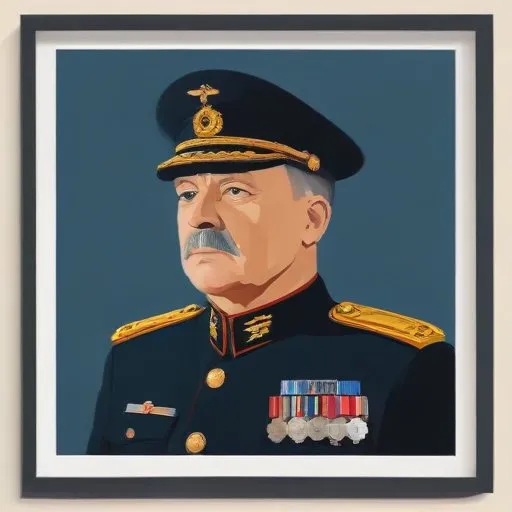
Estonian military officer who served as the Commander of the Estonian Defence Forces during the early 2000s, playing a crucial role in the country's NATO integration.
Viktor Puskar is best known for his valiant efforts as a military commander during the Estonian War of Independence, leading the country to victory against the Red Army and cementing his place in Estonian history. As a Colonel, Puskar's strategic mind and bravery in the face of adversity earned him the respect of his comrades and the gratitude of his nation.
Born on April 25, 1889 (O.S. May 7) in Viljandi, Estonia, Puskar's path to becoming a military leader began when he graduated from the Vilnius Military Academy in 1911. This strong educational foundation would serve him well in the years to come, as he navigated the complex web of alliances and rivalries that defined World War I.
In 1917, Puskar joined the Estonian national units, marking the beginning of his illustrious military career. When the Estonian War of Independence broke out in 1918, Puskar was at the forefront, leading the Jrvamaa Defence League and later becoming commander of the 2nd Division. His leadership during this period was instrumental in defending South Estonia, expelling the Red Army from North Latvia, and capturing the strategic city of Pskov.
After retiring from the military in 1920, Puskar turned to farming, but his passion for his country never wavered. He became one of the leaders of the Vaps Movement, a group dedicated to promoting Estonian nationalism and independence. This commitment to his nation's freedom would eventually land him in jail from 1936 to 1937, accused of underground activity.
In 1941, Puskar fled to Germany, only to return to Estonia after the Red Army was driven out. His final days were spent in Tartu, where he passed away on April 12, 1943. Despite the challenges he faced, Puskar's unwavering dedication to his country has left an indelible mark on Estonian history.
Viktor Puskar's contributions to Estonia's struggle for independence have cemented his place as a national hero. Despite facing imprisonment and exile, he remained steadfast in his commitment to his country's freedom. As we reflect on his life and achievements, we are reminded of the importance of courage, perseverance, and patriotism in the face of adversity.
Born in 1884
A prominent military leader who played a crucial role in Estonia's struggle for independence, leading the country's armed forces to victory in the Estonian War of Independence.
Born in 1874
Estonia's first president, a key figure in the country's struggle for independence from Russia, served as a unifying force during tumultuous times. He's remembered for his role in shaping Estonia's early years and its path to sovereignty.
Born in 1886
Estonia's Head of State during World War II, leading the country's government-in-exile and advocating for independence from Soviet occupation. He played a crucial role in preserving Estonia's sovereignty and identity.
Born in 1890
A prominent Estonian leader who served as the country's Prime Minister during a tumultuous period, guiding Estonia through World War II and the Soviet occupation. He's revered for his bravery and statesmanship during Estonia's struggle for independence.
Born in 1890
Leader of Estonia's government-in-exile during World War II, fighting for independence from Soviet occupation. Known for his efforts to preserve Estonian sovereignty and culture.
Born in 1884
Estonia's 7th Prime Minister, a lawyer and politician who played a crucial role in shaping the country's early years of independence, known for his diplomatic efforts and national unification.
Born in 1888
Estonian journalist and politician who served as the 6th Prime Minister of Estonia, known for his leadership during the country's interwar period and his role in shaping the nation's early years of independence.
Born in 1860
Estonian journalist and politician who fought for press freedom and served as a member of the Estonian Parliament, advocating for democratic values and human rights.
