


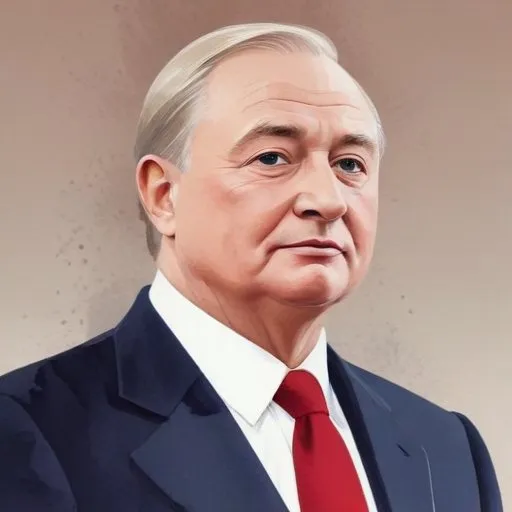
The 3rd President of Moldova, a key figure in the country's transition from communism to democracy, known for his efforts to strengthen ties with Russia and the European Union.
Vladimir Voronin, the third President of Moldova, is a name synonymous with communist ideology and a tumultuous political career. As the first democratically elected communist party head of state after the dissolution of the Eastern Bloc, Voronin's tenure from 2001 to 2009 left an indelible mark on Moldovan politics.
Voronin was born as Vladimir Bujeni on May 25, 1941, in the village of Corjova, located in the Romanian-administered Transnistria Governorate. His early life was marked by tragedy, with his biological father, Nicolae Bujeni, dying during World War II. Voronin was raised by his stepfather, Nikolai Voronin, an ethnic Russian and a communist activist.
Voronin's career began in 1961 as the head of a bakery in Criuleni. He later held various positions in the state administration of the Moldavian SSR, including inspector and vice-director of the Organization Section of the Central Committee of the Moldavian branch of the Communist Party.
In 1994, Voronin became the leader of the Party of Communists of Moldova (PCRM), a position he still holds today. His unwavering commitment to communist ideology often led to controversial decisions, particularly in his dealings with neighboring Romania.
During his presidency, Voronin's policies were marked by a mix of authoritarianism and reform. He implemented measures to combat corruption, improved the country's infrastructure, and strengthened Moldova's economy. However, his tenure was also marred by allegations of human rights abuses and electoral fraud.
Voronin has been recognized for his educational achievements, holding degrees in economics, engineering, political science, and law. He has also been awarded several honorary titles, including the Order of the Republic, the highest state decoration in Moldova.
Voronin's legacy is a complex and multifaceted one. While his commitment to communist ideology has been criticized, he has also been credited with modernizing Moldova's infrastructure and economy. His presidency has left a lasting impact on the country's political landscape, shaping the course of Moldovan history.
Voronin's presidency was not without controversy. He has faced criticism for his authoritarian style, human rights abuses, and electoral fraud. However, his supporters argue that he brought stability and economic growth to the country.
"The Communist Party is not just a party, it's a way of life." - Vladimir Voronin, 2005
Voronin's presidency marked a significant turning point in Moldovan history, as the country transitioned from a Soviet satellite state to an independent nation. While his legacy is complex and contested, he remains a figure of great importance in modern Moldovan politics.
In contrast to his contemporaries, Voronin's unwavering commitment to communist ideology set him apart from other Eastern European leaders. His presidency was marked by a unique blend of authoritarianism and reform, distinguishing him from other post-Soviet leaders.
Voronin's personal life has been marked by tragedy, including the loss of his biological father during World War II. His stepfather, Nikolai Voronin, played a significant role in shaping his early life and political ideology.
Voronin's presidency has had a lasting impact on Moldovan pop culture, inspiring numerous songs, films, and literary works. His enigmatic figure has become a cultural icon in Moldova, symbolizing both hope and controversy.
Voronin has been awarded several honorary titles, including the Order of the Republic, the highest state decoration in Moldova. He has also received recognition for his contributions to Moldovan politics and economics.
73 Years Old
A Russian politician who has dominated the country's politics for over two decades, known for his authoritarian leadership style and controversial foreign policy decisions.
95 Years Old
The last leader of the Soviet Union, who introduced reforms that led to the end of the Cold War and the collapse of communism, earning a Nobel Peace Prize. He's known for his policies of glasnost and perestroika, which transformed the Soviet Union and the world.
61 Years Old
Russian lawyer and politician who served as President of Russia from 2008 to 2012, known for his efforts to modernize Russia's economy and politics. He also served as Prime Minister from 2012 to 2020.
76 Years Old
A Ukrainian engineer-turned-politician who served as President of Ukraine from 2010 to 2014, known for his pro-Russian stance and fleeing the country amidst protests.
88 Years Old
Ukraine's second president, an engineer-turned-politician, known for navigating the country's post-Soviet transition and implementing economic reforms. He's also infamous for his alleged role in a journalist's murder.
74 Years Old
Romanian captain and politician who served as the 4th President of Romania, known for his efforts to combat corruption and reform the country's political system. He was also a vocal critic of communism and worked to strengthen Romania's ties with the European Union.
58 Years Old
The 3rd President of Georgia, a lawyer-turned-politician who spearheaded democratic reforms and fought against corruption, leading to a brief war with Russia. He's known for his bold anti-corruption efforts and tumultuous presidency.
84 Years Old
First President of the breakaway state of Transnistria, leading the region to declare independence from Moldova in 1990. He played a key role in the Transnistrian War and subsequent negotiations.
