


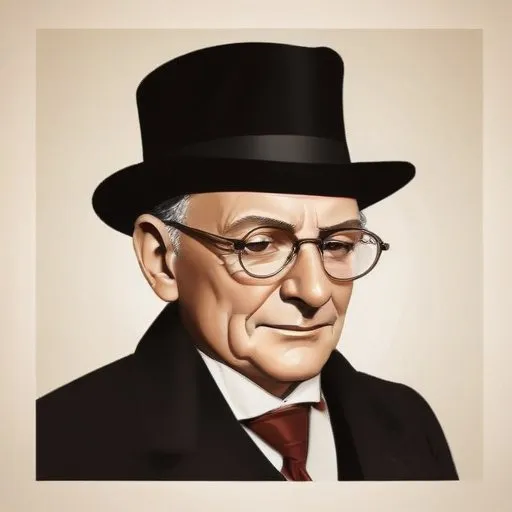
A pioneering music educator and composer who developed innovative methods for teaching music to children, leaving a lasting impact on music education.
W. Otto Miessner is renowned for creating the first public high school band in the United States, revolutionizing music education and inspiring generations of musicians. As a composer, music educator, and visionary, Miessner dedicated his life to spreading the joy of music and fostering a love for learning in young minds.
Born on May 26, 1880, in Huntingburg, Indiana, Miessner was the son of Charles Miessner and Mary Miessner (née Reutepohler). He grew up with a passion for music, which was nurtured by his family and community. Miessner graduated from Huntingburg High School in 1898 and went on to pursue higher education in music.
He earned a diploma from the Cincinnati Conservatory of Music, where he studied music theory with A. J. Gantvoort, piano with Frederick Hoffman, and singing with Adolph Devin-Duvivier. Miessner further honed his skills in New York with Frederick Bristol (singing), A. J. Goodrich (harmony and counterpoint), and Edgar Stillman Kelley (composition). In 1910, he traveled to Berlin to study voice with Alexander Heinemann.
Miessner's teaching career began in 1900 at a school in Boonville, Indiana, where he taught music until 1904. He later moved to Connersville, Indiana, to teach elementary and high school music from 1905 to 1909. It was during this period that Miessner's innovative spirit and dedication to music education led to the creation of the first public high school band in the United States.
In 1906, Miessner encountered three students who had been suspended from school due to misbehavior. He struck a deal with them, offering to get them reinstated if they agreed to learn to play instruments in a school band. The experiment was a resounding success, and Connersville High School proudly boasted the first public high school band in the country.
Miessner's philosophy was simple yet powerful: "The idle mind is the devil's workshop. But this is my workshop, and I'll not tolerate an idle mind as long as there's excitement in music." This mantra guided his approach to music education, emphasizing the importance of active engagement and creative expression.
Through his pioneering efforts, Miessner inspired a new generation of music educators and students. His legacy extends far beyond the confines of Connersville High School, as he contributed to the growth and development of music programs across the United States.
Throughout his life, Miessner remained committed to his passion for music and education. He believed in the transformative power of music, stating, "Music is a part of the very fabric of our being. It is a universal language, understood by all."
In recognition of his groundbreaking contributions, Miessner received numerous awards and honors for his work in music education.
W. Otto Miessner's remarkable journey is a testament to the impact one person can have on the world. As a composer, music educator, and visionary, he left an indelible mark on the landscape of American music education. His innovative spirit, dedication to music, and commitment to fostering a love for learning in young minds continue to inspire generations of musicians and educators.
Born in 1896
A renowned composer, conductor, and educator who made significant contributions to American classical music, particularly through his Romantic-style symphonies and leadership of the Eastman School of Music.
Born in 1914
A renowned conductor and educator, he revolutionized the wind band repertoire and elevated its status through his innovative arrangements and performances. He is celebrated for his iconic recordings and influential teaching style.
Born in 1899
A renowned violinist and conductor, leading the Philadelphia Orchestra for over 40 years, known for his technical precision and interpretations of Romantic-era composers.
Born in 1882
A renowned conductor who revolutionized the art of orchestral performance with his innovative techniques and charismatic stage presence, leading iconic ensembles like the Philadelphia Orchestra.
Born in 1874
A renowned bassist, composer, and conductor who led the Boston Symphony Orchestra for 25 years, introducing many American premieres of works by prominent composers. He was a champion of modern classical music.
Born in 1897
A renowned conductor and composer, known for his precise and expressive performances, leading the Cleveland Orchestra to international acclaim. His interpretations of classical music remain highly influential.
