


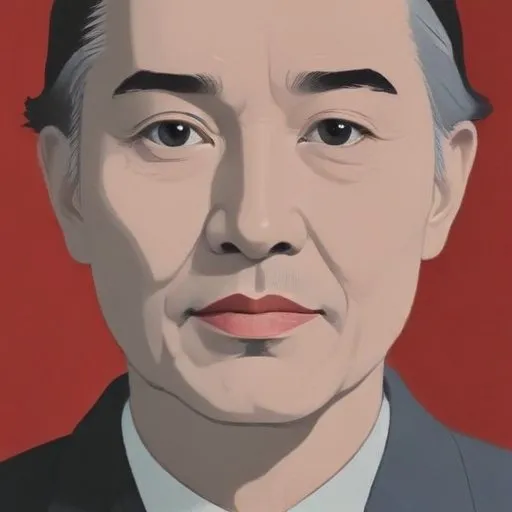
A Chinese-American artist who blended Eastern and Western styles, creating vibrant, abstract paintings and poetry that explored the intersection of art and language.
Walasse Ting, a Chinese-American visual artist and poet, is renowned for his vibrant and expressive paintings that have captivated art enthusiasts worldwide. His distinctive style, which often features nude women, cats, birds, and other animals, has earned him critical acclaim and a devoted following.
Born on October 13, 1928, in Shanghai, Ting's artistic journey began in the 1950s in Paris, where he befriended prominent artists such as Karel Appel, Asger Jorn, and Pierre Alechinsky, members of the avant-garde CoBrA group. This association had a profound impact on Ting's artistic style, which was initially influenced by the CoBrA group's use of expressive, childlike imagery.
In the 1960s, Ting relocated to New York City, where he became associated with the Pop Art movement. This shift marked a significant turning point in his career, as he began to explore new themes and techniques. His collaborations with poets, including Allen Ginsberg and Gary Snyder, further enriched his artistic expression.
Ting's most celebrated works are perhaps his "Cat Women" series, which feature female figures surrounded by lush flowers and decorative elements. These paintings embody the artist's fascination with femininity, beauty, and the human form. The "Cat Women" series has become an integral part of Ting's legacy, symbolizing his unique blend of Eastern and Western artistic traditions.
Throughout his career, Ting continued to experiment with various styles and techniques. In the mid-1970s, he shifted towards popular figuratism, characterized by broad areas of color painted with a Chinese brush and acrylic paint. This innovative approach earned him recognition as a pioneer in the field of contemporary art.
In addition to his visual art, Ting was a prolific poet and author. He penned 13 books, including "All in My Head" (1974) and "One Cent Life" (1964), a portfolio of 62 original lithographs featuring works by renowned artists such as Andy Warhol, Roy Lichtenstein, and Tom Wesselmann.
Ting's cosmopolitan lifestyle took him to various cities, including Amsterdam, where he lived in the 1990s. He regularly commuted between Amsterdam and New York, drawing inspiration from his global experiences. Today, Ting's artwork is held in high esteem, with his legacy continuing to inspire generations of artists, poets, and art enthusiasts alike.
Walasse Ting's artistic contributions have had a profound impact on modern society. His fusion of Eastern and Western styles has inspired a new generation of artists to experiment with diverse cultural influences. Ting's emphasis on color, form, and expression has also influenced various fields, including fashion, design, and literature.
Walasse Ting's artwork serves as a testament to the power of cultural exchange and artistic innovation. His legacy continues to inspire artists, writers, and art enthusiasts, underscoring the importance of preserving and celebrating the rich cultural heritage of our global community.
Born in 1881
A pioneering artist who transformed modern art with pioneering Cubist works, creating a new visual language that continues to inspire and influence art, design, and culture.
Born in 1869
A pioneering artist who revolutionized modern art with bold, expressive, and colorful works that blurred the lines between painting and sculpture, creating a new language of form and color.
Born in 1904
A renowned surrealist master of bizarre, dream-like paintings and sculptures that blur reality and fantasy, known for iconic works like "The Persistence of Memory" and "The Elephants".
Born in 1893
A renowned Spanish artist, famous for his vibrant, dreamlike paintings and sculptures that blended abstraction and surrealism, creating a unique visual language. His works often featured bold colors, biomorphic forms, and a sense of playfulness.
Born in 1920
A Chinese-French painter who blended Eastern and Western styles, creating vibrant, abstract works that explored the relationship between color and emotion. His paintings are highly expressive and evoke a sense of dynamic energy.
97 Years Old
A pioneering abstract expressionist artist, known for her innovative "soak-stain" technique, which involved pouring thinned paint onto raw canvas to create vibrant, lyrical works. Her style blurred the lines between painting and printmaking.
Born in 1910
A prominent figure in the abstract expressionist movement, known for bold, expressive brushstrokes and vibrant colors that evoked intense emotions.
Born in 1904
A pioneering abstract expressionist, he revolutionized modern art with bold, expressive brushstrokes and vibrant colors, creating dynamic, emotive pieces that continue to inspire.
