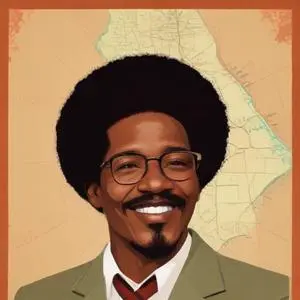
Walter Rodney: The Revolutionary Historian and Activist
A Pioneer in Challenging Conventional Wisdom
Walter Rodney, a Guyanese historian, political activist, and academic, is renowned for his groundbreaking work, "How Europe Underdeveloped Africa," which shook the foundations of traditional historiography in 1972. This seminal book challenged the dominant narratives of European colonialism, shedding light on the exploitative nature of imperialism and its devastating impact on Africa.
Early Life and Education
Born on March 23, 1942, in Georgetown, Guyana, Rodney came from a working-class family and went on to attend the University College of the West Indies in 1960. He graduated with a first-class honors degree in history in 1963, followed by a Ph.D. in African History from the School of Oriental and African Studies in London, England, at the remarkable age of 24.
A Scholar-Activist on the Global Stage
Rodney's academic pursuits took him to various corners of the world. He taught at the University of Dar es Salaam in Tanzania (1966-1967 and 1969-1974) and the University of the West Indies at Mona, Jamaica (1968). As a vocal critic of capitalism and imperialism, Rodney argued that only through socialism and the leadership of the working classes could Africa break free from imperial shackles.
A Controversial Figure: The Rodney Riots
On October 15, 1968, the Jamaican government, led by Prime Minister
Hugh Shearer, declared Rodney persona non grata, triggering a wave of protests and riots in West Kingston. The incident, known as the Rodney Riots, resulted in six deaths and millions of dollars in damages. This event marked a turning point in Rodney's life, cementing his status as a champion of the oppressed and a thorn in the side of oppressive regimes.
Philosophical Contributions and Beliefs
Rodney's work embodied a deep commitment to socialism and the empowerment of the working class. He believed that the struggles of Africa and the Caribbean were inextricably linked, and that a unified, Pan-African approach was essential for true liberation.
Legacy and Impact
Walter Rodney's life and work continue to inspire generations of scholars, activists, and social justice advocates. His piercing critique of imperialism remains as relevant today as it was during his lifetime. Through his writings and activism, Rodney has left an indelible mark on the pursuit of equality, justice, and human rights.
Personal Milestones and Key Life Events
- 1960: Began studying at the University College of the West Indies
- 1963: Graduated with a first-class honors degree in history
- 1966: Earned a Ph.D. in African History from the School of Oriental and African Studies
- 1968: Taught at the University of the West Indies at Mona, Jamaica
- 1969-1974: Taught at the University of Dar es Salaam in Tanzania
- 1972: Published "How Europe Underdeveloped Africa"
- 1980: Assassinated in Georgetown, Guyana, at the age of 38
Inspirational Quotes
"Our understanding of the past is the key to our understanding of the present and our visions of the future."
– Walter Rodney, "How Europe Underdeveloped Africa"
In remembering Walter Rodney, we honor his unwavering commitment to truth, justice, and human liberation. His legacy continues to inspire us to challenge dominant narratives and strive for a world free from oppression and exploitation.
FAQ
What is Walter Rodney known for?
Walter Rodney was a renowned Guyanese historian, scholar, and activist known for his contributions to the field of African studies and his advocacy for Pan-Africanism and Black Power. He is particularly famous for his book How Europe Underdeveloped Africa, which critiques the legacy of colonialism and imperialism.
What was Walter Rodneys role in the Black Power movement?
Walter Rodney played a significant role in the Black Power movement, using his scholarship to inform and mobilize people of African descent to challenge racism and oppression. His work was influential in shaping the movements ideology and strategy.
What was the significance of Walter Rodneys work on African history?
Walter Rodneys work on African history was groundbreaking, as it challenged the dominant Eurocentric narratives of the time. He emphasized the importance of understanding African history from an African perspective, highlighting the agency and resistance of African people in the face of colonialism and slavery.
How did Walter Rodneys work impact the development of Guyana?
Walter Rodneys work had a significant impact on the development of Guyana, as it helped to shape the countrys post-independence identity and informed the governments policies on education, culture, and economic development.
What was Walter Rodneys legacy after his assassination?
After his assassination in 1980, Walter Rodneys legacy continued to inspire activists, scholars, and policymakers around the world. His work remains a powerful testament to the importance of African self-determination and social justice.