


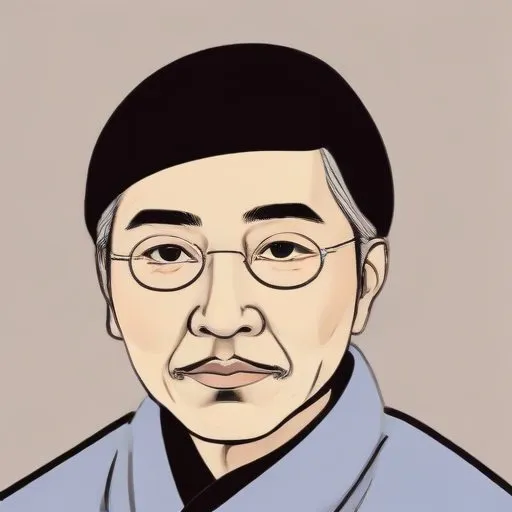
A renowned Chinese writer of novels and short stories that explore the complexities of rural life and the human condition, known for his vivid storytelling and poetic prose.
Wang Zengqi, a renowned Chinese writer, is celebrated for his elegant short stories and essays infused with traditional literature and folklores of his hometown. He is regarded as a successor of the Beijing School Writers, a prestigious group of writers known for their unique writing style.
Wang was born in 1920 into a landowner family in Gaoyou, Jiangsu province. In 1939, he enrolled in the National Southwestern Associated University, where he took writing classes from the esteemed Shen Congwen. It was during his university years that Wang started writing, and in 1940, he completed the first draft of Fuchou Revenge.
After graduating, Wang became a teacher at a high school in Kunming from 1944 to 1946, where he fell in love with Shi Songqin. Later, he moved to Shanghai and taught until 1948. In the same year, he became a museum curator in Beijing. Wang's writing career flourished, and he adapted the story of Fan Jin in Chapter 3 of The Scholars for the Peking opera, earning him recognition in the 1950s.
Wang faced persecution during the Anti-Rightist Campaign and was banished to Zhangjiakou until 1962. He suffered again during the Cultural Revolution, but his fortunes changed in 1968 when he was summoned by Jiang Qing to improve the model opera yangban xi Spark amid the Reed, also known as Shajiabang. After this, Wang restarted his normal writing, producing a series of short stories that are considered the pinnacle of his writing career.
Wang's writing style is characterized by its elegance and subtlety, reflecting his deep understanding of traditional Chinese literature and folklore. His work is a testament to his belief in the importance of preserving cultural heritage and promoting social harmony.
Wang Zengqi's writing has had a profound impact on modern Chinese literature, influencing generations of writers and readers alike. His elegant style and commitment to preserving cultural heritage have solidified his position as one of the most important writers of his time.
Through his life and work, Wang Zengqi has left an indelible mark on modern Chinese literature, inspiring generations of writers and readers to cherish and preserve cultural heritage.
Born in 1896
A pioneering Chinese writer and critic, known for his influential literary works that explored the country's social and political landscape, particularly during the Republican era.
Born in 1009
A renowned poet and essayist of the Song Dynasty, known for his lyrical and expressive writings that explored themes of nature, politics, and human emotions.
Born in 1902
A renowned Chinese writer and educator, celebrated for his vivid portrayals of rural life and cultural heritage in modern Chinese literature. His works often explored the complexities of human relationships and social change.
Born in 1904
A pioneering female writer and educator who explored themes of feminism, socialism, and individuality in her works, leaving a lasting impact on Chinese literature.
