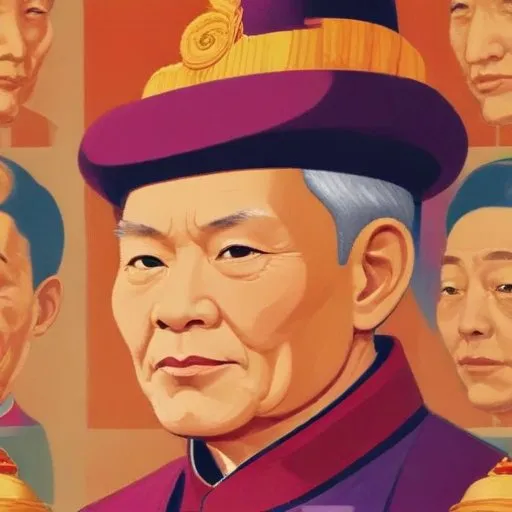
Wen Yanbo: The Visionary Scholar-Official of the Song Dynasty
A Grand Councilor's Wisdom and Integrity
Wen Yanbo, courtesy name Kuanfu, was a renowned scholar-official of the Song dynasty, who served four emperors over more than five decades, earning him a reputation as a trusted advisor and consummate politician. He is best known for his unwavering commitment to justice, his innovative military strategies, and his unshakeable integrity in the face of adversity.
Early Life and Career
Born on October 23, 1006, Wen Yanbo's intellectual prowess and administrative acumen propelled him to pass the imperial examination in 1027. He began his career as the magistrate of Yicheng County, later becoming the controller-general of Jiang Prefecture. His exceptional abilities eventually led him to the capital Kaifeng, where he served under Emperor Renzong as an investigating censor and later as a palace censor.
Military Reforms and Strategic Insights
During the tumultuous period of Tangut people's declaration of independence and the formation of Western Xia, Wen Yanbo demonstrated his military acumen. He suggested to Emperor Renzong that marshals in the front line should be granted independent authority to discipline subordinate generals for desertion and cowardice, without requiring permission from the imperial court. This innovative approach to military command and control earned him praise from the emperor.
Unwavering Integrity in the Face of Adversity
In 1040, Wen Yanbo's commitment to justice was put to the test when he was tasked with investigating a contentious case involving Generals Liu Ping and Huang Dehe. Wen's meticulous examination of the evidence and his refusal to be swayed by Huang's influence and bribery revealed the truth, exonerating Liu and exposing Huang's treachery.
Awards and Honors
Throughout his illustrious career, Wen Yanbo received numerous accolades and honors for his exceptional service to the Song dynasty. His most notable appointments include:
- Grand Councilor during Emperor Renzong's reign
- Investigating Censor
- Palace Censor
- Controller-General of Jiang Prefecture
- Magistrate of Yicheng County
Philosophical Contributions and Beliefs
Wen Yanbo's approach to governance and politics was underpinned by his strong sense of justice and his commitment to the welfare of the people. He believed in the importance of meritocracy, advocating for the promotion of talented officials based on their abilities rather than their family background or connections.
Personal Milestones and Key Life Events
Wen Yanbo's remarkable life was marked by several significant milestones, including:
- Passing the imperial examination in 1027
- Serving under four emperors: Emperor Renzong, Emperor Yingzong, Emperor Shizong, and Emperor Zhezong
- Playing a crucial role in shaping the Song dynasty's military strategies and governance
Influence on Modern Society
Wen Yanbo's legacy extends beyond the Song dynasty, influencing the development of Chinese politics, governance, and military strategy. His commitment to justice, his innovative approaches to governance, and his unwavering integrity have inspired generations of scholars, officials, and politicians.
Legacy and Historical Context
Wen Yanbo's remarkable life and career serve as a testament to the power of wisdom, integrity, and vision in shaping the course of history. As a scholar-official, he embodied the highest ideals of the Confucian tradition, earning him a revered place in the annals of Chinese history.
FAQ
Who was Wen Yanbo and what was his role in Chinese history?
Wen Yanbo was a Chinese grand chancellor who lived during the Tang dynasty. He served as the chief advisor to Emperor Xuanzong and played a crucial role in shaping the empires politics and economy during the 8th century.
What were Wen Yanbos accomplishments as grand chancellor?
Wen Yanbos accomplishments as grand chancellor included implementing fiscal reforms, strengthening the military, and promoting education and the arts. He was known for his wise counsel and his ability to balance the competing interests of different factions at court.
What was Wen Yanbos relationship with Emperor Xuanzong?
Wen Yanbo had a close and trusted relationship with Emperor Xuanzong, who valued his counsel and relied on him to manage the empire. However, their relationship was also marked by periods of tension and conflict, particularly over issues of power and patronage.
How did Wen Yanbos policies impact the Tang dynasty?
Wen Yanbos policies had a significant impact on the Tang dynasty, helping to establish a period of relative stability and prosperity. His reforms improved the empires finances, strengthened its military, and promoted cultural and educational development.
What is Wen Yanbos legacy in Chinese history?
Wen Yanbo is remembered as one of the most capable and wise grand chancellors of the Tang dynasty, known for his integrity, wisdom, and dedication to the empire. His legacy has endured for centuries, and he remains a revered figure in Chinese history.