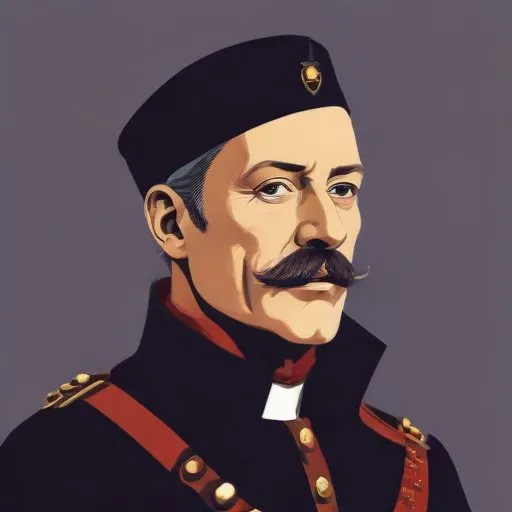
Wilhelm Filchner: The Daring Explorer Who Braved the Antarctic
A Life of Adventure and Discovery
Wilhelm Filchner is best known for leading the Second German Antarctic Expedition in 1911-1913, a daring endeavor that took him to the unforgiving landscapes of the Antarctic. As a German army officer, scientist, and explorer, Filchner's thirst for adventure and discovery drove him to embark on numerous expeditions that would shape his legacy as a pioneer in his field.
Early Years and Military Service
Born on September 13, 1877, in Munich, Germany, Filchner's early life was marked by a sense of adventure and a desire to serve his country. He joined the German army as a young man, where he quickly gained a reputation for his bravery and daring. His travels took him to Russia and the Pamir Mountains range, where he honed his skills as a geographer and geophysicist.
The Tibet and China Expeditions
Following his military service, Filchner conducted several surveys and scientific investigations in China, Tibet, and surrounding regions. His most notable expedition during this period was the 1903-1905 scientific survey in Tibet and western China, which showcased his expertise in geography and geophysics.
The Second German Antarctic Expedition
In 1909, Filchner was appointed to lead the Second German Antarctic Expedition, a monumental undertaking that aimed to explore the Antarctic continent. The expedition was plagued by difficulties, including the ship becoming trapped in the Weddell Sea ice for eight months, preventing Filchner from establishing a land base and achieving his main objective. Despite the setbacks, the expedition yielded important scientific results, including the discovery of the Filchner Ice Shelf.
Post-Expedition Life and Legacy
After the Antarctic expedition, Filchner resumed his travels in Asia, conducting two lengthy single-handed magnetic surveys in China and Tibet. His work during this period was marked by challenges and difficulties, including being stranded in India during World War II. Filchner eventually returned to Europe and retired to Zurich, where he passed away on May 7, 1957.
Awards and Honors
Throughout his life, Filchner received numerous honors and awards for his contributions to science and exploration. He was awarded the German National Prize for Art and Science in 1937 and received several honorary doctorates.
Legacy in the Antarctic
Filchner's legacy extends to the Antarctic, where several geographical features bear his name, including the Filchner Ice Shelf, Filchner Mountains, and Filchner Point.
Personal Milestones and Key Life Events
- Born on September 13, 1877, in Munich, Germany
- Joined the German army as a young man
- Conducted several surveys and scientific investigations in China, Tibet, and surrounding regions
- Led the Second German Antarctic Expedition in 1911-1913
- Resumed travels in Asia after World War I
- Passed away on May 7, 1957, in Zurich, Switzerland
Influence on Modern Society
Filchner's expeditions and discoveries have had a lasting impact on modern society, inspiring generations of scientists, explorers, and adventurers. His work in the Antarctic paved the way for future expeditions and research, contributing significantly to our understanding of the continent and its mysteries.
Trivia and Fun Facts
- Filchner was known for his daredevil spirit and was nicknamed "the daredevil of the Pamir Mountains"
- He was an accomplished linguist and spoke several languages, including Russian, Chinese, and Tibetan
- Filchner's expedition to the Antarctic was the first to use a seaplane
FAQ
What was Wilhelm Filchners most notable expedition?
Wilhelm Filchners most notable expedition was his 1903-1905 Tibet expedition, during which he reached the previously unknown Tsangpo River and explored the Tibetan Plateau.
How did Wilhelm Filchners expeditions contribute to geographical knowledge?
Filchners expeditions contributed significantly to geographical knowledge, mapping previously unknown regions and providing valuable insights into the geography and geology of Tibet and the Tibetan Plateau.
What was Wilhelm Filchners role in the German Geographical Society?
Filchner was a prominent member of the German Geographical Society, serving as its president from 1920 to 1932 and contributing to the development of German geography and exploration.
How did Wilhelm Filchners expeditions impact the understanding of Tibetan culture?
Filchners expeditions provided valuable insights into Tibetan culture, including its religion, customs, and way of life, and helped to foster greater understanding and appreciation for Tibetan culture in the Western world.
What was Wilhelm Filchners view on the importance of exploration?
Filchner believed that exploration was essential for expanding human knowledge, pushing the boundaries of geographical understanding, and promoting international cooperation and understanding.