


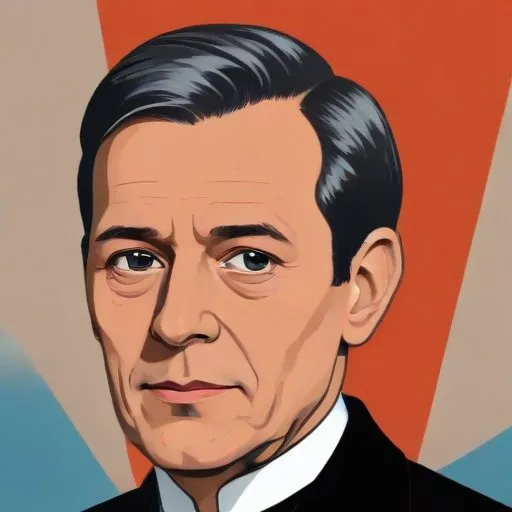
A Dutch jurist and politician who served as Minister of the Interior, known for his efforts to reform the country's administrative law and decentralize government powers. He played a significant role in shaping the Netherlands' modern administrative structure.
Wilhelm Friedrich de Gaay Fortman is renowned for his unwavering commitment to promoting human rights and upholding international law. As a Dutch jurist, diplomat, and politician, he dedicated his life to protecting the rights of individuals and nations, earning him a reputation as one of the most respected figures in the field of international relations.
Born on May 8, 1911, in Amsterdam, Netherlands, de Gaay Fortman pursued his academic interests in law at the University of Amsterdam, where he earned his doctorate in 1935. His educational background laid the foundation for his future endeavors in international law and human rights.
De Gaay Fortman's work was guided by his unwavering belief in the importance of protecting human dignity and promoting social justice. He firmly believed that international law should prioritize the rights of individuals and communities over state interests.
De Gaay Fortman's tireless efforts to promote human rights and international law have had a lasting impact on modern society. His contributions paved the way for the development of international human rights law, inspiring generations of lawyers, diplomats, and human rights advocates.
De Gaay Fortman's remarkable contributions were recognized through various awards and honors, including the Erasmus Prize (1979) and the Honorary Doctorate from the University of Brussels (1981).
De Gaay Fortman's personal life was marked by significant milestones, including his marriage to Henriette Francken in 1940 and the birth of their two children. His commitment to his family and community was evident in his active involvement in various philanthropic organizations.
De Gaay Fortman's work took place during a pivotal period in world history, marked by the aftermath of World War II and the emergence of the human rights movement. His legacy serves as a testament to the power of dedication and perseverance in promoting justice and human dignity.
Wilhelm Friedrich de Gaay Fortman's remarkable life and work serve as an inspiration to those committed to promoting human rights and international law. His unwavering dedication to protecting human dignity has left an indelible mark on the world, ensuring that his legacy will continue to inspire future generations.
Born in 1881
A Czech-American jurist and philosopher who developed the "pure theory of law," which separates law from morality and politics, and is also known for his work on international law and the concept of sovereignty.
Born in 1822
A Latvian-German chemist and academic who pioneered the field of biochemistry, discovering various compounds and contributing significantly to the understanding of proteins and amino acids.
Born in 1903
A Dutch economist and academic who developed the first national economic model and was awarded the first Nobel Prize in Economics in 1969 for his work on econometrics.
Born in 1902
The 36th Prime Minister of the Netherlands, a Dutch academic and politician, served as a leader during post-WWII reconstruction and played a key role in shaping the country's modern identity. He's also known for his efforts in establishing the European Coal and Steel Community, a precursor to the EU.
Born in 1886
A Dutch politician and historian who served as Prime Minister of the Netherlands from 1948 to 1958, leading the country's post-war reconstruction and social reform efforts. He's known for his progressive policies and strong leadership during a pivotal period in Dutch history.
Born in 1885
Dutch politician who served as Prime Minister of the Netherlands during World War II, leading the government in exile from London and playing a key role in the country's liberation.
