


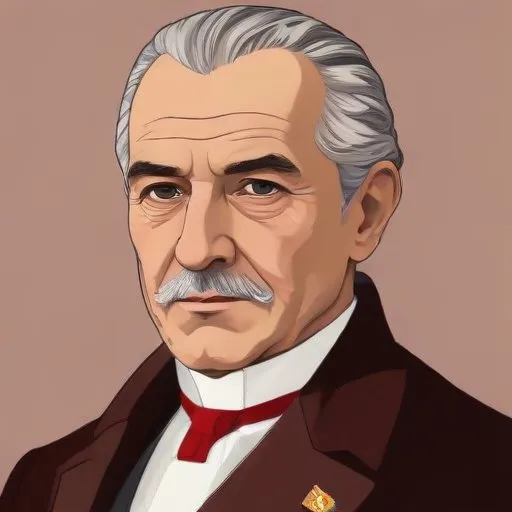
Austrian educator and politician who served as the 3rd President of Austria from 1928 to 1938, known for his attempts to maintain Austrian independence and democracy during the rise of Nazi Germany.
Wilhelm Miklas is prominently known for his untainted presidency of Austria from 1928 to 1938, during which he gallantly resisted the looming presence of Nazi Germany. Throughout his tenure, Miklas remained steadfast in his commitment to Austrian independence, earning him a revered place in Austrian history.
Born on October 15, 1872, in Krems, Lower Austria, Miklas was the son of a post official. He pursued higher education at the University of Vienna, graduating with a degree in history and geography. Following his academic pursuits, Miklas became the headmaster of the Federal Secondary School in Horn, a position he held from 1905 to 1922.
Miklas' foray into politics began in 1907 when he was elected to the Imperial Council (Reichsrat) as a member of the Christian Social Party. He was reelected in 1911 and continued to serve in the provisional assembly of German-Austria and the Constitutional Assembly of the First Austrian Republic. A rare opponent of German nationalism, Miklas voiced his opposition to a closer connection with the Weimar Republic, instead advocating for Austrian independence.
In 1928, Miklas was elected president of Austria, a position he held until the Anschluss in 1938. During his presidency, Miklas faced immense pressure from Nazi Germany, but he refused to yield to their demands. In 1933, he failed to intervene when Chancellor Engelbert Dollfuss declared the self-elimination of the parliament, effectively granting himself dictatorial powers. This precarious situation allowed Dollfuss to consolidate power and paved the way for Austria's eventual annexation by Nazi Germany.
Wilhelm Miklas' unwavering dedication to Austrian independence and sovereignty has earned him a revered place in Austrian history. His presidency, though marked by turmoil and external pressures, serves as a testament to his unyielding commitment to the Austrian people. In the face of overwhelming adversity, Miklas stood firm, refusing to compromise on his values and principles.
After the Anschluss, Miklas was forced to resign as president and lived in retirement until his death on March 20, 1956. Despite the challenges he faced, Miklas' legacy as a champion of Austrian independence continues to inspire and educate future generations about the importance of standing up for one's values and principles in the face of adversity.
Wilhelm Miklas' remarkable story serves as a testament to the power of conviction, resilience, and dedication to one's people. His unwavering commitment to Austrian independence has cemented his place in history as a beacon of hope and inspiration for generations to come.
Born in 1870
Austrian lawyer and politician who served as the 4th President of Austria, known for his role in establishing the country's post-WWII government and drafting its constitution. He played a key role in Austria's transition to democracy.
Born in 1897
The 15th Federal Chancellor of Austria, a strong opponent of Nazi Germany, who tried to maintain Austria's independence before its annexation in 1938. He's known for his courageous but ultimately unsuccessful resistance against Hitler's regime.
Born in 1879
A German nobleman who served as Chancellor of Germany in 1932, known for his role in appointing Adolf Hitler as Chancellor, paving the way for the Nazi regime.
Born in 1881
A leading figure in Austrian socialism, he played a key role in shaping the country's post-WWI government and was a prominent advocate for democratic socialism. His writings on Marxism and nationalism remain influential.
