


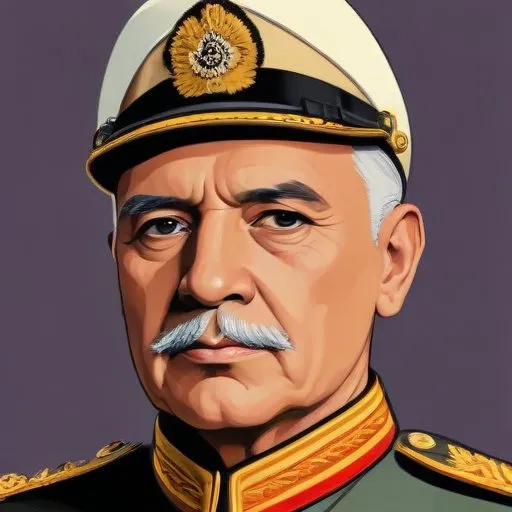
Led British and Indian forces during World War I, playing a crucial role in the Gallipoli Campaign and later serving as Commander-in-Chief of the British Indian Army.
Field Marshal William Riddell Birdwood, 1st Baron Birdwood, is renowned for his exceptional military prowess, particularly during the Gallipoli Campaign in 1915, where he commanded the Australian and New Zealand Army Corps (ANZAC). His distinguished service as commander-in-chief of the Fifth Army on the Western Front during the First World War cemented his reputation as a brilliant military strategist.
William Birdwood was born on 13 September 1865 in Kirkee, India, to Herbert Mills Birdwood and Edith Marion Sidonie. His father, a Bombay high court judge, played a significant role in shaping William's early life. Birdwood was educated at Clifton College, where he developed a strong foundation for his future military career.
Birdwood's military career began in 1883, when he secured a militia commission in the 4th Battalion Royal Scots Fusiliers. He trained at the Royal Military College, Sandhurst, and was commissioned early due to the Russian war scare of 1885. He joined the 12th Prince of Wales's Royal Lancers and later transferred to the Bengal Staff Corps and the 11th Bengal Lancers, seeing action on the North-West Frontier in 1891. His exceptional service earned him the position of adjutant of the Viceroy's Bodyguard in 1893.
Birdwood's most notable achievement was during the Gallipoli Campaign, where he commanded the ANZAC forces during the landings on the peninsula and the subsequent evacuation later in the year. His leadership skills and tactical prowess were instrumental in the campaign's success. He went on to become commander-in-chief of the Fifth Army on the Western Front, playing a crucial role in the closing stages of the war.
After the war, Birdwood served as general officer commanding the Northern Army in India in 1920 and Commander-in-Chief, India, in 1925. He was elevated to the peerage as 1st Baron Birdwood in 1938. Throughout his illustrious career, Birdwood received numerous honors, including the Knight Grand Cross of the Order of the Bath, the Knight Commander of the Order of the Star of India, and the Knight Commander of the Royal Victorian Order.
Birdwood's personal milestones were marked by his marriage to Janetta Hope in 1893, with whom he had two sons and a daughter. He was known for his strong sense of duty, discipline, and leadership, inspiring countless soldiers throughout his career. His legacy extends beyond the realms of military history, serving as a testament to the values of courage, honor, and sacrifice.
Birdwood's military career was shaped by the tumultuous events of the early 20th century, including the First World War and the Russian war scare of 1885. A comparative analysis with his contemporaries, such as General Douglas Haig and General Erich Ludendorff, highlights Birdwood's unique strengths as a commander, particularly his ability to adapt to changing circumstances and maintain the morale of his troops.
Birdwood's remarkable life and career serve as a testament to his unwavering commitment to duty, country, and honor. His legacy continues to inspire generations of soldiers, historians, and scholars alike.
Born in 1868
Led a British expedition to the South Pole, racing against a Norwegian team, and tragically perished on the return journey. He is remembered for his bravery and sacrifice in the pursuit of scientific discovery.
Born in 1871
Prolific writer of historical novels and adventure stories, also a talented landscape painter.
Born in 1863
A Welsh lawyer and politician who served as Prime Minister of the United Kingdom, leading the country through World War I and introducing key social reforms. He's known for his charismatic leadership and progressive policies.
Born in 1852
A British Prime Minister who led the country through the early years of World War I, known for his role in shaping the country's war effort and introducing reforms like women's suffrage.
