


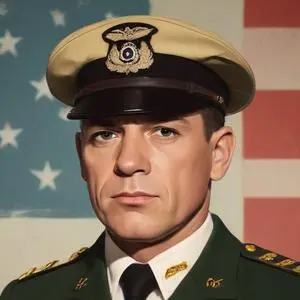
Notorious for leading the 1968 My Lai Massacre, a brutal and infamous incident during the Vietnam War, in which American soldiers killed hundreds of unarmed Vietnamese civilians. This event sparked widespread outrage and anti-war protests.
William Laws Calley Jr. is a former United States Army officer infamous for his role in the My Lai massacre, one of the most notorious atrocities committed by American forces during the Vietnam War. On March 16, 1968, Calley led a platoon of soldiers in a brutal attack on the South Vietnamese village of My Lai, resulting in the deaths of 22 unarmed civilians, including women and children.
Calley was born on June 8, 1943, in Miami, Florida, to William Laws Calley Sr., a World War II veteran of the United States Navy. He graduated from Miami Edison High School and attended Palm Beach Junior College in 1963, but dropped out in 1964 after failing a majority of his classes. Before enlisting in the Army in 1966, Calley worked various jobs, including as a bellhop, dishwasher, salesman, insurance appraiser, and train conductor.
After completing basic combat training at Fort Bliss, Texas, Calley underwent advanced individual training as a company clerk at Fort Lewis, Washington. His high scores on the Armed Forces Qualification tests earned him a spot in Officer Candidate School, where he graduated as a second lieutenant in the infantry in September 1967. Calley was assigned to the 1st Platoon, Company C, 1st Battalion, 20th Infantry Regiment, 11th Infantry Brigade, 23rd Infantry Division, and began training at Schofield Barracks, Hawaii, in preparation for deployment to South Vietnam.
The events of March 16, 1968, would forever be etched in history as a dark stain on the United States' involvement in Vietnam. Under Calley's command, a platoon of American soldiers entered the village of My Lai, where they proceeded to slaughter innocent civilians, including women, children, and the elderly. The exact number of deaths remains disputed, but estimates range from 347 to over 500. Calley was later convicted of premeditated murder for his role in the massacre, which sparked widespread outrage and calls for accountability.
In 1970, Calley was court-martialed and convicted of premeditated murder for the deaths of 22 unarmed civilians at My Lai. He was sentenced to life imprisonment, but his sentence was later commuted to 20 years by the U.S. Army Court of Military Review. In a move that sparked controversy, President Richard Nixon ordered Calley's release from prison in 1973, citing "undue prejudice" against the former lieutenant. Calley was released to house arrest, where he served three years before being paroled in 1975.
Since his release from prison, Calley has shunned public attention, leading a quiet life in Columbus, Georgia. The My Lai massacre remains a painful and controversial chapter in American military history, serving as a stark reminder of the devastating consequences of war. Calley's actions and conviction have been the subject of intense debate, with some viewing him as a scapegoat for the failures of military leadership and others seeing him as a symbol of the atrocities committed during the Vietnam War.
As the world reflects on the lessons of My Lai, one thing is clear: the actions of William Calley serve as a brutal reminder of the devastating consequences of unconditional obedience and the importance of accountability in the face of unchecked power.
Born in 1917
The 35th President of the United States was a charismatic leader who navigated the country through the Cuban Missile Crisis and advocated for civil rights, leaving a lasting legacy in American politics.
Born in 1908
The 36th President of the United States, a skilled politician and leader, played a crucial role in passing landmark civil rights legislation, including the Civil Rights Act and Voting Rights Act.
Born in 1913
The 37th President of the United States, a polarizing figure who led the country through significant domestic and foreign policy changes, infamous for his involvement in the Watergate scandal.
Born in 1916
The 8th United States Secretary of Defense played a crucial role in shaping US foreign policy during the Cold War era, particularly in the Vietnam War. He is infamous for his controversial decisions and legacy.
Born in 1923
A renowned diplomat and strategist who played a pivotal role in shaping global politics during the Cold War era, known for his Realpolitik approach and brokering peace agreements .
Born in 1914
A decorated four-star general who played a crucial role in the Vietnam War, leading US military forces to victory in several key battles and later becoming the Army's Chief of Staff.
89 Years Old
The first African American to serve as Secretary of State, he played a crucial role in shaping US foreign policy during the Gulf War and War on Terror. He's also known for his diplomatic efforts and leadership in the military.
73 Years Old
A highly decorated four-star general who led the US military efforts in Iraq and Afghanistan, later becoming the head of the CIA, known for his strategic thinking and leadership.
