


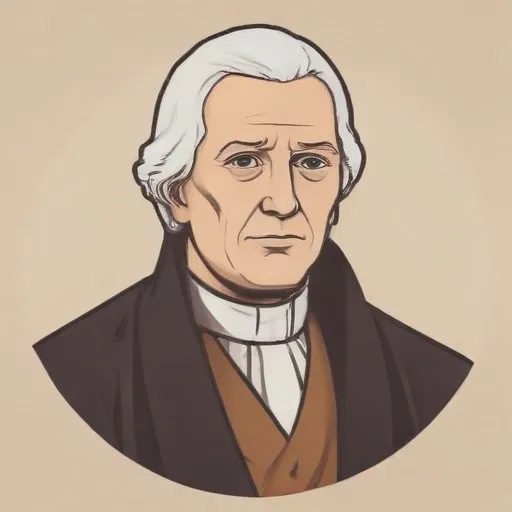
A 17th-century Oxford scholar who challenged Catholic doctrine, contributing to the Church of England's formation. His writings defended Anglicanism, influencing the English Reformation.
William Chillingworth, a 17th-century English churchman, is mostly known for his theological works, particularly his influential book "The Religion of Protestants," which sparked controversy and debate among his contemporaries. His intellectual curiosity and probabilistic approach to theology earned him a reputation as a formidable debater and thinker of his time.
Born on October 12, 1602, in Oxford, England, Chillingworth was the son of a mayor and had the privilege of having William Laud, a prominent churchman, as his godfather. He began his academic pursuits at Trinity College, Oxford, where he excelled in mathematics and developed a passion for poetry. In 1628, he became a fellow of the college, solidifying his position as a respected scholar.
Chillingworth's fascination with religious controversy led him to engage with prominent Catholics, including John Percy, a Jesuit who succeeded in converting him to Catholicism in 1630. However, he soon reevaluated his stance and returned to the Church of England. This theological seesaw continued, with Chillingworth adopting Arminian views and embracing Pyrrhonism, an ancient Greek philosophy that emphasizes the limitations of knowledge.
His major work, "The Religion of Protestants," reflected his probabilistic approach to theology, which stirred up controversy among his contemporaries. The book's central argument posits that Protestantism is a more reasonable and moral choice than Catholicism. This work cemented Chillingworth's reputation as a leading theologian of his time.
Chillingworth's theological contributions, particularly his emphasis on reason and probabilism, have had a lasting impact on Christian thought. His willingness to challenge established dogma and engage in intellectual debate has inspired generations of theologians and scholars.
Chillingworth's adoption of Pyrrhonism reflects his skepticism towards dogmatic certainty. He believed that truth is provisional and that humans can only strive for probabilistic knowledge. This philosophical stance has influenced the development of epistemology and the philosophy of religion.
William Chillingworth's life and works are a testament to the intellectual tumult of 17th-century England. His theological explorations and controversies reflect the broader debates of his time, which shaped the course of Christian thought and continue to resonate today.
Born in 1924
Prolific author of macabre and suspenseful novels, often blending elements of horror, mystery, and dark humor, with works adapted into successful films and TV shows.
Born in 1573
A 17th-century poet and cleric who penned powerful, metaphysical sonnets that explored themes of love, death, and spirituality. His works are celebrated for their complex, intricate language and profound insights into the human experience.
Born in 1593
A metaphysical poet and Anglican priest, he crafted intricate, symbolic, and introspective verse that explored the human condition and spirituality. His poetry is revered for its lyricism, depth, and emotional resonance.
Born in 1643
A Scottish bishop, historian, and theologian who wrote influential works on the English Reformation and served as a close advisor to King William III. He's most known for his historical writings and ecclesiastical reforms.
