


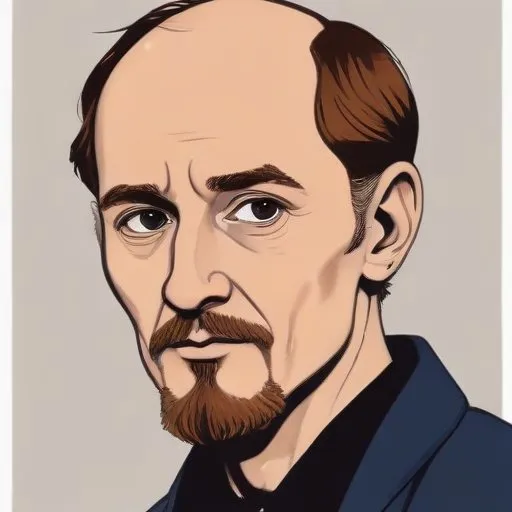
A Scottish philosopher who developed the theory of prima facie duties, which argues that certain actions are inherently right or wrong, regardless of their consequences. He's also known for his work on moral philosophy and ethics.
William David Ross, a renowned Scottish philosopher, is best known for his seminal work, The Right and the Good (1930), where he developed a pluralist, deontological form of intuitionist ethics, diverging from G.E. Moore's consequentialist intuitionism. This groundbreaking work cemented his position as a leading figure in philosophical circles, contributing significantly to the field of ethics.
Born on April 15, 1877, in Thurso, Caithness, Scotland, Ross spent his early childhood in southern India before returning to Scotland to pursue his education. He attended the Royal High School, Edinburgh, and the University of Edinburgh, where he earned a first-class MA honors degree in classics in 1895. Ross furthered his studies at Balliol College, Oxford, securing a First in Classical Moderations in 1898 and a First in Literae Humaniores (Greats) in 1900.
Ross was elected a Fellow of Merton College in 1900, a position he held until 1945. In 1902, he became a tutorial fellow at Oriel College, Oxford. During World War I, Ross joined the army in 1915, serving in various positions related to munitions supply, eventually rising to the rank of major and Deputy Assistant Secretary in the Ministry of Munitions. This wartime service earned him an OBE (Officer of the Order of the British Empire) in 1918. In recognition of his post-war public services, Ross was knighted in 1938, becoming a Knight Commander of the Order of the British Empire.
Ross's philosophical work was deeply rooted in Aristotle's ideas, which he critically edited and translated. His commitment to intuitionist ethics, as outlined in The Right and the Good, posits that moral obligations arise from a plurality of moral principles, rather than a single, overarching principle. This stance diverges from consequentialist ethics, which Ross saw as flawed. He believed that moral judgments stem from our intuitive sense of right and wrong, rather than a calculation of consequences.
Ross's influence on modern ethics is profound, as his work has shaped discussions around intuitionist ethics, deontology, and moral pluralism. His legacy extends beyond philosophy, as his commitment to public service and education has inspired generations of scholars and thinkers.
Throughout his life, Ross exemplified a commitment to intellectual rigor, public service, and education. His work continues to shape philosophical debates, and his legacy serves as a testament to the power of rigorous scholarship and dedication to the pursuit of knowledge.
Born in 1711
A Scottish Enlightenment thinker who developed influential ideas on morality, ethics, and human nature, and is considered one of the most important figures in the history of Western philosophy.
Born in 1724
Developed influential philosophical frameworks, such as the Critique of Pure Reason, that shaped modern Western thought on ethics, morality, and human understanding.
Born in 1806
A prominent 19th-century thinker who championed individual liberty, free speech, and women's rights, and is best known for his influential book "On Liberty".
Born in 1838
A pioneering utilitarian philosopher and economist who developed influential theories on ethics, morality, and welfare economics, shaping modern thought on these subjects.
Born in 1872
A renowned thinker who made significant contributions to mathematics, philosophy, and social commentary, known for his influential writings on logic, ethics, and politics. He's a prominent figure in shaping modern intellectual thought.
Born in 1910
A prominent logical positivist, he championed the idea that only verifiable statements are meaningful, and his book "Language, Truth, and Logic" remains a seminal work in 20th-century philosophy.
Born in 1900
A philosopher who challenged traditional views on the mind-body problem, proposing a more holistic approach to understanding human behavior and consciousness. He's known for his concept of "category mistake."
Born in 1921
Developed the concept of "justice as fairness" and argued that a just society should be based on principles that would be agreed upon by rational individuals behind a "veil of ignorance".
