


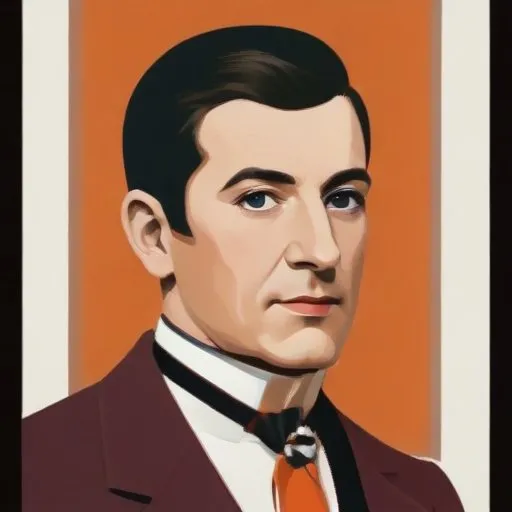
A Catholic nobleman who was falsely accused of treason and executed in 1680, known for being a victim of the Popish Plot, a fabricated conspiracy to overthrow the English government.
William Howard, 1st Viscount Stafford, was a Royalist supporter who met a tragic end, falsely implicated in the infamous Popish Plot and executed for treason. His untimely death, however, only cemented his legacy as a Catholic martyr, beatified by Pope Pius XI in 1929.
William Howard was born on November 30, 1614, to Thomas Howard, 21st Earl of Arundel, and his wife, Alethea Talbot. Despite growing up in a nominally Anglican household, William was exposed to Roman Catholic influences from a young age, as many members of the Howard family remained secretly loyal to the faith.
William's early education took place in the household of Samuel Harsnett, Bishop of Norwich, before attending St John's College, Cambridge, at the age of 11 in 1624. Although he did not receive a degree, his education laid the foundation for his future interests and pursuits.
William married Mary, daughter of Edward Stafford, in 1637, in a Catholic ceremony that reportedly embarrassed his father. Following the death of Mary's distant cousin, Henry Stafford, 5th Baron Stafford, the Howard family secured the title, and William was created Baron Stafford on September 12, 1640. Two months later, he was elevated to Visc, a title he would hold until his untimely death.
In 1678, Titus Oates, a notorious informer, accused William of conspiring to assassinate King Charles II as part of the fabricated Popish Plot. Despite a lack of evidence, William was arrested, tried, and executed for treason on December 29, 1680.
William's martyrdom did not go unnoticed, and in 1929, Pope Pius XI beatified him as a Catholic martyr. Today, he is remembered as a symbol of persecution and faith, a testament to the enduring power of conviction in the face of adversity.
William's legacy serves as a powerful reminder of the dangers of false accusations and the importance of standing by one's convictions, even in the face of persecution. His story continues to inspire and educate, a testament to the enduring power of faith and resilience.
Born in 1630
The last monarch of the House of Stuart, restored to the throne after a republican Commonwealth, known for his lavish spending, mistresses, and the Great Fire of London. He ruled with a mix of absolutism and indulgence, shaping England's Restoration era.
Born in 1633
The last Catholic monarch of England, Scotland, and Ireland, who attempted to restore Catholicism and absolute monarchy, sparking the Glorious Revolution. He's infamous for his authoritarian rule and religious intolerance.
Born in 1629
A 15th-century Catholic Church leader who played a key role in the Wars of the Roses and was a powerful figure in English politics. He was a skilled diplomat and strategist.
