


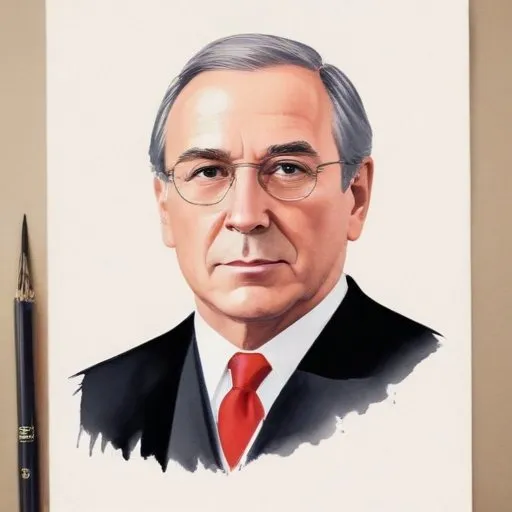
American lawyer, judge, and politician who served as the 21st United States Secretary of State, playing a key role in the Mexican-American War and manifest destiny. He's known for his "Destiny" quote, advocating for westward expansion.
William L. Marcy, a stalwart of American politics, is best known for his pivotal roles as U.S. Senator, Governor of New York, U.S. Secretary of War, and U.S. Secretary of State. His crowning achievement, the Gadsden Purchase, remains the last major acquisition of land in the contiguous United States, cementing his legacy as a visionary statesman.
Born on December 12, 1786, in Southbridge, Massachusetts, Marcy's fascination with the law led him to Brown University, where he earned his degree. Post-graduation, he established a legal practice in Troy, New York, setting the stage for his future political endeavors.
During the War of 1812, Marcy fought bravely, rising through the ranks from ensign to captain in the 155th New York Infantry Regiment. This experience kindled his interest in politics, and he soon aligned himself with the Bucktail faction of the Democratic-Republican Party, becoming a key member of the Albany Regency.
Between 1821 and 1831, Marcy held various positions, including Adjutant General of New York, New York State Comptroller, and associate justice of the New York Supreme Court. In 1831, the New York legislature elected him to the U.S. Senate, where he served until 1833. He then became the Governor of New York, a position he held for three terms until his defeat in 1838.
Under President James K. Polk, Marcy served as Secretary of War from 1845 to 1849, overseeing the Mexican-American War. During this period, he demonstrated his administrative prowess, effectively managing the conflict and its aftermath.
After leaving the Polk administration, Marcy resumed his law practice and became a leader of the Soft Hunker faction of the New York Democratic Party. In 1853, he returned to the Cabinet as Secretary of State under Franklin Pierce, where he negotiated the Gadsden Purchase, resolving a long-standing border dispute with Mexico and acquiring vital territory in present-day Arizona and New Mexico.
William L. Marcy's remarkable career, marked by his pragmatic approach to politics and his ability to navigate complex situations, has left an indelible mark on American history. His legacy continues to inspire future generations of leaders, and his name remains synonymous with vision, statesmanship, and dedication to public service.
Born in 1777
A skilled orator and compromiser who played a crucial role in shaping the country's early development, particularly through his "American System" economic plan. He's also known for his numerous presidential bids and influential leadership in the Senate.
Born in 1782
A prominent figure in American politics, serving as Vice President and advocating for states' rights, particularly in regards to slavery. He played a significant role in shaping the country's early development.
Born in 1782
A renowned lawyer and politician who served as the 14th United States Secretary of State, known for his exceptional oratory skills and influential role in shaping the country's early development.
Born in 1795
The 11th President of the United States was a strong leader who aggressively expanded the country's territory through the annexation of Texas and the Mexican-American War, nearly doubling the size of the US. He's also known for being a strong advocate for Manifest Destiny.
Born in 1791
The 15th President of the United States, a northern Democrat who remained in office during the American Civil War, is infamous for his inaction in preventing the secession of 11 southern states. He's often regarded as one of the worst presidents in US history.
Born in 1767
A fiery leader who expanded democracy and shaped the country's economy, known for his populist policies and controversial decisions, including the forced relocation of Native Americans.
Born in 1782
The first president born after American independence, he's known for being a skilled politician and statesman who navigated the country through the Panic of 1837. He's also remembered for being the first president born a citizen of the United States.
Born in 1790
The first vice president to assume the presidency after the death of the incumbent, serving from 1841 to 1845 and annexing the Republic of Texas. He's known for his strong states' rights views and being the first president born after the American Revolution.
