


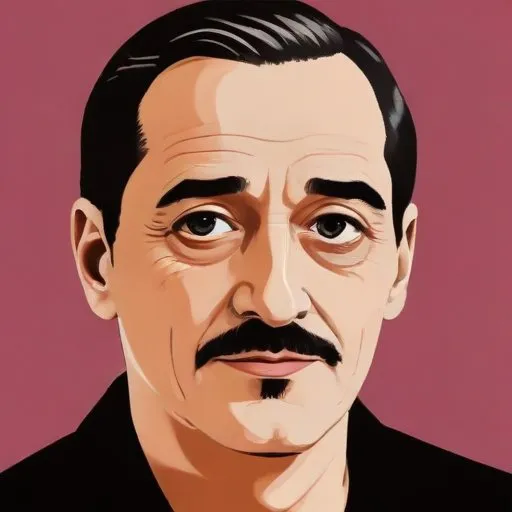
A German author and illustrator, best known for creating vivid and detailed illustrations of maritime scenes, particularly of ships and naval battles, in the early 20th century.
Willy Stwer is best known for his breathtaking nautical paintings and lithographs that transport viewers to the golden age of maritime history. His artistic talent was recognized early, and he became the favorite naval painter of Kaiser Wilhelm II, accompanying the Emperor on several voyages and receiving numerous commissions from the Imperial German Navy.
Born on May 22, 1864, in Wolgast, Germany, Stwer was the son of a sea captain and was immersed in the maritime world from a young age. He initially trained as a metalworker and worked as a technician in the engineering offices of various German shipyards. However, his passion for art soon took over, and he began receiving commissions as a draftsman, illustrator, and painter.
Stwer's talent was recognized early, and his self-taught painting technique earned him the patronage of Kaiser Wilhelm II. This royal seal of approval catapulted Stwer to fame, and he became a prominent figure in the Imperial German Navy's artistic circle. In 1892, he married Henrietta Dettmann from a wealthy family, which allowed him to devote himself exclusively to his art.
Between 1892 and 1929, Stwer was incredibly prolific, creating approximately 900 black-and-white and 335 color illustrations for 57 books, as well as posters, postcards, trading cards, labels, brochures, and calendars. His work adorned the walls of the Imperial German Navy's vessels and captured the essence of historical maritime events, including the sinking of the RMS Titanic in 1912.
Stwer's art not only showcased his technical skill but also reflected his deep respect for the sea and its power. His work often conveyed a sense of awe, wonder, and reverence for the maritime world. As a board member of the German Navy League, Stwer believed in the importance of promoting the maritime industry and its significance in shaping the nation's identity.
In recognition of his contributions to the world of art, Stwer was awarded an honorary professorship in 1907. This prestigious honor cemented his position as a leading artist of the Imperial Era.
With the abdication of Kaiser Wilhelm II and the end of the Imperial Era, Stwer's career suffered a setback. He continued to receive commissions from steamship lines, but his later work lacked the imperial patronage that had once propelled him to fame. Stwer passed away on May 31, 1931, at the age of 67, and was interred in Cemetery III of the Jerusalem and New Churches in Berlin. His grave remains preserved to this day, a testament to his enduring legacy.
Willy Stwer's remarkable body of work continues to inspire artists and maritime enthusiasts alike, offering a glimpse into the grandeur and majesty of the Imperial Era.
Born in 1890
A German-Swedish journalist and author who wrote satirical and humorous articles, novels, and poems, critiquing politics and society during the Weimar Republic era.
Born in 1899
A celebrated German writer and poet, best known for his humorous and satirical children's books, such as "Emil and the Detectives" and "Lottie and Lisa", which have been beloved by generations of readers.
Born in 1895
A German philosopher and author who wrote influential works on technology, politics, and war, exploring the intersection of humanity and modernity. Known for his provocative and poetic writings that challenged conventional thinking.
Born in 1912
Developed the V-2 rocket for Nazi Germany and later led the team that created the Saturn V rocket that took humans to the moon.
Born in 1894
Pioneering rocket scientist and space travel theorist who laid the groundwork for modern astronautics, inspiring generations of space enthusiasts.
Born in 1886
A renowned German conductor and composer, he was a dominant figure in the Berlin Philharmonic, known for his intense and expressive performances of Beethoven, Brahms, and Bruckner. He was also a composer of symphonies and other works.
Born in 1864
A renowned composer and conductor of the late Romantic era, known for his tone poems and operas that showcased his mastery of orchestration and expressive storytelling.
Born in 1892
A pioneering filmmaker who charmed audiences with sophisticated comedies and witty romantic dramas, often blending satire and social commentary.
