


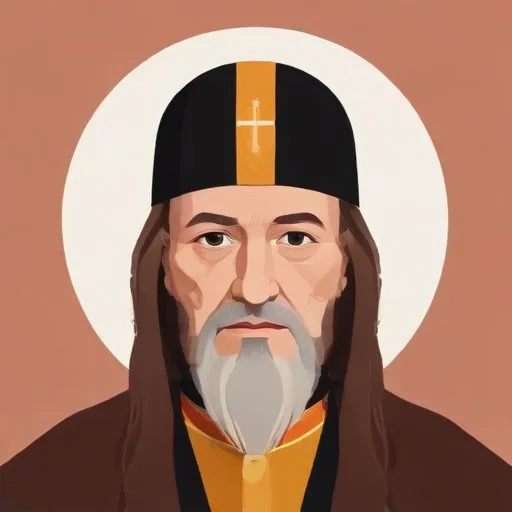
The 26th Superior General of the Society of Jesus, a Polish-Austrian religious leader, oversaw the Jesuit order during a tumultuous period, navigating Vatican politics and modernizing the organization. He's known for his strong leadership and reform efforts.
Wlodimir Ledchowski, a Polish Catholic priest, is renowned for his unwavering dedication to the Society of Jesus, serving as its 26th Superior General from 1915 until his death in 1942. Under his leadership, the Society flourished despite the turmoil of two World Wars and the Great Depression.
Born on October 7, 1866, in Loosdorf, Lower Austria, Ledchowski was one of nine children to Count Antoni Halka Ledchowski and Countess Josephine née Salis-Zizers. His family's strong Catholic roots and his uncle's elevated position as Mieczysław Cardinal Halka-Ledchowski would later influence his own spiritual journey.
After studying at the Theresianum in Vienna, Ledchowski briefly served as a page to Empress Elizabeth before pursuing law at the Jagellonian University in Kraków. However, he soon felt an insurmountable calling to the priesthood, leading him to apply to the Jesuits in 1889.
Ordained as a priest in 1894, Ledchowski's administrative skills and strong character quickly propelled him through the ranks. He became the Superior of the Jesuit house in Kraków, then Rector of the College, and eventually the Polish Vice-Provincial in 1901 and Provincial of Southern Poland in 1902.
In 1906, he was appointed Assistant in the German province, a position that prepared him for the highest office in the Society. When Franz Xavier Wernz passed away in 1914, Ledchowski emerged as a strong candidate for the leadership, and on February 11, 1915, he was elected the 26th Superior General of the Jesuits.
During Ledchowski's tenure, the Society of Jesus experienced unprecedented growth, despite the challenges of war and economic depression. He convened the 27th General Congregation, which aimed to revitalize the Jesuit order and adapt to the changing world.
His leadership was marked by a strong sense of discipline, obedience, and devotion to the Church. Ledchowski's vision for the Society emphasized the importance of education, intellectual pursuits, and missionary work.
As a leader, Ledchowski faced criticism for his perceived rigid stance on Church doctrine and his handling of internal conflicts within the Society. Nonetheless, his unwavering commitment to the Jesuit Order and the Catholic Church earned him a reputation as a strong and dedicated leader.
Today, Wlodimir Ledchowski remains an important figure in Catholic history, remembered for his courage, wisdom, and dedication to the service of the Church. His legacy continues to inspire generations of Jesuits and Catholics worldwide.
Born in 1504
Leader of the Catholic Church during the Counter-Reformation, he excommunicated Queen Elizabeth I and played a key role in the Council of Trent.
Born in 1675
A 18th-century pope who reformed the Catholic Church, promoting tolerance and scholarship, and is known for his encyclicals on topics like usury and the sacraments.
Born in 1881
Reformed the Catholic Church, introducing progressive reforms and ecumenical dialogue, and convened the Second Vatican Council.
Born in 1417
A 15th-century pope who played a significant role in the fall of the Western Schism, ending the division in the Catholic Church. He's also known for his lavish spending and nepotism.
Born in 1920
Leader of the Catholic Church from 1978 to 2005, known for helping to end communism in Poland and being a charismatic advocate for human rights and social justice.
Born in 1491
Founded the Jesuit Order, a Catholic religious organization known for its missionary and educational work, and developed the Spiritual Exercises, a guide for spiritual growth and discernment.
Born in 1506
Co-founder of the Society of Jesus, a Catholic religious order, known for his missionary work in Asia, especially in India and Japan, and for his role in the Counter-Reformation. He's revered for his tireless efforts to spread Christianity and his compassion for the poor and marginalized.
Born in 1521
A 16th-century Jesuit priest and doctor of the church, he played a crucial role in counter-reformation efforts, and his writings helped shape Catholic theology.
