


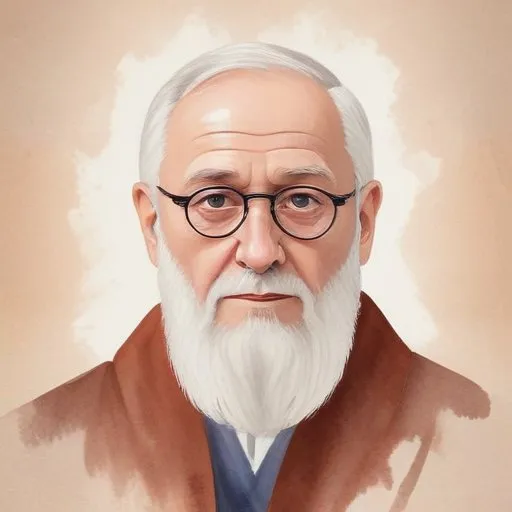
A 16th-century Lutheran theologian who contributed to the development of Protestant theology, particularly in the areas of Christology and soteriology. His writings influenced the Lutheran Reformation and shaped the Lutheran Church's doctrine.
Wolfgang Musculus, born Mslin or Mauslein, was a renowned Reformed theologian of the Reformation, celebrated for his profound biblical commentaries and systematic theology. He is particularly recognized for his work, Loci communes sacrae theologiae (Common Places of the Christian Religion), which remains a significant contribution to Reformed theology.
Musculus was born on September 10, 1497, in the village of Dius, Moselle, in a German-speaking area of France. He was raised in a family that valued education and was exposed to the rich oral tradition of song and knowledge from a young age.
He joined the Benedictine monastery at Lixheim, where he developed his passion for languages, Humanism, and religion. In 1527, Musculus left the monastery to serve as deacon of the Cathedral of Our Lady of Strasbourg, where he studied under prominent theologians such as Bucer and Capito.
Musculus's theological career spanned over three decades, during which he served in various capacities, including preaching assistant to Matthus Zell in Strasbourg and professor of theology at Bern. His most notable contributions include:
Musculus's work has had a profound impact on Reformed theology, shaping the thoughts and ideas of theologians for centuries. His contributions have influenced notable figures such as J.S. Bach, who drew inspiration from his hymns.
Today, Musculus is remembered as a pioneering theologian of the Reformation, whose commitment to biblical interpretation and systematic theology continues to inspire scholars and theologians alike.
Musculus's life was marked by significant events, including his departure from the Benedictine monastery in 1527 and his subsequent service in Strasbourg and Augsburg. In 1549, he became the primary professor of theology at Bern, where he wrote several influential works.
Despite facing challenges, including the introduction of the Augsburg Interim, Musculus remained steadfast in his commitment to Reformed theology, leaving a lasting legacy in the world of theology.
Musculus's theology was characterized by a strong emphasis on biblical interpretation, covenant theology, and the authority of Scripture. His work reflects a deep understanding of the biblical narrative and a commitment to applying its teachings to everyday life.
Through his writings, Musculus demonstrated a nuanced understanding of the complexities of human nature, sin, and redemption, offering insights that continue to inform Reformed theology today.
Born in 1483
A German monk and priest who sparked the Protestant Reformation, challenging Catholic Church authority and shaping Western Christianity. He's famous for nailing 95 theses to a church door, sparking a religious revolution.
Born in 1509
A French pastor and theologian who played a key role in the Protestant Reformation, shaping Christian theology and influencing Western civilization. He's famous for his teachings on predestination and his role in establishing Calvinism.
Born in 1484
Leader of the Swiss Reformation, advocating for church reform and inspiring other Protestant movements.
Born in 1497
A 16th-century Renaissance scholar who made significant contributions to the development of the Protestant Reformation and education, known for his theological writings and astronomical observations.
Born in 1504
A prominent figure in the Swiss Reformation, he played a key role in shaping Protestant theology and wrote influential works on covenant theology. His writings had a lasting impact on Reformed Christianity.
Born in 1519
A 16th-century French theologian and scholar who played a key role in shaping Protestantism, particularly Calvinism, through his writings and teachings. He's also known for his Greek New Testament translation.
