


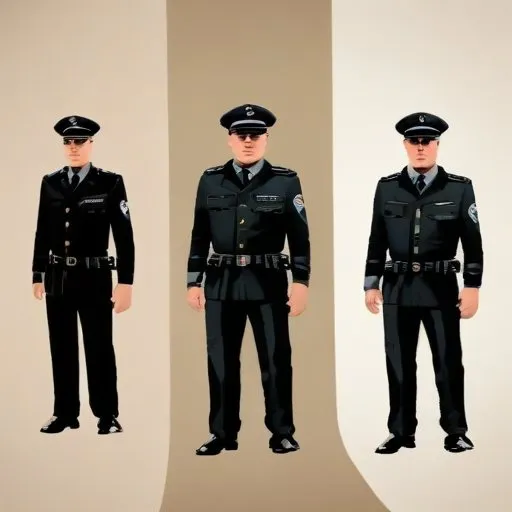
The East German secret police's chief spymaster, responsible for infiltrating and influencing Western governments and institutions during the Cold War. Known for masterminding espionage operations and disinformation campaigns.
Wolfgang Schwanitz, the last head of the infamous Stasi, the East German secret police, was a name synonymous with intrigue and controversy. Appointed as the Leader of the Office for National Security in 1989, Schwanitz was tasked with reforming the notorious intelligence agency amidst the collapse of the communist regime.
Schwanitz was born in Berlin on June 26, 1930. He became a member of the Free German Youth and later joined the Society for German-Soviet Friendship in 1950. Three years later, he became a member of the Socialist Unity Party of Germany, the ruling East German communist party.
In 1951, Schwanitz began working for the Stasi, where he studied at the college of the Stasi and earned a doctorate with a dissertation on combating hostile tendencies among the youth. His thesis, though not recognized in present-day Germany, marked the beginning of his rise through the ranks of the secret police.
Between 1974 and 1986, Schwanitz served as the head of Stasi in East Berlin, where he honed his skills as a seasoned intelligence officer. In 1986, he was appointed Stasi Lieutenant General and deputy of the Minister for State Security by Erich Mielke, a position that further cemented his authority within the organization.
As the communist regime teetered on the brink of collapse in 1989, both Erich Honecker, the longtime Head of State of East Germany, and Erich Mielke, the longtime head of the Stasi, resigned from their positions. Schwanitz was appointed as the successor of Mielke as Leader of the Office for National Security and member of the Council of Ministers.
Despite his efforts to reform the Stasi, Schwanitz was ultimately unable to salvage the agency's reputation. The Stasi was officially dissolved on March 31, 1990, marking the end of an era of secrecy and surveillance in East Germany.
In the years following German reunification, Schwanitz became an author, penning works that sought to portray the Stasi in a more positive light. His books and articles sparked controversy, with many arguing that he was attempting to rewrite history and downplay the agency's human rights abuses.
Schwanitz's life's work was marked by a complex web of intrigue, loyalty, and power. While his actions as the head of the Stasi remain a topic of debate, his legacy serves as a reminder of the importance of accountability and transparency in government.
Schwanitz passed away on February 1, 2022, leaving behind a legacy of both fascination and revulsion. His life's work continues to spark heated debates about the role of intelligence agencies in modern society and the importance of protecting human rights.
Born in 1912
The last communist leader of East Germany, known for his rigid adherence to Soviet ideology and his role in constructing the Berlin Wall.
Born in 1893
Led the German Democratic Republic (East Germany) from 1950 to 1971, implementing socialist policies and building the Berlin Wall. He's known for his strict communist rule and dividing a nation.
97 Years Old
A journalist and politician who accidentally sparked the fall of the Berlin Wall by prematurely announcing new travel regulations, leading to a wave of protests and eventual reunification.
89 Years Old
Last communist leader of East Germany, known for his brief rule and attempted reforms before the Berlin Wall fell.
98 Years Old
The last communist leader of East Germany, who oversaw the country's transition to democracy and reunification with West Germany in 1990. He played a crucial role in ending the division of Germany.
Born in 1914
A German engineer and politician who served as the 4th Prime Minister of East Germany, known for his role in shaping the country's communist government and economy. He played a significant part in the country's Cold War era politics.
