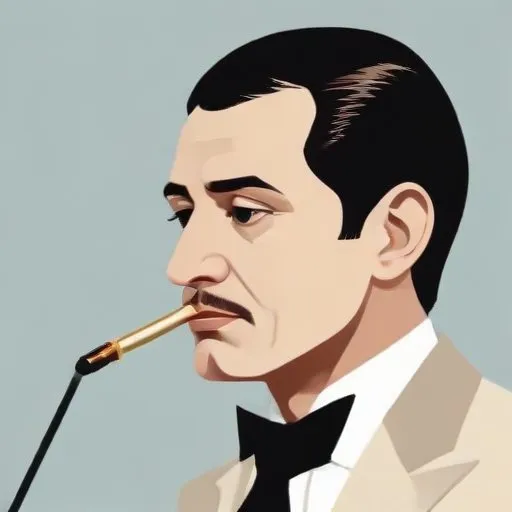
Yevstigney Fomin: The Russian Opera Maestro
A Life of Melody and Composition
Yevstigney Fomin, one of the most celebrated Russian opera composers of the 18th century, left an indelible mark on the world of music. Born in St. Petersburg on August 16, 1761, Fomin's life was a symphony of creativity, innovation, and perseverance, resulting in over 30 operas that continue to captivate audiences to this day.
Early Life and Education
Fomin's early life was marked by tragedy, with his father's untimely death when he was just six years old. Under the care of his stepfather, I. Fedotov, a soldier, Fomin was enrolled in the Academy of Fine Arts in St. Petersburg at the tender age of six. Here, he began to develop his passion for architecture and music, learning the harpsichord in 1776 with Matteo Buini. Fomin's talent and dedication earned him the opportunity to study theory and composition with
Hermann Raupach and Blasius Sartori.
A Journey to Italy and Accademia Filarmonica
In 1782, Fomin embarked on a journey to Italy, where he studied under the renowned Padre Martini and Stanislao Mattei. This exposure to European music and culture had a profound impact on Fomin's compositional style, and he was eventually accepted into the prestigious Accademia filarmonica in 1785.
Operatic Successes
Returning to St. Petersburg in 1785, Fomin's operas began to take center stage. His most famous work,
Orfey i Evridika (Orpheus and Eurydice), a melodrama to a text by Yakov Knyazhnin, premiered in 1792 and remained a staple of Russian opera for decades. Other notable works include
Yamshchiki na podstave (The Coachmen at the Relay Station, 1787),
Vecherinki (Soires, 1788), and
Amerikantsy (The Americans, 1800).
Legacy and Influence
Fomin's legacy extends far beyond his own lifetime. His operas continued to be performed and reinterpreted throughout the 19th and 20th centuries, with
Orfey i Evridika being revived in Soviet times in 1947, 1953, and 1961. In 2008, the opera was performed on period instruments for the first time in Moscow. Fomin's influence can be seen in the works of later Russian composers, solidifying his place as a pioneer of Russian opera.
A Life of Music and Service
In addition to his compositions, Fomin served as a rptiteur for the imperial theater under Paul I from 1797. His dedication to music education led him to teach at the theatrical school, inspiring future generations of musicians and composers. Fomin's life was a testament to the power of music, perseverance, and creativity, leaving behind a legacy that continues to resonate with audiences today.
Timeline of Major Works
- 1787: Yamshchiki na podstave (The Coachmen at the Relay Station)
- 1788: Vecherinki (Soires)
- 1792: Orfey i Evridika (Orpheus and Eurydice)
- 1800: Amerikantsy (The Americans)
A Lasting Impact
Yevstigney Fomin's contribution to Russian opera is immeasurable. His innovative compositions, educational endeavors, and dedication to music have inspired countless musicians and composers. As we look back on his life and works, we are reminded of the transformative power of music to bring people together, transcend time, and evoke the beauty and complexity of the human experience.
FAQ
What was Yevstigney Fomins contribution to Russian music?
Yevstigney Fomin made significant contributions to Russian music through his compositions and teaching. He was a pioneering figure in the development of Russian opera and helped to establish the countrys musical identity.
How did Yevstigney Fomins work influence the development of Russian opera?
Yevstigney Fomins work had a profound impact on the development of Russian opera. His compositions helped to establish the genre and paved the way for later Russian composers, such as Mikhail Glinka and Modest Mussorgsky.
What was Yevstigney Fomins approach to music composition?
Yevstigney Fomins approach to music composition was characterized by his use of folk melodies and harmonies. He drew heavily from Russian folk music and incorporated these elements into his compositions, creating a distinctly Russian sound.
How did Yevstigney Fomins teaching influence Russian music education?
Yevstigney Fomins teaching had a significant impact on Russian music education. He trained many prominent Russian composers and musicians, helping to establish a new generation of musical talent in Russia.
What is Yevstigney Fomins legacy in Russian musical history?
Yevstigney Fomins legacy in Russian musical history is marked by his pioneering contributions to Russian opera and his influence on the development of Russian music education. He is remembered as a foundational figure in the countrys musical heritage.